Visit Morocco: A Luxury Journey Through Imperial Cities, Atlas Peaks and Sahara Dunes
There is a particular hour in Morocco, that suspended moment when the call to prayer drifts across the rooftops of Marrakech and the sky turns the colour of saffron, when you understand why travellers have been seduced by this country for centuries. To visit Morocco is to step into a living tapestry where medieval medinas hum beside palm-shaded riads, where the Atlas Mountains rise like a snow-capped frontier above ochre valleys, and where the Sahara desert opens, vast and silent, beneath a sky thick with stars.
This is a country that rewards those who travel slowly, who savour mint tea poured from a great height, who pause in the cool shadow of a zellij-tiled courtyard and let Morocco speak in its own unhurried voice. As a luxury travel partner with roots firmly planted in this land, we have spent years curating journeys that move beyond the obvious, itineraries that thread together imperial cities, hidden Berber villages, design-led boutique hotels and the sort of desert nights that change you quietly, completely.
What follows is more than a guide. It is an invitation to dream, to plan, and ultimately to begin your own Moroccan story.
A Quick Overview of Your Moroccan Journey
Duration: Typically 7 to 14 days, with bespoke extensions available Destinations: Marrakech, Fez, the Sahara desert, Atlas Mountains, Essaouira, the Draa Valley, and the imperial cities of Rabat and Meknes Travel style: Private, tailor-made luxury, with editorial pacing Accommodation: Hand-picked riads, design hotels, kasbahs, and luxury desert camps Departure cities: Marrakech or Casablanca, depending on your route Best travel season: March to May and September to November, when the light is soft and the landscapes at their most generous
Why Choose a Luxury Experience to Travel to Morocco
Mass tourism in Morocco has discovered the country, but its true soul remains accessible only to those who travel with the right key. Authentic Morocco lives in the early morning hours of the Fez medina before the souks fully wake, in a private tagine prepared by a Berber family at the foot of Jebel Toubkal, in the way a desert guide reads the dunes the way a sailor reads the sea.
When you travel to Morocco with a dedicated specialist, you trade queues and coach-loads for context and connection. Private transportation in air-conditioned 4×4s or chauffeured sedans replaces shared minibuses. A local expert, often a friend of the family, sometimes the family itself, opens doors that remain closed to the general tourist. You sleep in medinas whose riads know you by name by the second morning, and you wake in desert camps where the only sound is the wind shaping the dunes outside your canvas suite.
The Atlas Mountains, the Sahara, the Atlantic coast, the imperial cities: Morocco is a country of staggering geographic and cultural variety, and a personalised itinerary is the only way to do justice to that scope. Our approach is editorial: we listen first, then we craft. Whether you dream of riding a camel into the Erg Chigaga at sunset, hiking among Berber villages in the High Atlas, or simply sipping mint tea on a Marrakech rooftop as the swifts dive at dusk, the journey is shaped around you. You can read more about why travellers choose Sun Trails and what sets our approach apart from conventional Morocco tour companies.
A Day-by-Day Itinerary Through the Soul of Morocco
Day 1, Arrival in Marrakech, the Red City
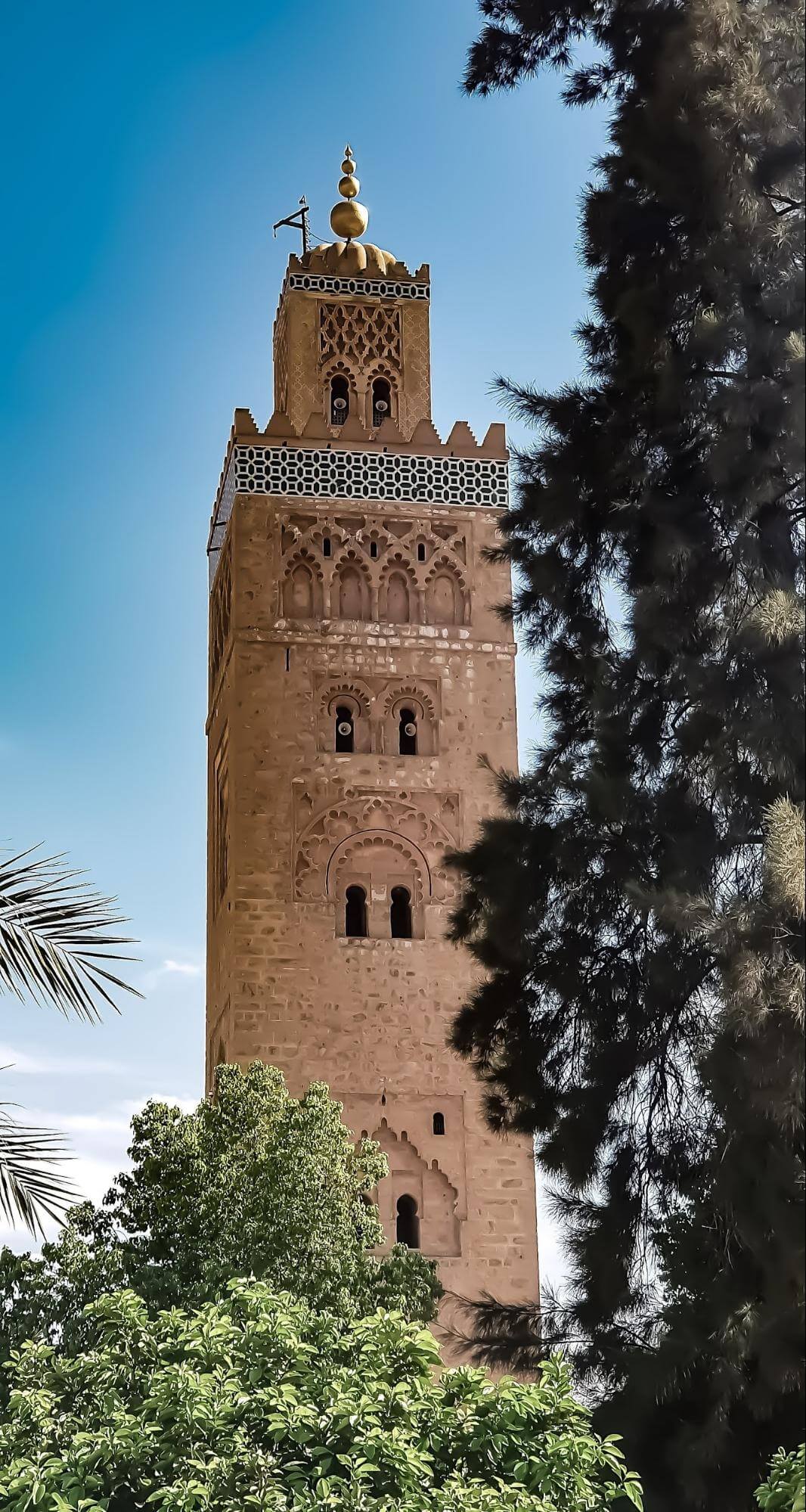
Your driver meets you at Menara Airport, and within twenty minutes the ramparts of the old city rise into view, glowing the colour of terracotta in the late afternoon sun. You are escorted through a narrow derb to your riad, perhaps the jasmine-scented courtyards of Villa des Orangers, or the more intimate Palais Khum, where carved cedar ceilings and a small turquoise pool create an instant sense of arrival. Tea is poured. Rose petals float. The city of Marrakech, with its rhythms and its mysteries, waits just beyond the door. If this is your first time, our guide to things to do in Marrakech is a useful companion for the days ahead.
Day 2, The Medina, the Palaces, and Jemaa el-Fnaa
A private guide, chosen for cultural fluency, not just knowledge of monuments, leads you through the labyrinth of the medina. The Bahia Palace unfolds in a sequence of stuccoed courtyards. The Saadian Tombs reveal their secret garden. Lunch is taken at a hidden rooftop where the chef once cooked for a French ambassador, and the afternoon dissolves into the souks: leatherwork, lanterns, antique Berber jewellery. As dusk approaches, you climb to a café overlooking Jemaa el-Fnaa, where storytellers, musicians, and snake charmers compose the world’s most theatrical sunset.
Day 3, Over the Atlas to the Valley of Roses
You leave Marrakech early. The road climbs through Berber villages and walnut groves until the Tizi n’Tichka pass opens onto the other side of the country, a landscape suddenly cinematic, all ochre and slate and infinite sky. You stop at the UNESCO ksar of Aït Ben Haddou, walk among its earthen towers, and continue down through the Dades Valley toward Skoura, where palm groves shelter one of Morocco’s most beautiful boutique addresses: Jardins de Skoura, a lodge that feels less like a hotel than a home.
Day 4, Into the Sahara Desert
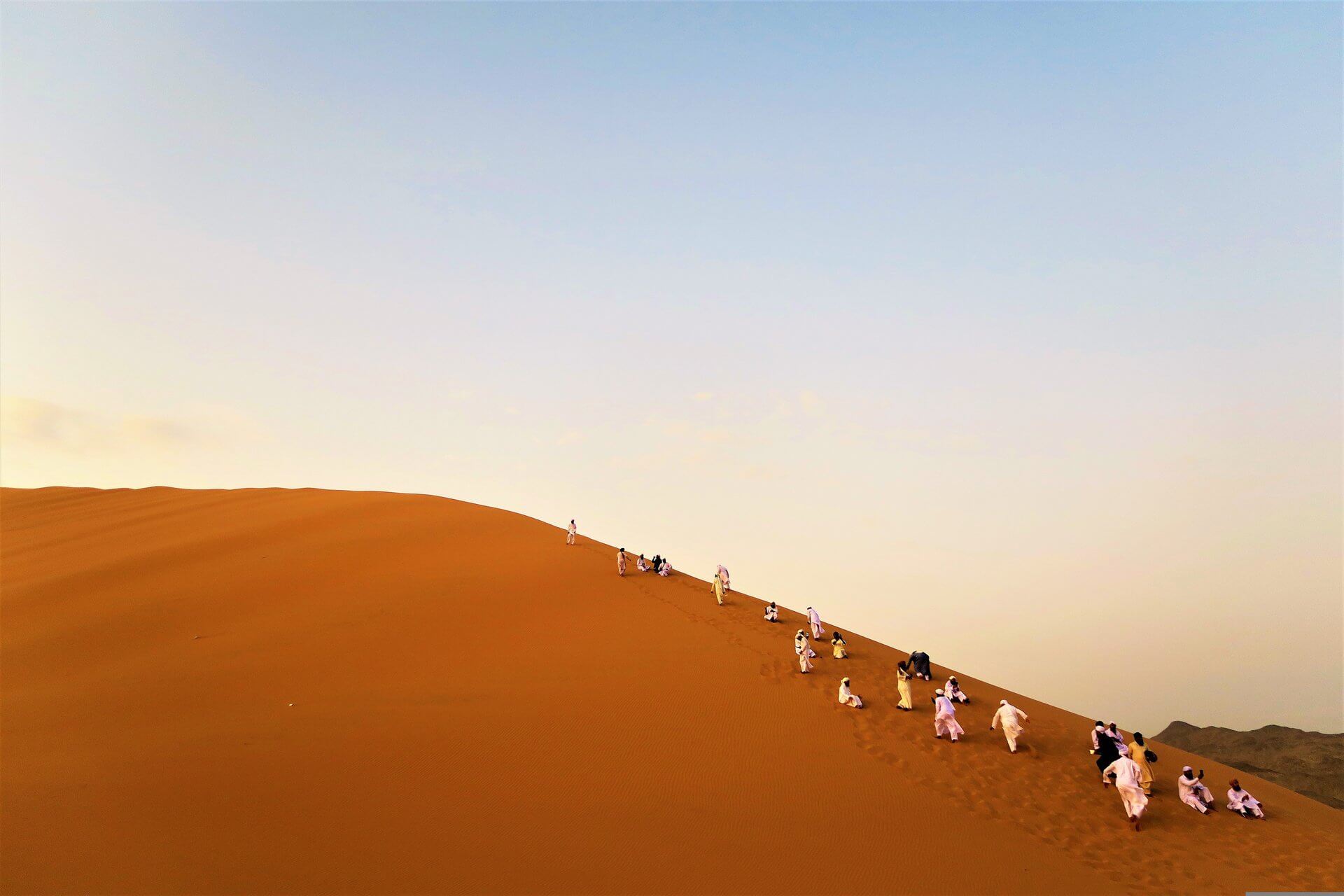
The drive south to the dunes is a slow unveiling. Date palms give way to hammada, then to rolling expanses of black volcanic stone, and finally, somewhere past Zagora or M’Hamid, to the first golden waves of sand. At the edge of the dunes, you transfer to a 4×4. Your luxury desert camp appears like a mirage: a constellation of canvas suites, woven carpets, brass lanterns, and a long communal table set beneath the stars. A camel ride at sunset takes you deep into the silence of the Erg Chigaga. Dinner is a slow ceremony of Moroccan cuisine, lamb mechoui, couscous, fresh pomegranate, followed by music around a fire as the Milky Way arches overhead. The luxury desert camp experience is, for many travellers, the moment Morocco becomes unforgettable.
Day 5, Oases, Palm Groves, and the Road to the Atlantic or to Fez
From the desert, the itinerary branches according to your preferences. Some travellers turn north toward Fez, threading the Middle Atlas and the cedar forests of Azrou. Others curve west through Taroudant, the “grandmother of Marrakech,” before descending to the Atlantic. Either route is an invitation to slow travel; both can be tailored within our 10-day Morocco itinerary or the more concise 7-day version.
Day 6, Fez, the Spiritual Heart
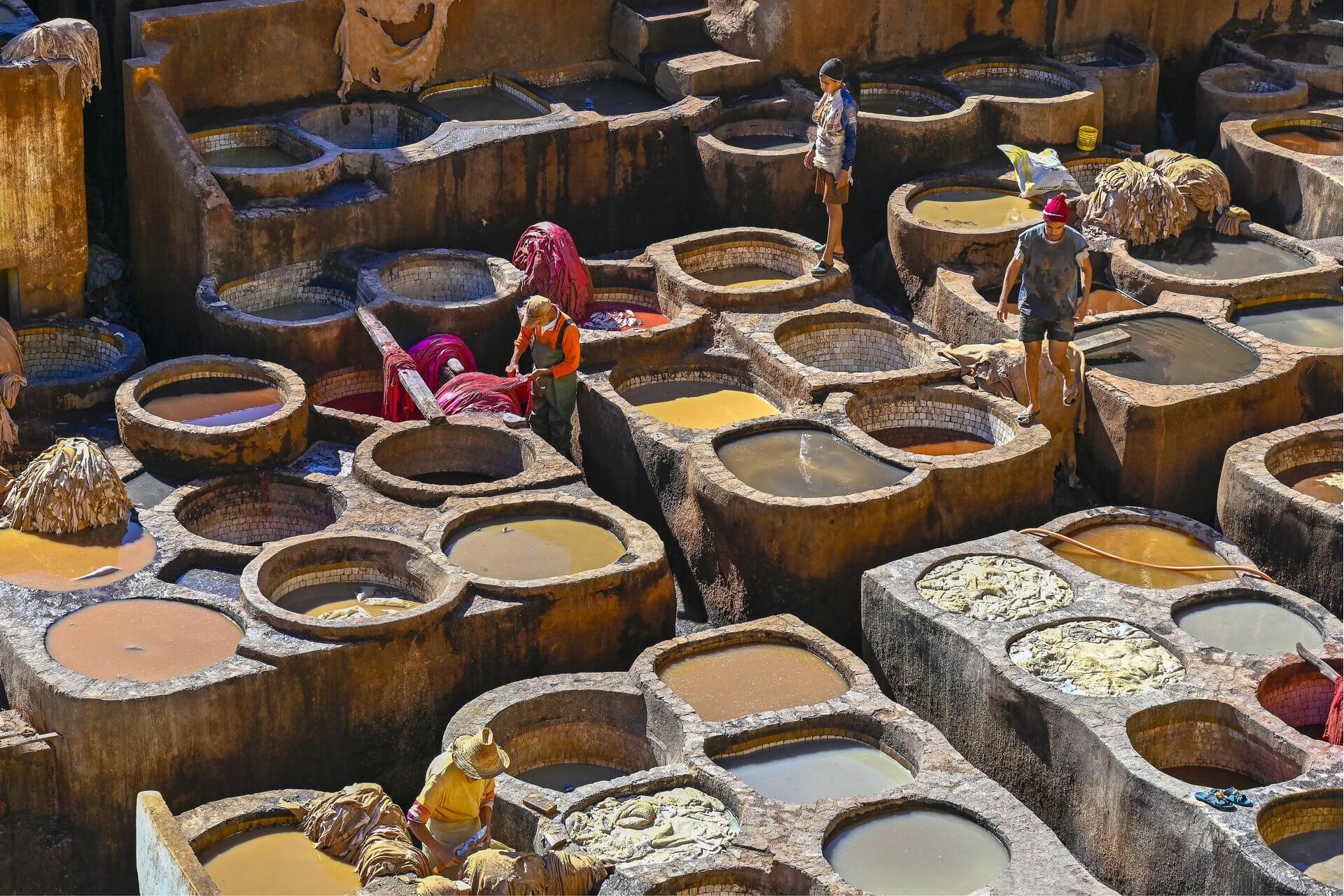
If your road leads to Fez, prepare to encounter the most intact medieval city in the Arab world. The Fez medina is a sensory overload, 9,000 alleys, the oldest university in the world (Al-Qarawiyyin, founded in 859), tanneries that glow like a painter’s palette, and food markets that have changed little in centuries. You stay at Riad Laaroussa or Riad Fes, both perfect examples of restored Moroccan architecture, and dine at some of the finest restaurants in Fes.
Day 7, Coastal Air in Essaouira
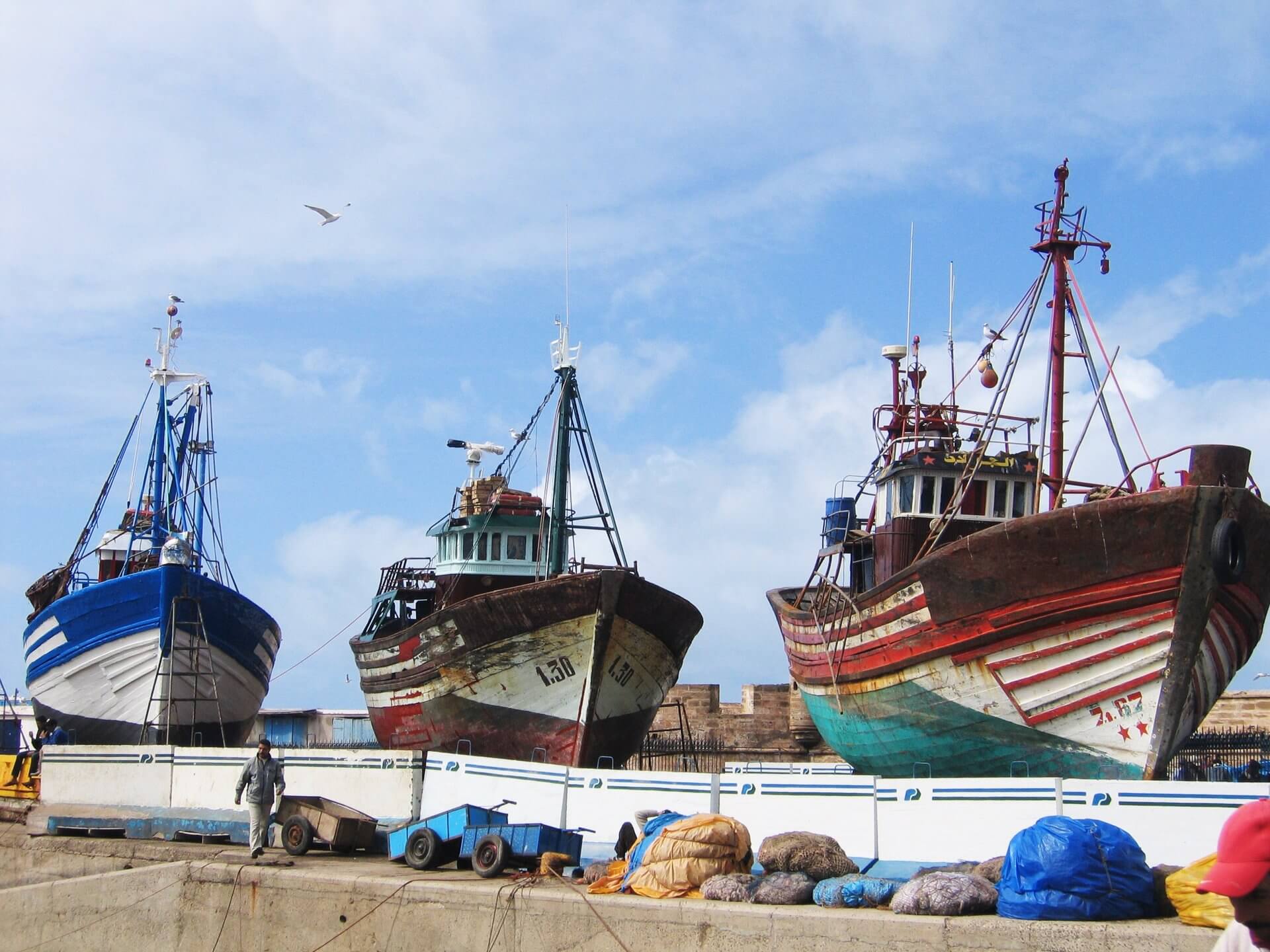
For those whose route ends on the Atlantic, Essaouira is a final, restorative chapter. The whitewashed ramparts, the gulls wheeling above the fishing port, the wind that has made this town a haven for surfers and artists alike: it is Morocco at its most relaxed. You wander the medina, lunch on grilled sardines straight off the boat, and watch the sunset from the ramparts. Our guide to things to do in Essaouira captures the best of this windswept corner of the country.
Where You Stay: Riads, Kasbahs, and Desert Camps
Accommodation is not a footnote in a Moroccan journey, it is half the experience. We work exclusively with places to stay chosen for their character, their hospitality, and their sense of place.
In Marrakech, that means restored riads tucked deep within the medina, where the city’s noise falls away the moment you cross the threshold and a small plunge pool reflects the sky between orange trees. In the Atlas, it means design-forward retreats like Domaine Malika, where mountain views meet contemporary Moroccan style. In the south, it means kasbahs of rammed earth and palm wood, addresses such as Lma Lodge in Skoura or Kasbah Hnini, where the architecture is itself a lesson in Moroccan craft.
And in the Sahara, the experience reaches its most poetic register. Our preferred camps, the Erg Chigaga luxury camp and the Erg Chebbi luxury camp among them, pair real comfort (proper beds, en-suite bathrooms, attentive service) with the elemental beauty of Merzouga and its dunes. They are not glamping clichés. They are quiet, beautifully made spaces designed to let the landscape do the talking.
The Experiences That Define Your Journey
A great trip to Morocco is built of moments, not monuments. We weave them into your itinerary with care: a sunrise camel ride across the dunes; a private cooking class with a dada in a Marrakech courtyard; an afternoon learning the art of slipper-making in the medina; a hike with a Berber guide through the Aït Bouguemez, the so-called Valley of Happiness; a hot air balloon drifting above the Atlas at dawn.
Cultural immersion is the thread that ties them together. Whether you are sharing bread baked in a village clay oven, listening to Gnawa music at a riad concert, or simply pausing to watch a craftsman work zellij tiles by hand, the goal is the same: to bring you closer to the Morocco that lives between the postcards. Active travellers can complement these experiences in Morocco with trekking in the Atlas Mountains, while those drawn to the country’s spiritual cadence will find Ramadan a particularly luminous time, a season we explore in our notes on travelling Morocco during Ramadan.
The Best Time to Visit Morocco
Spring (March to May)
Spring is, for many, the most beautiful season to visit Morocco. The Atlas Mountains are still capped with snow, the valleys bloom with almond and rose, and temperatures across the imperial cities sit comfortably in the low twenties. Desert nights remain crisp; days are warm and dry. This is the season of long lunches in shaded gardens and unhurried afternoons in the medinas.
Summer (June to August)
Summer rewards those who follow the breeze. Marrakech and the southern oases grow hot, but the Atlantic coast, Essaouira, Oualidia, Taghazout, Agadir, stays cool and luminous, with reliable trade winds that draw surfers and kitesurfers. The mountains, too, offer relief: high-altitude treks above Imlil or in the Aït Bouguemez valley are at their finest. We tend to redesign summer itineraries around coast and altitude rather than desert and city.
Autumn (September to November)
Autumn is a near-perfect counterpart to spring. The summer heat eases, the light grows golden, and the Sahara returns to its ideal temperature, warm by day, cool enough at night for a fire and a cashmere wrap. Harvests bring fresh dates, pomegranates, and olives to the souks. It is our most-requested season, and the one we most often suggest to first-time travellers.
Winter (December to February)
Winter is Morocco’s quiet luxury. The Atlas Mountains attract trekkers and ski tourers, the desert is cold and dramatic at night but radiant by day, and the medinas of Marrakech and Fez take on a contemplative beauty under a low winter sun. Riads with fireplaces, hammams scented with eucalyptus, long lunches in sheltered courtyards: winter rewards travellers who want depth over crowds. It is also the season of the Anti-Atlas treks, when southern Morocco is at its most welcoming.
Transportation and the Pace of Comfort
A luxury journey through Morocco lives or dies by the quality of its transportation. Distances are deceptive, the country is large, the roads vary, and the difference between an exhausting transfer and a memorable one comes down to the vehicle, the driver, and the route.
Our travellers move by private 4×4 or chauffeured Mercedes, with English- or French-speaking drivers who know the country intimately. Airport pickup is seamless. Routes are paced to allow stops at viewpoints, markets, and roadside cafés where the mint tea is poured with ceremony. For long distances, Marrakech to the Sahara, or Fez to Essaouira, we sometimes recommend a small-plane transfer, turning what would be a full day on the road into a forty-minute scenic flight. Every detail of personalised service is anticipated: cool water and dates in the car, playlists prepared for the journey, picnic stops arranged in advance with a local cook.
Do I Need a Visa to Travel to Morocco?
Citizens of the EU, the UK, the US, Canada, Australia, and many other countries do not need a visa for stays under 90 days. A passport valid for at least six months beyond your arrival date is required. International travel rules can change, so we always recommend confirming with the Moroccan consulate or the national tourist office before departure.
What Language Is Spoken in Morocco?
Arabic and Berber (Amazigh) are the official languages. French is widely spoken in cities and across the tourism industry, and English or French is increasingly common in major tourist areas, hotels, and among younger Moroccans, including Moroccans living abroad who often return for summer holidays. Our guides are fluent in both English and French.
What Currency Is Used, and Should I Bring Cash?
The Moroccan dirham (MAD) is the local currency. ATMs are plentiful in cities; cash is essential in rural areas and in the souks. A modest reserve of dirhams for tipping and small purchases is recommended.
How Should I Dress When I Visit Morocco?
Morocco is a Muslim country with a relaxed approach to dress in most tourist areas, but modesty is appreciated, particularly outside the major cities. Lightweight, breathable clothing that covers shoulders and knees is ideal. Local women dress in a range of styles, from traditional djellabas to modern Western attire, and the same flexibility is extended to visitors. Religion in Morocco is woven gently into daily life through the call to prayer, but it is rarely imposed on travellers. For the Sahara, layers are essential, desert nights can be cool even in summer.
Should I Rent a Car or Hire a Guide?
For a true luxury experience, neither: a private driver-guide is the most rewarding way to travel. To rent a car in Morocco is feasible but demanding, and the time you save when you hire a guide with local expertise behind the wheel is time you can spend on the experiences that matter. Our luxury Morocco tours from Marrakech are designed precisely around this principle.
Is Travel Insurance Necessary?
We strongly recommend a comprehensive travel insurance policy that covers medical care, cancellation, and adventure activities if you plan to trek or visit the Sahara. Travel insurance is a small cost for considerable peace of mind.
How Long Should I Plan to Stay in Morocco?
A first stay in Morocco is best with at least seven days; ten to fourteen is ideal. Anything less risks reducing this dream destination to a sequence of highlights rather than a journey. Our 9-day private tours strike a popular balance for travellers with limited time but a real appetite for depth. When you start planning your trip, we recommend beginning with the season and the pace; the rest follows naturally.
Begin Your Moroccan Story
Some countries are seen. Morocco is felt, in the warmth of a stranger’s greeting, in the spice of a tagine simmered for hours, in the immense, humbling quiet of a Sahara night. To visit Morocco well is to give it the time and attention it deserves, and to travel with people who love this country as we do.
When you are ready to start planning your trip, we would be delighted to listen. Tell us what you dream of, a honeymoon in the dunes, a multi-generational family journey, a first encounter with the imperial cities, a quiet hike through the High Atlas, and we will design something true to it. You can reach us through our contact page, browse the experiences of past travellers in our reviews, or simply send a note and start the conversation.
Morocco is waiting. The mint tea is already poured.