Best Cities to Visit in Morocco: A Luxury Traveler’s Guide for 2026
There is a particular hour in this North African country, just before the muezzin’s call lifts above the rooftops, when the light turns the color of warm honey and the country reveals itself slowly, city by city. Morocco is not one destination but many: a coastline, a desert, a mountain range, and a constellation of urban centers that have learned to hold centuries of history without losing their pulse. Choosing the best cities to visit in Morocco is less about checking landmarks off a list and more about understanding which atmospheres will mark you most.
After fifteen years guiding discerning travelers across the kingdom, we have learned that the right journey is rarely the longest one. It is the one that aligns with how you want to feel: hushed in a riad courtyard at dawn, lost in conversation with a calligrapher in the old north, watching the Atlantic break against ramparts in Essaouira, or silent beneath the desert stars near Merzouga. This guide is our considered selection of the best cities in Morocco, written for travelers who value depth, beauty, and the kind of access that turns a holiday into something quietly transformative.
The Best Cities at a Glance
|
City |
Reality on the Ground |
|
Marrakech |
The cultural capital, ochre walls, the busiest medina in the country, ideal first stop. |
|
Fez |
The oldest imperial city, intact medieval quarter, a UNESCO World Heritage site. |
|
Essaouira |
Atlantic port city, breezy ramparts, art galleries, gnaoua music. |
|
Chefchaouen |
The blue city of the north, photogenic, calm, mountain-fresh. |
|
Rabat |
The capital of morocco, the Kasbah of the Udayas, the Hassan Tower, refined and green. |
|
Casablanca |
Morocco’s largest city, the Hassan II Mosque, art deco architecture, business hub. |
|
Meknes |
The smallest imperial city, Bab Mansour gate, gateway to ancient ruins. |
|
Tangier |
Where Europe meets Africa, literary heritage, renewed boutique scene. |
|
Merzouga |
Saharan threshold, the Erg Chebbi dunes, camel caravans, desert camps. |
|
Ouarzazate |
The cinematic south, fortified strongholds, Aït Benhaddou, mountain crossings. |
|
Volubilis |
Roman ruins, mosaics, the country’s most important archaeological site. |
|
Tetouan |
Andalusian heritage, a quieter UNESCO-listed quarter. |
The Long Answer: Choosing Your Cities Wisely
The question is rarely whether a city deserves a visit. Most of them do. The honest question is how to sequence them so that each one feels like a discovery rather than a repetition. After designing thousands of journeys, we have noticed a pattern in what works.
A first trip to morocco is often best anchored by Marrakech and one counterpoint, either the medieval intensity of the spiritual capital or the Atlantic levity of Essaouira. Add the Sahara desert for contrast and you have the spine of a deeply satisfying route. Returning travelers tend to dig deeper: the Andalusian northern morocco around the strait, the agricultural plains near the Roman site, the lesser-walked Anti-Atlas, or the long blue coast that stretches toward Dakhla. The kingdom rewards repetition. Few countries hold so many distinct atmospheres within a week’s drive.
What unites the best cities to visit here is a particular relationship to time. Even in the largest of them, you find moments of stillness that feel borrowed from another century. And in the smallest, like the blue village in the Rif, you find a worldliness that comes from centuries of trade with the Mediterranean. The cities of morocco are not museums. They are lived in, layered, and occasionally contradictory, which is precisely what makes them worth the journey.
Speak with a specialist about your dates and vision. We design private journeys that combine the best cities in morocco with the landscapes between them. Begin the conversation here, and we will respond within 24 hours.
Marrakech: The Red City and Cultural Heart
No city in Morocco introduces the country with the same energy as Marrakech. The pink walls of the medina, built in the twelfth century, surround a maze of souks, gardens, palaces, and historic alleys. Landmarks such as the Majorelle Garden, Bahia Palace, and El Badi Palace reflect the city’s cultural depth, while the souks remain among the most vibrant shopping districts in North Africa.
Beyond the medina, Marrakech is shaped by distinct neighborhoods. Gueliz is known for its art galleries and contemporary cafés, while Hivernage offers luxury hotels and refined restaurants. The Kasbah district, home to the Saadian Tombs, moves at a slower pace, and Bab Doukkala still reflects the atmosphere of a more traditional local quarter.
For first-time visitors, two or three nights in Marrakech is usually ideal, though many travelers stay longer in riads such as Villa des Orangers or Palais Khum, where the accommodation becomes part of the experience itself.
Fez: The Oldest Imperial City
If Marrakech is the stage, Fez is the manuscript. The ancient medina of Fes el-Bali, with its thousands of narrow alleys, remains the largest car-free urban area in the world. Founded in the ninth century, Fez is the oldest of Morocco’s imperial cities and home to Al-Qarawiyyin, widely considered the world’s oldest continuously operating university. The Chouara tannery, ceramic workshops, and brass artisans of Seffarine Square preserve traditions that have endured for centuries.
A proper visit to Fez deserves at least two full nights. The medina is best explored slowly, ideally with a local cultural guide familiar with its hidden riads, workshops, and historic doors. The city is also one of the culinary capitals of Morocco, with both traditional Fassi cuisine and modern interpretations found throughout the old quarter.
Essaouira: The Wind-Swept Atlantic Port
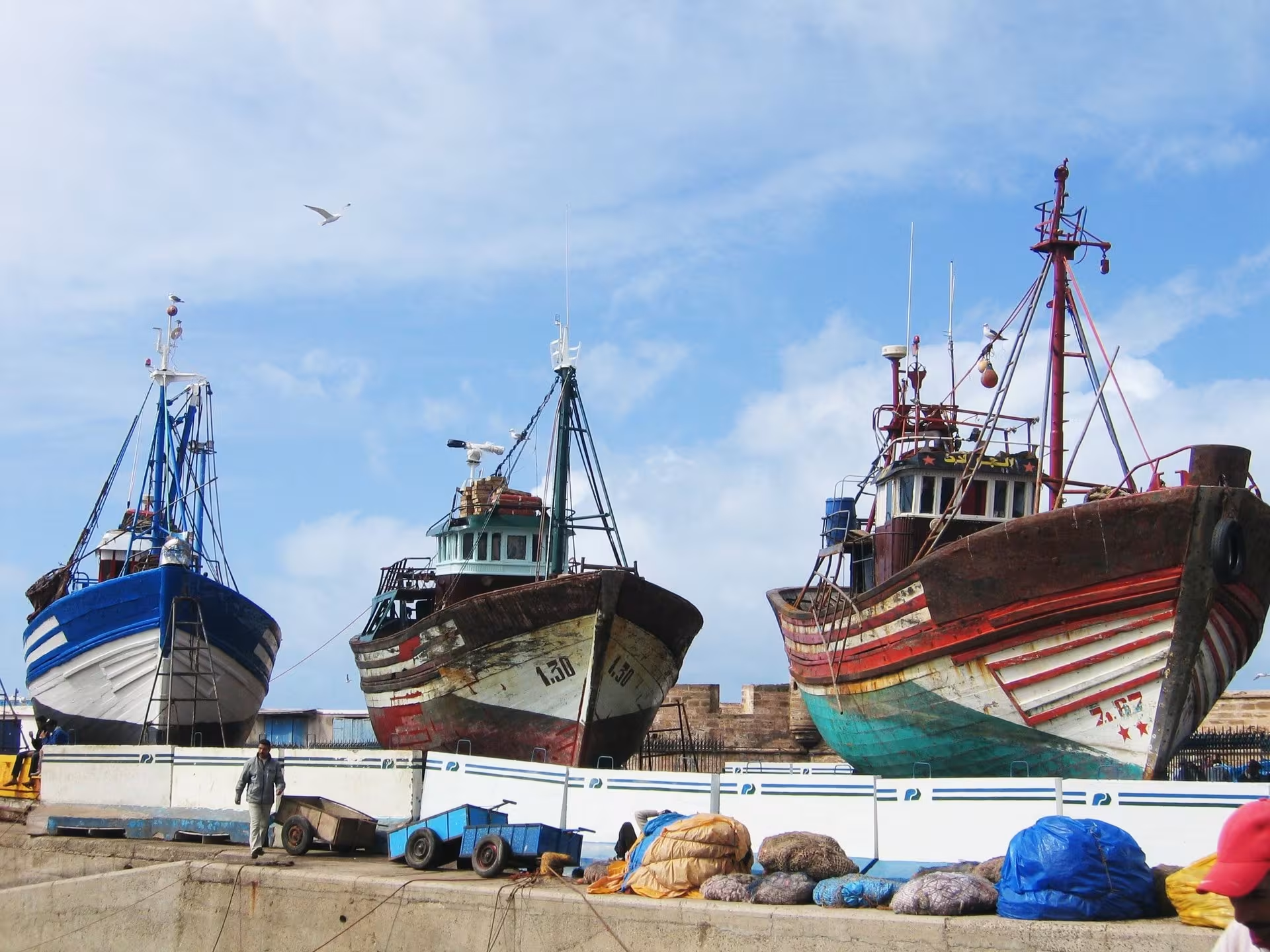
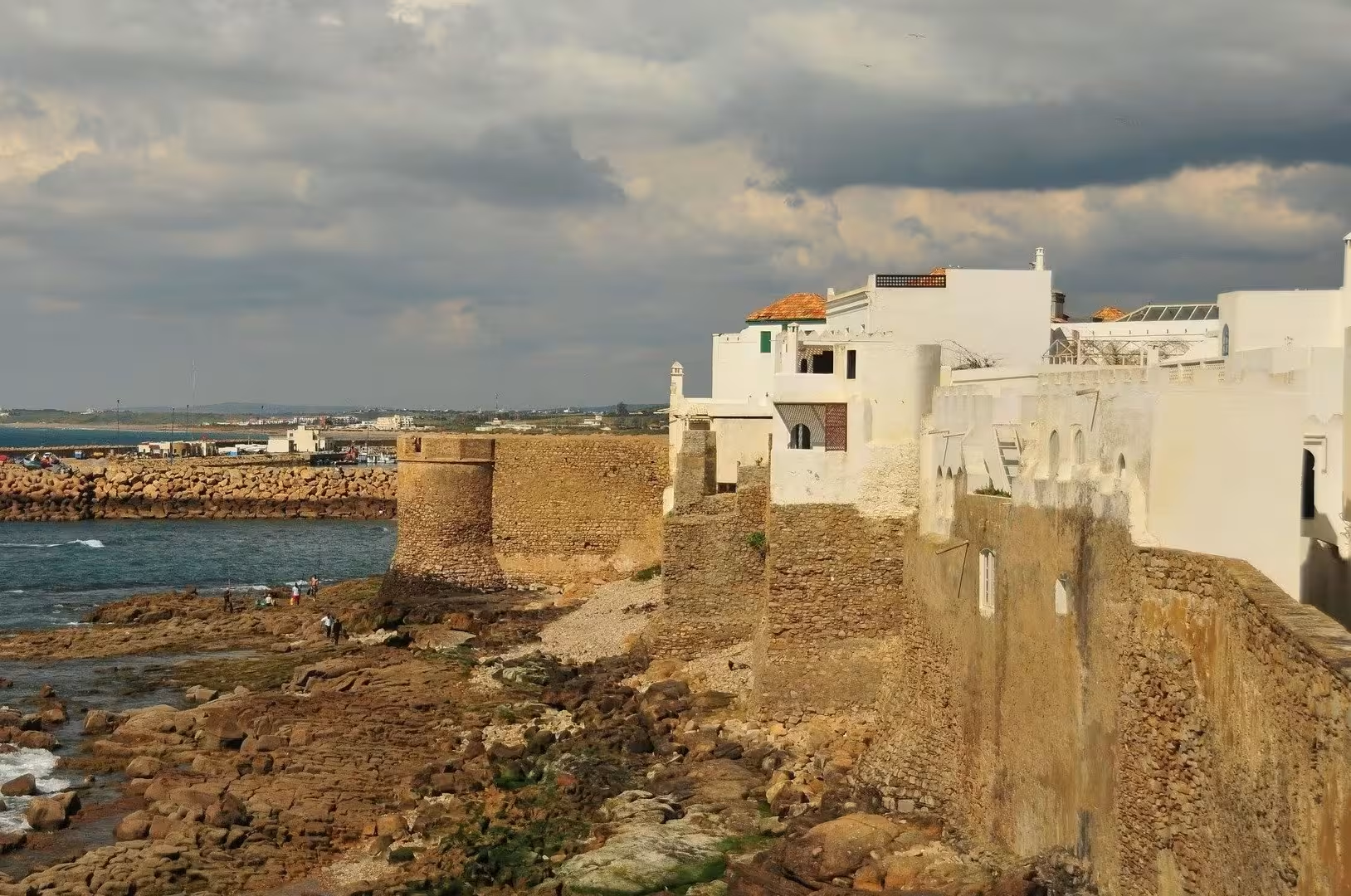
Three hours west of the red city, the fortified port city of Essaouira opens onto the Atlantic with the casual confidence of a place that has been doing this for centuries. The ramparts, sketched by Orson Welles in his Othello and walked by Jimi Hendrix in 1969, look out onto an ocean the color of slate. Inside the old quarter, a UNESCO-listed grid laid out by a French engineer in the eighteenth century, you find argan cooperatives, woodcarvers working thuya burl, and seafood grilled at the quay within minutes of being landed. Our guide to things to do in Essaouira outlines the most rewarding day, from the morning fish auction to sunset on the Skala.
This windswept retreat has long been a counterweight to the intensity of inland regions. The light is softer, the temperatures milder, and the rhythm noticeably slower. Travelers staying at properties like Madada Mogador find the city ideal for two or three nights of recalibration before continuing south or returning inland.
Chefchaouen: The Blue City of the Rif
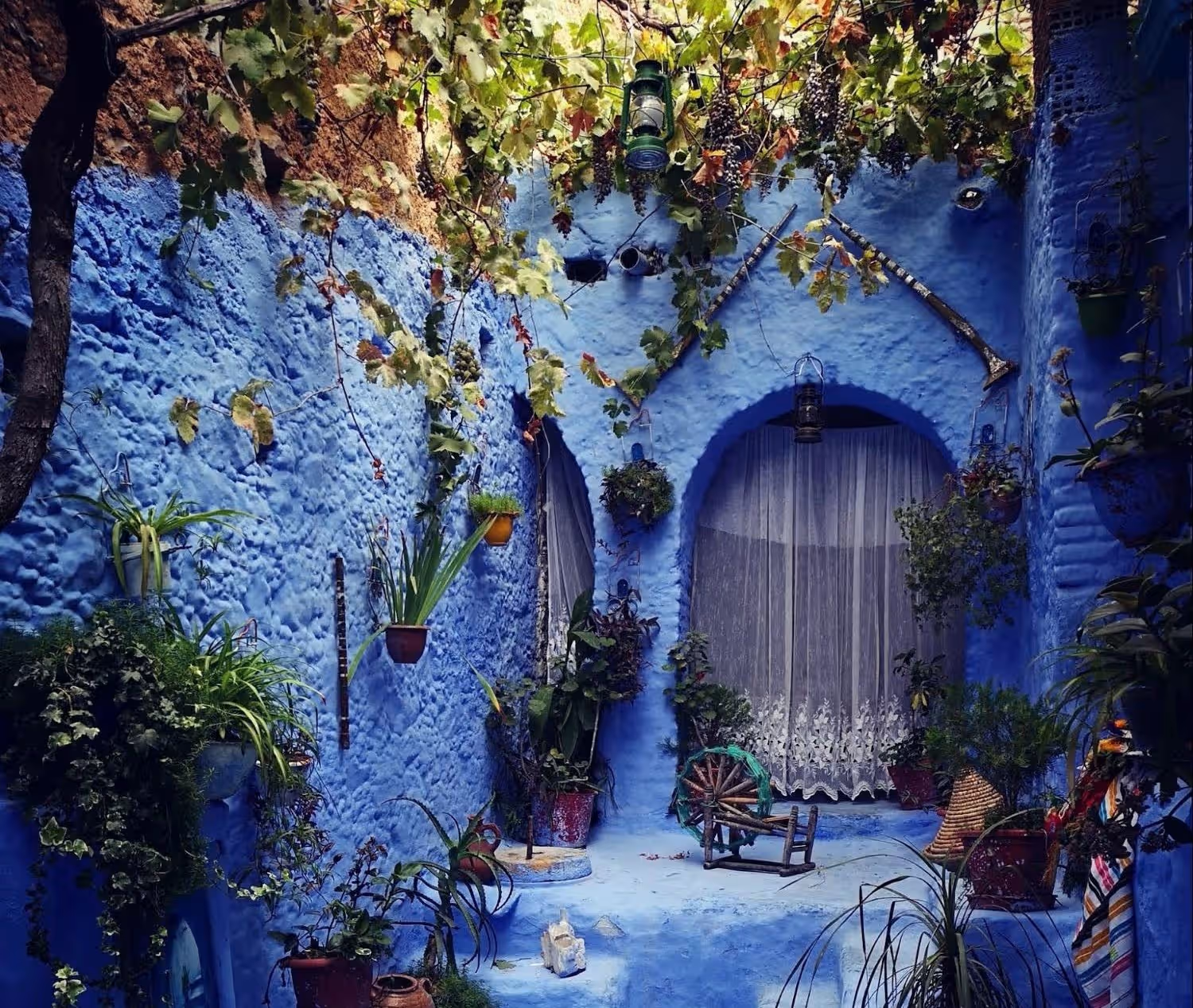
The blue city of Chefchaouen sits in a fold of the Rif Mountains in the north, four hours from the strait and five from the spiritual capital. Painted in shades of indigo and powder blue, its old quarter has become one of the most photographed in the country, and yet it remains genuinely lived in. Mornings begin with bread baked in communal ovens. Afternoons drift through small squares where elderly weavers offer wool blankets and mint tea is poured from a height that the locals have refined into ritual. Our Northern Morocco itinerary shows how to weave this stop naturally into a broader journey.
One night is enough to feel the town. Two is enough to love it. The walk up to the Spanish mosque at sunset, looking back across the painted houses, is one of those small moroccan moments that lingers for years.
Rabat: The Capital of Morocco
Often overlooked by first-time visitors, Rabat is the capital of morocco and arguably its most graceful city in morocco. It holds the Kasbah of the Udayas, the Hassan Tower, the mausoleum of Mohammed V, and a tree-lined modernity that comes from being both an administrative seat and an old Atlantic stronghold. Our 24 hours in Rabat is a practical primer for travelers who want to add an unhurried day on the way north. The newly opened Mohammed VI Museum of Modern and Contemporary Art has become a cultural anchor that lifts the city beyond its administrative reputation.
The Chellah, a Roman and Merinid necropolis at the edge of the new town, is one of the most evocative archaeological sites in the country. The old quarter is smaller than those of the south but no less authentic, and the Kasbah of the Udayas, perched above the river mouth, holds a small Andalusian garden that may be the most quietly beautiful corner of any moroccan city.
Casablanca: Morocco’s Largest City
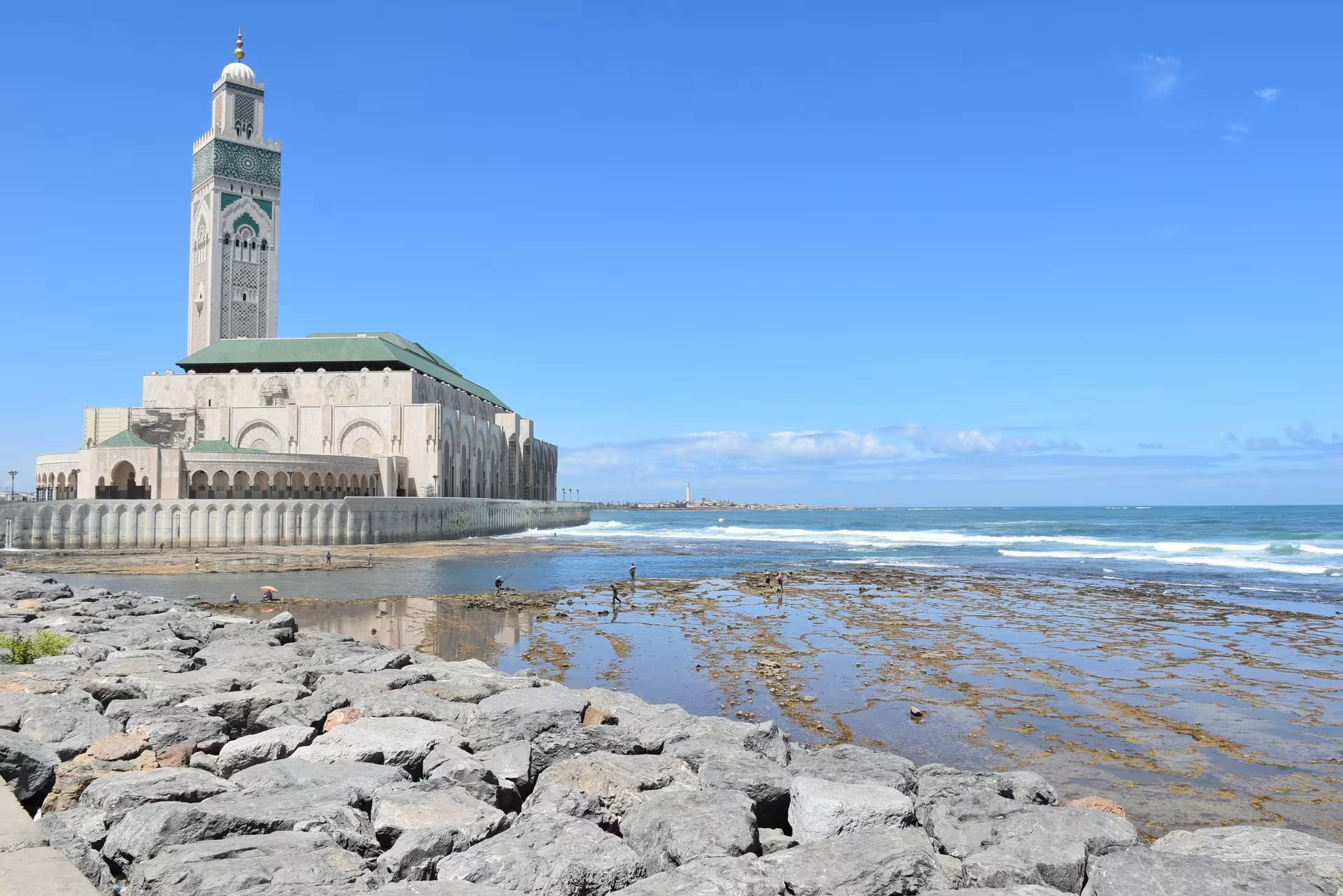
Casablanca, morocco’s largest city, is rarely the destination travelers fall in love with first, and that is precisely why returning visitors often appreciate it most. The Hassan II Mosque, completed in 1993 and the only major mosque open to non-Muslim visitors in the kingdom, rises directly from the Atlantic and is among the largest religious buildings in the world. The art deco quarter around the Place Mohammed V is among the finest in Africa, and the corniche has been reborn with serious restaurants and contemporary hotels. Our deeper read in Casablanca, More Than a Movie makes the case for spending at least one considered night.
For most journeys, this metropolis functions as the arrival or departure point via Mohammed V International Airport, the country’s main international gateway. A morning at the Hassan II Mosque and a meal in the old Habous quarter is often enough to feel its weight before continuing inland.
Meknes and Volubilis: The Quieter Imperial Pair
Between Fez and Rabat, the imperial city of Meknes and the Roman ruins of Volubilis offer one of the most rewarding historical pairings in Morocco.
Once the seventeenth-century capital of Moulay Ismail, Meknes is known for landmarks such as Bab Mansour, one of the finest gates in Moroccan architecture, and the restored Mausoleum of Moulay Ismail near Place el-Hedim.
Just thirty minutes north lies Volubilis, the most important Roman archaeological site in Morocco. Its remarkably preserved mosaics, depicting figures such as Bacchus, Diana, and Hercules, remain visible across the ruins of what was once a prosperous Roman city. At sunset, with the surrounding wheat fields glowing gold, Volubilis becomes one of the most atmospheric historical sites in the country.
Tangier: The Northern Gateway
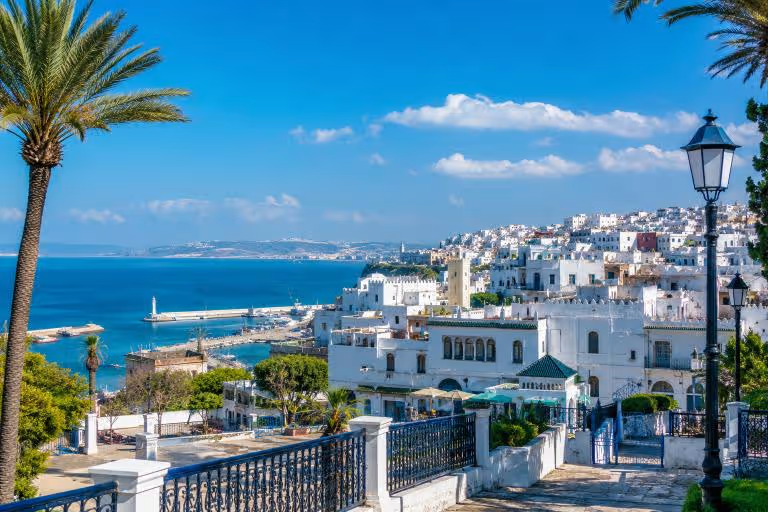
Tangier, perched at the threshold of two continents, has changed more in the last decade than perhaps any other urban center in the country. Once a faded literary capital of Bowles, Burroughs, and the Beats, it has been reborn through massive infrastructure investment, the high-speed Al Boraq train that now links it to Casablanca in just over two hours, and a new generation of boutique hotels. The Kasbah, the American Legation Museum, and the cafés that still echo Paul Bowles make it a rewarding stop, especially in combination with the blue city and the cobalt-and-white town of Asilah just down the coast. Travelers exploring this corner often appreciate our notes on gems of Morocco’s north before fixing the route.
Merzouga and the Sahara Desert
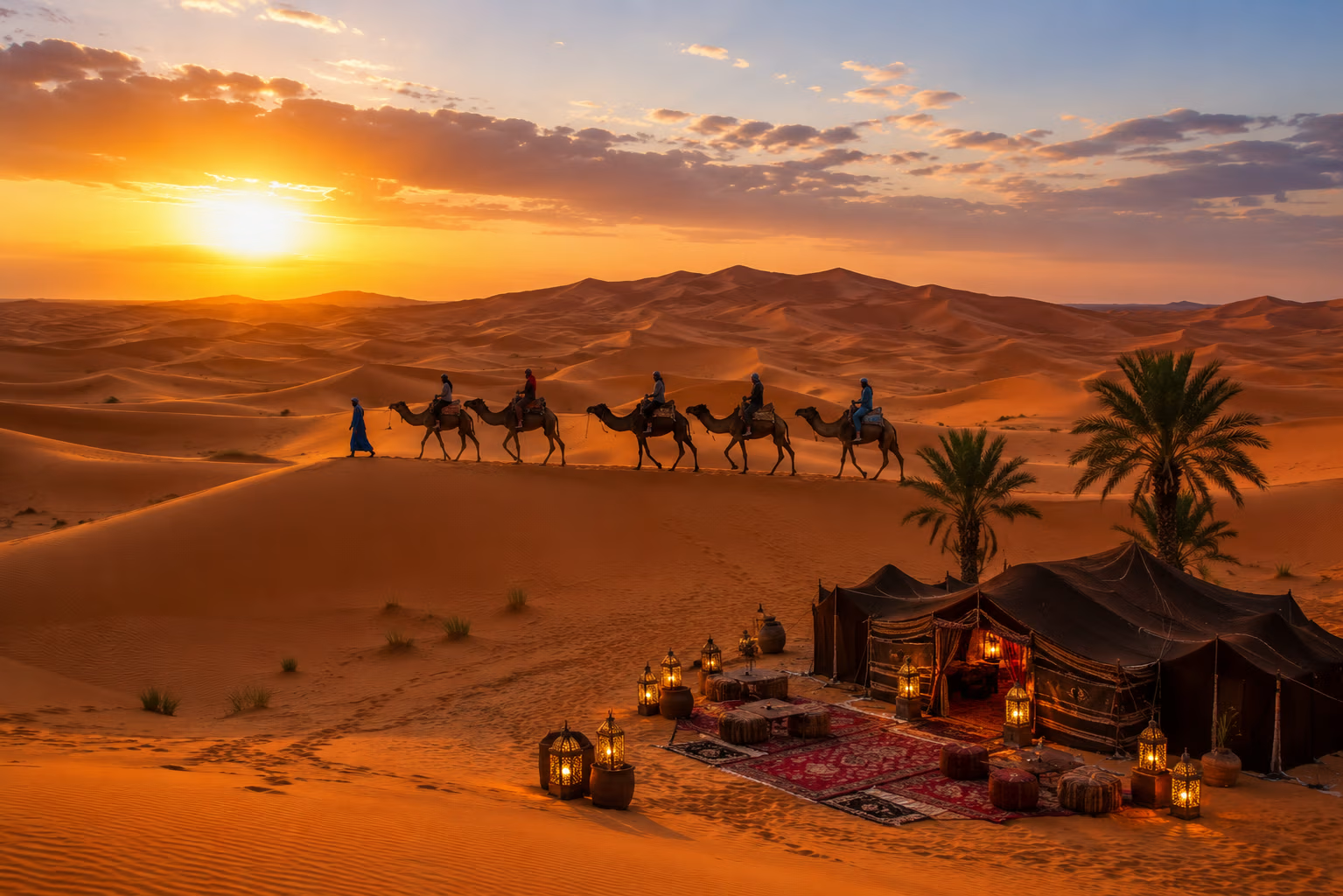
No list of the best moroccan cities is complete without the desert thresholds, even if Merzouga is technically a village. From here, the great Erg Chebbi dune field rises out of the hammada like a slow ochre wave, reaching heights of more than 150 meters. A night under canvas in a luxury camp, reached by camel at dusk and met with tagines and stars, is the single most requested experience among our travelers. For travelers seeking the deeper, more remote southern dunes, Erg Chigaga, near Mhamid, offers an even quieter alternative. Our definitive Sahara desert guide explains the distinctions between the two ergs and the right way to design a desert finale.
Ready to map your route through the best cities in morocco? Share your dates, travel style, and the experiences that move you. Our team designs private luxury travel planning for clients who want substance behind the polish. Begin the conversation.
A Suggested Itinerary: Cities and Landscapes Combined
A balanced ten to twelve day route typically blends best places to visit with the landscapes between them. Below is the architecture we most often recommend for a first visit, condensed.
Days 1 to 3, the red city. Arrive at Menara Airport, settle into a riad, and let the streets unfold across two unhurried days of old-quarter walks, garden visits, and one evening dinner at La Mamounia or a private dar.
Days 4 to 5, the mountains and the desert road. Cross the Tizi n’Tichka pass into Berber country, stop at the fortified village of Aït Benhaddou, sleep in the Dades or Skoura at a property like Jardins de Skoura.
Days 6 to 7, the desert. Reach the dune sea late afternoon. One night in a luxury camp, sunrise over the Erg Chebbi, and an unhurried return inland.
Days 8 to 9, the spiritual capital. Drive north through the cedar forests. Two nights in the old quarter with a serious cultural guide.
Days 10 to 11, the north. The blue city, then on to the strait for the closing chapter.
Day 12, departure. Either fly out from the north or take the Al Boraq train to Casablanca.
For travelers with less time, our condensed 5 day private tour, the 7 day morocco itinerary, and the more expansive 10 day morocco itinerary lay out alternative architectures.
Best Time to Visit
Spring, March to May. The most balanced season. Wildflowers across the Middle Atlas, mild days inland, and the southern oases still green from winter rains.
Summer, June to August. Hot inland, often above 38°C in the imperial centers. The coast remains the smart choice: the windswept port, El Jadida, and Oualidia offer Atlantic breezes and seafood at its best.
Autumn, September to November. Arguably the finest window. Light turns golden, dates ripen in the southern palmeraies, and the desert is at its most welcoming. Strongly recommended for a first journey here.
Winter, December to February. The High Atlas wears snow, the red city is crisp and quiet, and the desert nights are cold but clear. A romantic season for honeymooners and travelers who prefer fewer crowds.
Where to Stay: The Architecture of a Retreat
Accommodation here is half the journey. Restored riads, palace hotels, mountain lodges, and luxury desert camps each offer a distinct register. In the red city, La Mamounia remains the iconic address, complemented by intimate riads such as Villa des Orangers. In the spiritual capital, Riad Laaroussa sets a quiet standard. In the south, Dar Ahlam near Skoura redefines what a hotel can be, while the Erg Chigaga luxury camp brings serious comfort to a corner of the Sahara that few travelers reach.
Transportation and Practical Notes
Morocco is best explored by private car with a driver-guide, especially when traveling between cities or crossing the Atlas Mountains.
The high-speed Al Boraq train connects Tangier, Rabat, and Casablanca comfortably, while Royal Air Maroc operates domestic flights to destinations such as Dakhla and Laâyoune. In Marrakech, Petit Taxis are useful for short trips within the city, and ride apps like Careem and InDrive are widely used in larger urban areas. Asking for the meter “compteur s’il vous plaît” is always recommended.
For medical care, Casablanca has some of the country’s leading private clinics, including Polyclinique du Maarif and Clinique Ghandi. Comprehensive travel insurance with medical evacuation cover is strongly advised for any extended journey through Morocco.
Frequently Asked Questions
What are the best cities to visit in morocco for a first-time traveler?
The strongest first-time circuit pairs the red city with either the spiritual capital or the windswept port, then adds a night in the Sahara near the southern dunes. This sequence captures the imperial heritage, a coastal counterpoint, and the desert in roughly ten days. Rabat and Casablanca are excellent additions for travelers with more time or a particular interest in modern infrastructure.
Which city in morocco is the most beautiful?
Beauty here is plural. The blue city is the most visually striking thanks to its painted palette and mountain setting. The red city is the most theatrically beautiful at sunset, when the walls turn rose-pink. The spiritual capital holds the deepest medieval beauty, and the Atlantic port offers the most cinematic atmosphere. Most travelers leave with two or three favorites rather than one.
Is the red city or the spiritual capital better to visit?
Both are essential, and the honest answer is to visit both. The red city is the easier entry point: better connected, more polished, with stronger boutique hotel infrastructure. The northern capital is the deeper experience, with a more intact medieval quarter and a slower, more contemplative atmosphere. A serious trip to morocco includes both.
What are the best coastal cities to visit?
The leading coastal cities are the windswept port, with its ramparts and fishing fleet, and the strait, where the Mediterranean meets the Atlantic. El Jadida, with its Portuguese cistern, and Oualidia, famed for its lagoon and oysters, complete the short list of coastal stops worth considering for a slower itinerary.
How many days do you need to see the best places to visit?
Ten to twelve days allows a properly balanced journey across two imperial cities, one coastal town, and the Sahara desert. Seven days is sufficient for a focused first visit covering the red city, the atlas mountains, and the desert. Fourteen days opens the door to the north, the blue city, the strait, and the Roman ruins included.
Is the blue city worth a visit on a short trip?
The painted town in the Rif is worth a visit if you can afford the time it takes to reach it. The drive from the spiritual capital is roughly four hours, and from the strait about three. For travelers with only seven days, we generally recommend prioritizing the south. For trips of ten days or more, this stop becomes one of the most memorable.
What is the safest city for tourists?
All major moroccan cities are considered safe for tourists, with the Brigade Touristique, the dedicated tourist police, operating in the main urban centers. Common-sense precautions around pickpocketing in crowded souks are sensible, but violent crime against travelers is rare. Rabat and the blue city are often singled out as particularly calm.
Can you visit the Hassan II Mosque as a non-Muslim?
Yes. The Hassan II Mosque in Casablanca is one of the only major mosques in the country open to non-Muslim visitors, with guided tours daily except Friday mornings. The visit is one of the most rewarding hours in the city.
What are the must-see UNESCO World Heritage sites?
The kingdom holds nine UNESCO sites, including the historic quarters of the spiritual capital, the red city, Meknes, Tetouan, and the windswept port, the archaeological site of Volubilis, the fortified village of Aït Benhaddou, the Portuguese city of Mazagan in El Jadida, and the historic city in morocco of the administrative capital. A well-designed route touches at least three.
When is the best time to visit the imperial cities?
The best windows are March to May and September to November, when temperatures in the red city, the spiritual capital, Meknes, and Rabat are mild and the light is at its most flattering. Summer is hot inland; winter is cool but pleasant in the imperial centers themselves.
Do I need a guide to visit the old quarter of the spiritual capital?
A private cultural guide is strongly recommended. The nine thousand alleys are genuinely disorienting, and a guide opens doors to ateliers, riads, and madrasas that are otherwise invisible. For travelers exploring independently, the official tourist office certifies licensed guides.
What is the easiest way to plan a trip to morocco?
The simplest path is to work with a specialist who designs private journeys end to end. Planning a trip to morocco independently is possible, but the country’s logistics, from inter-city distances to riad selection to desert sequencing, reward local expertise. The U.S. State Department’s STEP program is recommended for American travelers, and travel insurance with medical evacuation cover is essential. For broader practical reading, the U.S. State Department’s travel page is a useful starting reference.