Is Morocco Safe? An Honest Travel Safety Guide from Local Experts
The question comes up in almost every initial conversation with a new traveler. Is Morocco safe? It is a fair question, and one that deserves a serious answer, not a marketing slogan. After more than two decades of designing private journeys throughout Morocco, we offer something better than a one-line reassurance: the perspective of people who live, work, and travel here daily, and who would never invite guests here if we were not fully confident in their safety and comfort.
The short answer is yes. Morocco is widely considered safe for tourists, with crime rates that are relatively low by international standards and a long tradition of hospitality toward foreign visitors. The longer answer, the one that helps you actually prepare and travel well, is what follows: an honest look at safety in Morocco, an overview of current travel advisories, the practical safety advice that experienced visitors rely on, and the quiet ways a luxury private journey removes many of the common travel frustrations from the moment you arrive.
Safety in Morocco at a Glance
General safety: Generally safe; one of the safest countries in North Africa for tourists Most common issue: Petty crime such as pickpocketing in crowded tourist areas Terrorism risk: Low but not zero; Moroccan authorities maintain a high level of security Female travelers: Generally safe, with cultural awareness recommended Healthcare: Excellent in major cities; travel insurance essential Areas to avoid: Border zones with Algeria; remote areas of Western Sahara Best advice: Travel with a reputable operator, respect local customs, and use common sense
Is It Safe to Travel to Morocco Right Now?
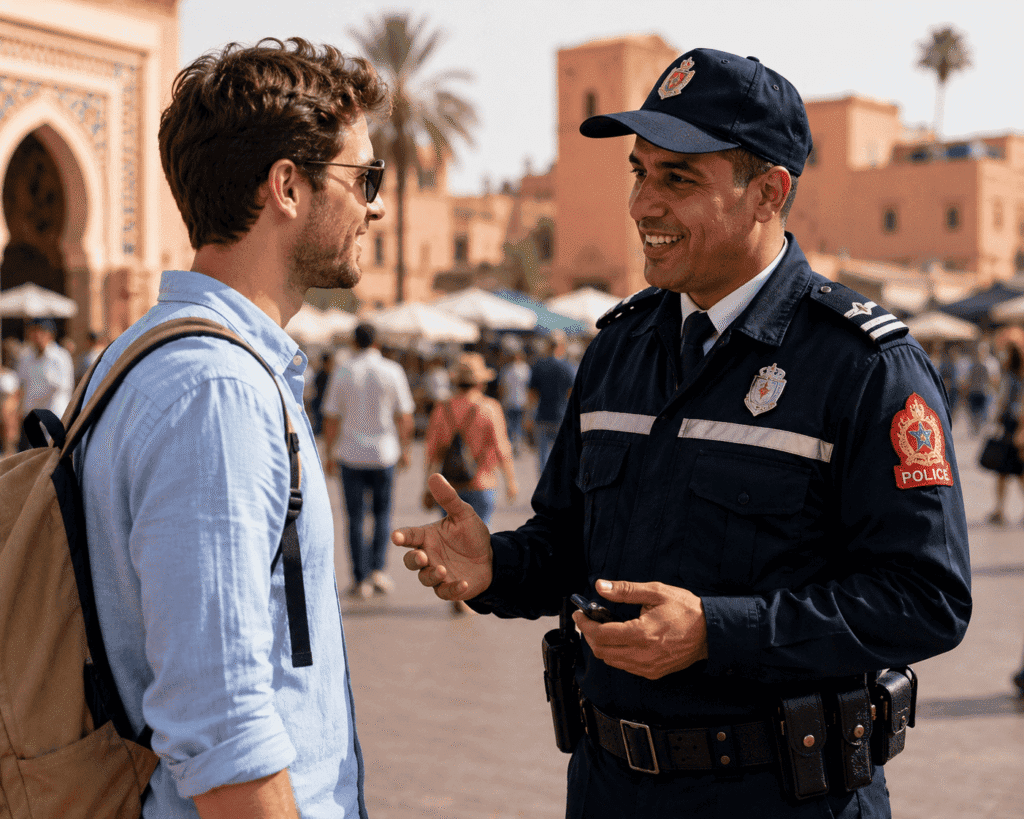
By any reasonable measure, Morocco is a safe destination. The country has invested heavily in tourism over the past two decades, and that investment has translated into visible safety and security infrastructure: a strong police presence in major cities, tourist police units in Marrakech, Casablanca, Rabat and Essaouira, and excellent coordination between Moroccan authorities and international embassies.
Most major governments classify Morocco as safe for travelers while advising the standard ‘exercise increased caution’ advisory that applies to almost every popular destination worldwide. The US State Department, the UK Foreign Office, and the Canadian and Australian foreign ministries publish current advisories for Morocco that broadly encourage travel while flagging the usual considerations: petty crime, a residual threat of terrorism present in many countries, and a few specific border zones to avoid. We always recommend checking your own government’s latest travel guidance before departure for the full advice relevant to your nationality.
The reality on the ground is reassuring. Tourists wander the medinas of Fez and Marrakech, sleep under the stars in the Sahara, hike in the Atlas Mountains, and surf the Atlantic coast every day of the year, the overwhelming majority without incident. In our view, Morocco is generally considered safe. The more useful question is how to ensure each individual journey is comfortable, smooth, and free of the small frustrations that can dim a holiday, and that is where a luxury private operator earns its place.
General Safety: What to Expect on the Ground
Walking through the souks of Marrakech, sipping mint tea in a Chefchaouen square, taking a taxi across Casablanca, these are everyday experiences for thousands of visitors. The texture of daily life in Morocco is warm and welcoming, and Moroccans take genuine pride in their reputation for hospitality.
That said, like any popular tourist destination, Morocco has its share of opportunistic petty crime. Pickpocketing in dense souks, the occasional snatch of a phone or bag from a moped, and the classic scam culture aimed at unwary tourists are the main concerns, not violent crime. The medinas of Marrakech and Fez were designed centuries before modern tourism, and a confident, attentive traveler, ideally accompanied by a local guide, navigates them with ease.
Common-sense precautions go a long way. Keep valuables in your riad safe. Carry small amounts of dirhams for daily purchases. Be polite but firm with unsolicited “guides” who offer to show you the way through the medina (politely declining and walking on is usually enough). Avoid wandering down poorly lit alleys late at night, just as you would in any unfamiliar city. These are not Morocco-specific rules; they are the same instincts you would use in Naples, Barcelona, or New York. Our Morocco travel tips page covers the day-to-day practicalities in more depth.
Common Scams and How to Avoid Them
The classic Marrakech scams are well-documented and easily sidestepped once you know them. A young man may insist that the souk you are walking toward is “closed today” and offer to lead you to “his cousin’s shop” instead. A photogenic snake charmer in Jemaa el-Fnaa may welcome your camera with apparent generosity, then demand a significant tip. A “free” gift of jasmine pressed into your hand may be followed by an aggressive request for payment.
None of these are dangerous. They are nuisances, and the antidote is simple: a friendly but firm “la, shukran” (no, thank you), continued walking, and a refusal to engage in long conversations with strangers offering unsolicited help. Travelers on our private journeys rarely encounter any of this, because a local guide accompanies you through the souks and handles these situations with the easy authority of someone who grew up there.
Taxi overcharging is the other recurring complaint. In Marrakech, Casablanca and other cities, agree on the fare before you set off, or insist on the meter. Better still, let your travel partner arrange private transfers; a chauffeured car eliminates the question entirely.
Is Morocco Safe for Female Travelers?
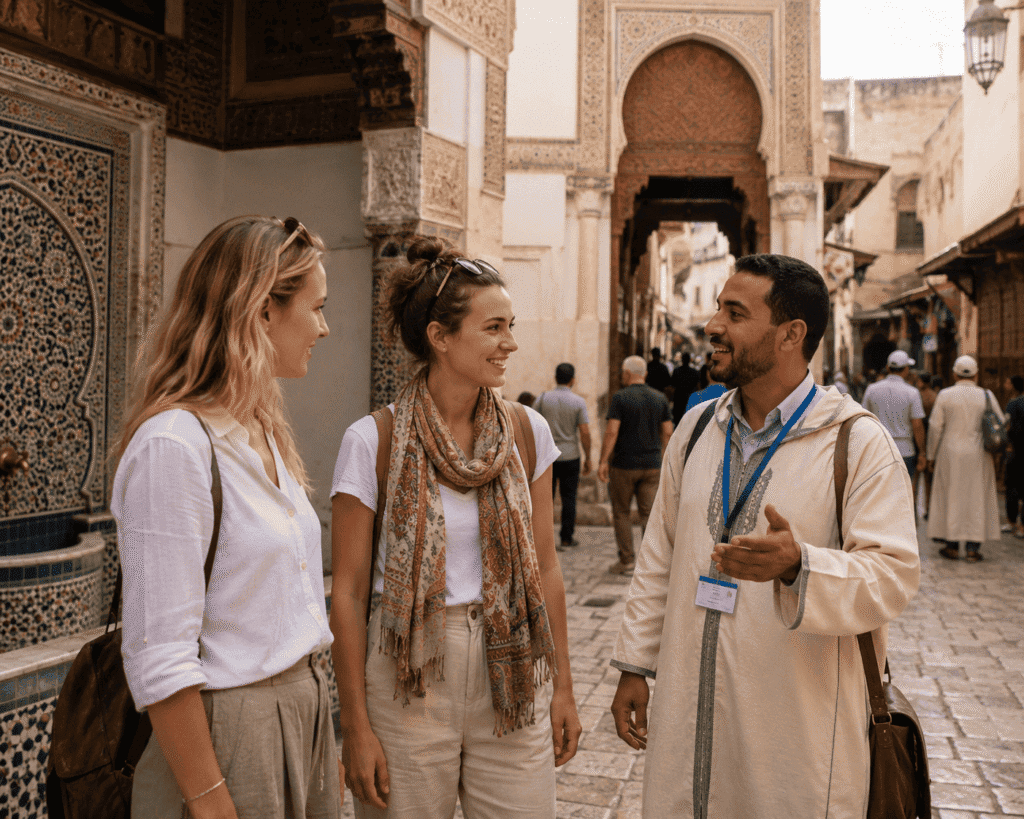
Morocco is generally safe for female travelers, and many women travel here happily every year, in groups, with partners, and solo. That said, Morocco is a conservative country, and the experience is shaped by a cultural context worth understanding before you arrive.
Female tourists sometimes report unwanted attention in busier tourist areas: comments on the street, persistent vendors, occasionally a follower in the medina. This is rarely threatening, but it can be tiring. Dressing modestly (shoulders and knees covered in public), wearing sunglasses and walking with confidence, and avoiding eye contact with strangers who call out are the standard tips for female travelers that experienced visitors universally recommend. Public displays of affection, even between members of the opposite sex who are married, are not customary in Morocco and are best kept private.
In our experience, women traveling with one of our private guides or drivers report a strikingly different experience: the unwanted attention essentially disappears when you are visibly accompanied by a local. For solo women planning a stay in Morocco, we strongly recommend structuring at least part of the trip with a guide, and choosing riads in safe, well-lit neighborhoods of the medina rather than budget guesthouses on the periphery. Our honeymoon and romantic travel and family tours pages outline how we organize journeys with these considerations built in.
Terrorism and Major Security Concerns
Morocco, like many countries, appears in international travel advisories because terrorist threats can exist worldwide. However, major incidents in Morocco are rare, and the country’s security services are widely considered effective. Security presence around tourist areas, hotels, airports, and public sites is common, while police checkpoints on roads are routine and generally quick.
Most advisories use similar wording for countries across Europe and North America.
In practice, millions of travelers visit Morocco each year without issues, making it a destination where the risk is considered real but well-managed.
Regions of Morocco: Where to Go and Where to Be Cautious
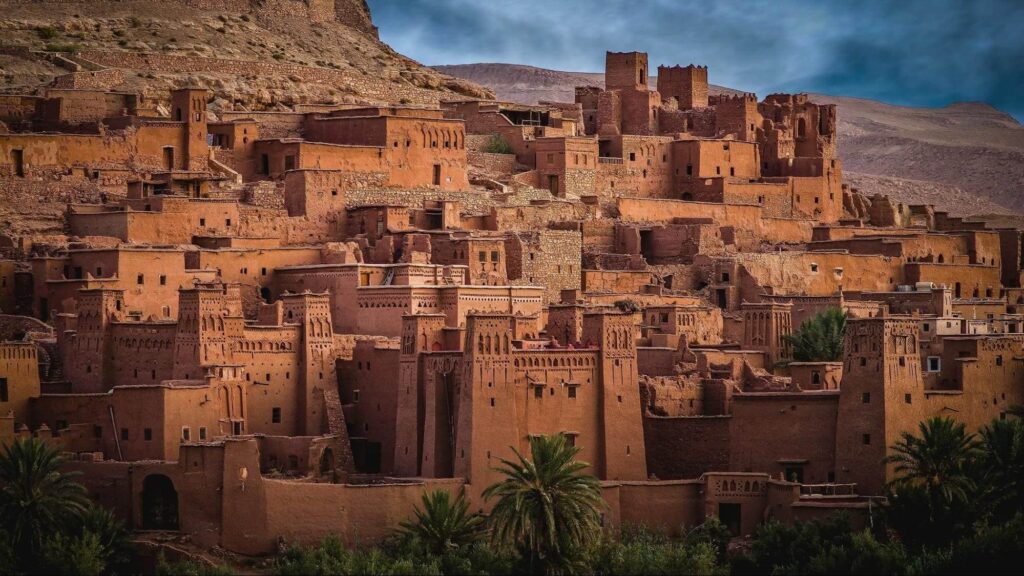
The vast majority of Morocco is open and welcoming to visitors. Marrakech, Fez, Rabat, Casablanca, Essaouira, Chefchaouen, Tangier, the Atlas Mountains, the Sahara around Merzouga and M’Hamid, the Atlantic coast, all are firmly on the well-trodden tourist circuit and present no unusual safety concerns.
Two specific areas warrant more care. The remote border zones with Algeria are best avoided; the border has been formally closed for decades and there is little practical reason to approach it. The status of Western Sahara is internationally disputed, and while the major towns of Dakhla and Laayoune welcome tourists (Dakhla in particular has become a kitesurfing destination of growing fame), advisories on Western Sahara vary by country, and travel deep into the desert south of Dakhla should be undertaken only with experienced operators and full attention to the latest guidance. Our Dakhla kitesurfing journeys are organized in close coordination with local partners who know these regions of Morocco intimately.
In the Rif Mountains, the area around Ketama is widely known for cannabis cultivation and is typically skipped. Chefchaouen, the famous “blue city” of the Rif, is entirely safe and one of the most charming destinations in the country.
Transportation in Morocco: Getting Around Safely
Transportation in Morocco has improved enormously in recent years. The high-speed Al Boraq train between Tangier and Casablanca is modern, comfortable and a great way to get around the north. ONCF trains connecting the imperial cities are reliable and pleasant. Domestic flights via Royal Air Maroc connect the major cities efficiently.
On the road, the picture is more nuanced. Moroccan highways are excellent. Rural roads, particularly in the Atlas and the south, can be narrow, winding and shared with trucks, donkeys and slow-moving traffic. We strongly suggest you avoid driving at night outside major cities; rural roads are poorly lit, livestock can wander into the road, and a long day of mountain driving is fatiguing in ways that catch many self-drive travelers off guard.
For these reasons, almost all of our travelers move with a private driver. A skilled Moroccan driver is not a luxury; he is a translator, a navigator, a problem solver and a cultural bridge, and the difference between an exhausting transfer and a memorable one is largely down to who is behind the wheel. If you do rent a car, drive defensively, complete an accident report with the police if anything occurs (Moroccan insurance requires it), and stick to daylight hours on rural roads. Petit taxis (small, color-coded city taxis) are metered in most cities, while grands taxis cover intercity routes on a shared basis; for comfort and certainty, a pre-arranged private transfer is always our recommendation.
Health, Hepatitis Risk and Travel Insurance
Morocco has good private healthcare in the major cities, particularly Casablanca, Rabat, Marrakech and Tangier. Public hospitals exist but are not what most international travelers expect; we always direct guests to private clinics if anything arises. Travel insurance that covers medical care, repatriation, and any adventure activities you plan (trekking, camel riding, surfing, hot air ballooning) is essential, and we ask all our guests to arrange it before arrival.
On the travel health side, no vaccinations are formally required for entry from most countries, but vaccinations for hepatitis A and B, tetanus, and typhoid are often recommended depending on your itinerary. Consult a travel medicine clinic six to eight weeks before departure. Tap water is generally safe in modern hotels and riads in major cities, but bottled water is the easier default for visitors and is inexpensive everywhere. Food safety is excellent in riads, restaurants and on our recommended food tours; we are more cautious about street food in unfamiliar markets, particularly for travelers with sensitive stomachs.
Practical Safety Tips Before You Go
A few practical safety tips to help you stay safe and travel with confidence.
Carry photocopies of your passport and a credit card separately from the originals. Memorize the address of your riad in Arabic or French script. Medina addresses are difficult to navigate by GPS alone. Use ATMs attached to banks rather than free-standing machines in tourist areas. Be cautious with public displays of affection; while Morocco is more relaxed than some of its neighbors, restraint is appreciated, particularly outside the major cities. Register your travel plans with your embassy if your home country offers the service. And give yourself the gift of a local guide; the small expense pays for itself many times over in confidence, context and the doors it opens.
A note on dual nationality: Moroccan law holds that children of Moroccan fathers are Moroccan citizens regardless of where they were born or what other passport they hold, and Moroccan citizenship takes precedence in the eyes of local authorities. Travelers with Moroccan heritage should be aware that they will be treated as Moroccan nationals in any legal matters during their stay, and that having a Moroccan passport does not guarantee your entry or transit to every country or territory in the region either.
When to Feel Unsafe, and What to Do
In the rare cases where travelers feel unsafe during an aggressive interaction in the souk, an uncomfortable taxi ride, an unwelcome encounter, the response is straightforward. Step into the nearest shop, hotel, café or restaurant; ask the staff for help. Moroccans take hospitality seriously, and shopkeepers will routinely assist a tourist in difficulty. Police are visible in the major cities and tourist areas, and tourist police in particular are accustomed to dealing with foreign visitors.
For our own guests, we provide a 24-hour local contact for the duration of every journey. If anything is uncertain, from a missed flight to an upset stomach to a question about a vendor’s price, a single phone call resolves it. This is the quiet luxury of traveling with a real operator on the ground, rather than stringing together independent bookings and hoping things hold together.
How a Luxury Private Journey Removes the Risk
Most of the safety concerns described above are matters of friction rather than danger, and friction is precisely what a well-designed private journey eliminates. Airport pickup by a known driver holding a sign with your name. Pre-arranged transfers from city to desert, with a vehicle suited to the road. Riads chosen for their atmosphere and their security, in neighborhoods we know intimately. Private guides who walk the medinas with you and turn the souks into a conversation rather than a gauntlet.
This is the layer of care that turns a question of “is Morocco safe?” into a non-question. You understand the risks, you respect the customs, and the rest is taken care of. Our why Sun Trails page explains how we structure each journey, and our reviews from past travelers speak to the experience in their own words.
Frequently Asked Questions
Is Morocco safe to visit in 2026?
Yes. Morocco is broadly considered safe for tourists in 2026, and the country continues to invest in tourism infrastructure. Standard precautions against petty crime and awareness of the general regional context are the main considerations. Check your home government’s latest travel advice for the full advice relevant to your nationality before booking.
Is Marrakech safe for tourists?
Marrakech is one of the most visited cities in Africa and is generally safe. Petty crime, persistent vendors and the occasional scam are the realities of any major tourist hub, but violent crime against tourists is rare. Traveling with a local guide through the medina, and using pre-arranged transport, removes most friction.
Is Morocco safe for solo female travelers?
Yes, with cultural awareness. Many women travel solo in Morocco every year. Modest dress, a confident demeanor, and ideally a portion of the trip arranged with a guide will make the experience smoother. Avoiding eye contact with persistent strangers, choosing well-located riads, and not walking alone late at night in unfamiliar areas are the standard recommendations.
Are there areas of Morocco I should avoid?
The disputed territory of Western Sahara beyond the main towns, and the immediate border zones with Algeria, are best avoided or approached only with experienced operators. The town of Ketama in the Rif is also typically skipped. Everywhere else on the standard tourist circuit, the imperial cities, the Atlas, the Sahara dunes around Merzouga and M’Hamid, the Atlantic coast, is welcoming and well-suited to visitors.
Is the Sahara desert safe to visit?
The Moroccan Sahara around Merzouga, M’Hamid, Erg Chebbi and Erg Chigaga is entirely safe for tourists when visited with a reputable operator. The dunes are firmly within Moroccan territory, well-policed, and the principal luxury desert camps maintain excellent standards. Our definitive guide to the Moroccan Sahara covers everything you need to know.
Do I need travel insurance for Morocco?
Yes. Comprehensive travel insurance covering medical treatment, repatriation, cancellation and any adventure activities (trekking, camel rides, surfing) is strongly recommended for any trip to Morocco.
Is it safe to drive in Morocco?
Driving is feasible but demanding. Highways are excellent, rural roads less so. Avoid driving at night outside major cities, and consider a private driver for the bulk of your journey, the comfort and safety gains are considerable.
Travel Morocco with Confidence
The honest answer to “Is Morocco safe?” is that the country is, in our experience and by the testimony of countless guests, one of the safest and most rewarding countries you can choose to visit. The risks are real but modest, the precautions are based on common sense, and the rewards, the dunes at dawn, the riads scented with orange blossom, the slow ceremony of a Moroccan dinner, are extraordinary.
If you would like to explore what a private, expertly guided journey through Morocco looks like, our team would be delighted to help you plan one. Tell us what you dream of and what gives you pause; we will design a journey that answers both. Begin a conversation through our contact page, or simply send a note.
Morocco is ready to welcome you with its usual warmth and all the quiet care of a country that has been hosting travelers for centuries.