Is Morocco Safe for Americans? An Honest 2026 Guide from a Luxury Travel Agency on the Ground
If you are an American planning a trip to Morocco, you have almost certainly typed the same question into Google as half our incoming guests do: is Morocco safe for Americans? It is a fair question. We are a luxury travel agency based in Morocco itself, building private journeys for travelers from New York, Los Angeles, Chicago, Dallas, and Atlanta, and we have seen the question from every angle.
The short answer is yes.
Morocco is safe for American travelers, and has been for a long time. The longer answer, the one that actually helps you plan, is what this page is for.
Safety Snapshot for American Travelers
|
Topic |
Reality on the Ground |
|
Overall safety |
Generally safe, one of the safest destinations in North Africa |
|
Violent crime |
Rare, especially against tourists |
|
Petty theft & pickpocketing |
Possible in crowded medinas and transportation hubs |
|
Terrorism risk |
Low, monitored by Moroccan security forces |
|
Female travel |
Generally safe, with normal precautions |
|
Solo travel |
Comfortable, especially with private transport |
|
Taxi safety |
Petit Taxi, Grand Taxi, Careem, InDrive widely used |
|
Tap water |
Stick to bottled water |
|
Medical care |
Excellent private clinics in Casablanca, Rabat, Marrakech |
Is Morocco Safe for Americans? The Honest Long Answer
Morocco is a safe country for American travelers, and this is not a polite agency line. It is the consistent verdict of every government advisory and every American guest we have ever hosted. Morocco is considered by most analysts to be one of the safest destinations in the Arab world, and crime rates are relatively low for a country of nearly forty million people.
In the U.S. State Department classification, Morocco sits at Level 2: exercise increased caution. That phrase alarms Americans the first time they read it, until they realize it is the same Level 2 applied to France, Germany, the United Kingdom, Spain, and Italy. The same travel advisories for Morocco are not warnings against travel. They are reminders to be a thoughtful traveler.
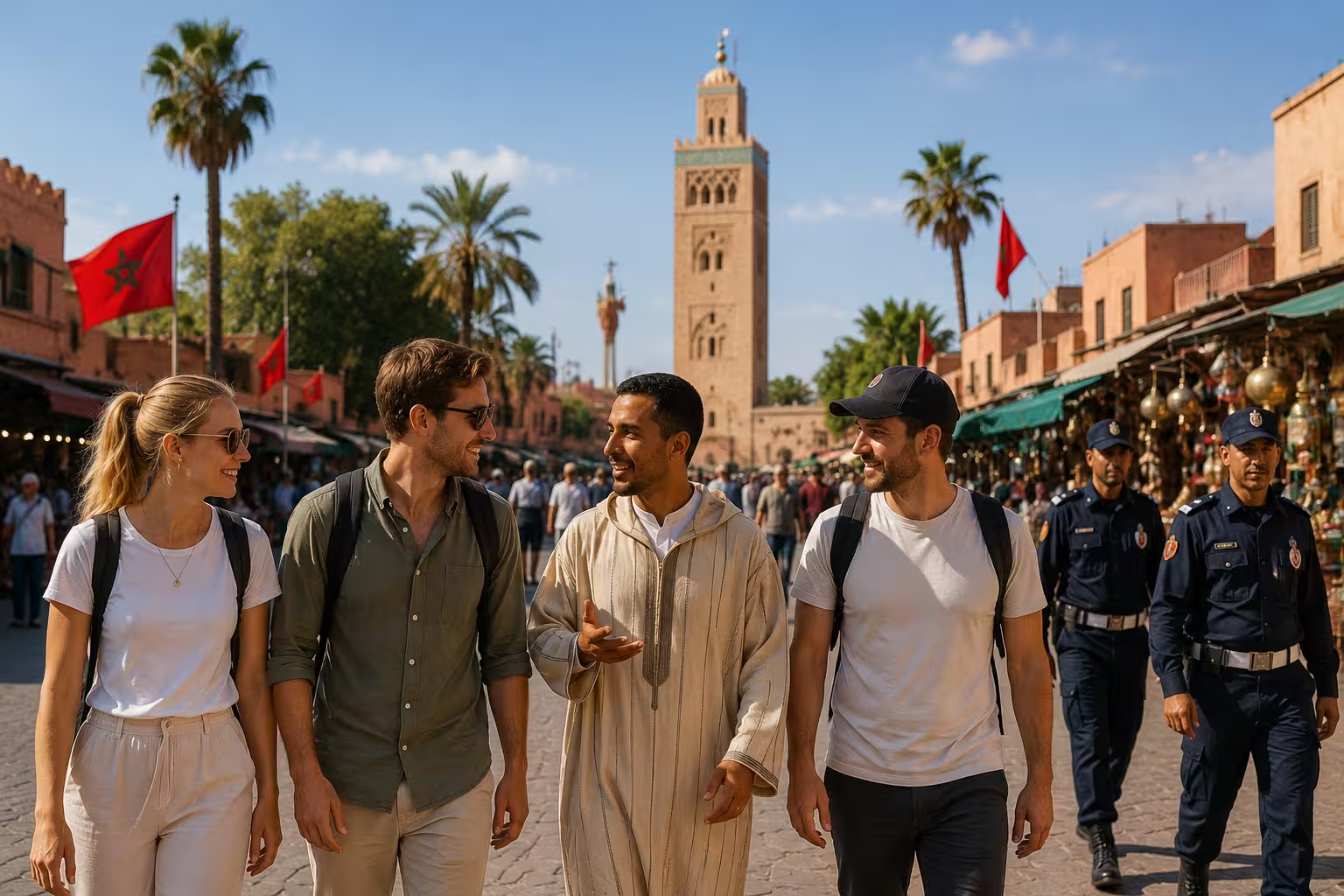
What you actually find on the ground is a country that has invested heavily in safety and security infrastructure. The government of Morocco runs one of the most respected security forces apparatuses in the region, frequently disrupting suspect cells before any plan can mature, and acting as a key counter-terrorism partner with the U.S., France, and Spain. Visible policing in tourist areas is high. The Brigade Touristique patrols the main squares of Marrakech, the medina of Fez, the corniche of Casablanca, and the walled town of Essaouira.
The safety concerns that do exist are the ones common to any popular tourist economy: petty crime, occasional scams, the rare snatch of a phone in a crowded souk. Almost all of it dissolves with basic travel precautions and the right local arrangements. American travelers who arrange a private Morocco tour with a vetted driver and dedicated guide remove most situational risk before they have even boarded the plane.
Planning your first trip to Morocco? Speak with a Morocco specialist to discuss your dates and regions. We respond within 24 hours.
Is There a Real Terrorist Threat in Morocco?
The threat of terrorism in Morocco is low, much lower than the standard advisory language might suggest. Morocco has not experienced a major terrorist attack in Morocco against a tourist area in many years. The country’s intelligence services cooperate closely with the FBI, France’s DGSI, and Spain’s CNI, and have been publicly credited with disrupting groups that continue plotting possible attacks not only in Morocco but elsewhere in Europe.
For an American traveler, Morocco is, in concrete terms, one of the safest destinations in North Africa, comparable to most major Western European capitals.
Petty Crime and Scams: What to Actually Watch For
If something is going to bother you on a trip to Morocco, it will most likely be a hustle, not a crime. The classics: the “tannery is closed, follow me” routine near Bab Debbagh, petty theft of an unsecured phone in dense medina sections, pickpocketing in the busiest moments around Jemaa el-Fnaa, unsolicited “guides” demanding payment, inflated taxi fares paid because a traveler did not say “compteur, s’il vous plaît”.
The defenses are simple. Basic safety precautions like keeping your phone in a zipped pocket and your valuable items in the riad safe will resolve almost everything. Aware of your surroundings is the actual rule. Pay in cash at small shops. Decline unsolicited help. Use Petit Taxi with the meter, or Careem and InDrive for app-based clarity on fares.
Safety by Region: Where Morocco Is Safest
Marrakech:
Marrakech is safe to visit and the most popular gateway in the country. The medina is busy and pickpocketing is the only realistic concern. Districts like Gueliz and Hivernage feel essentially European after dark. Things to do in Marrakech gives a fuller picture.
Casablanca:
Casablanca is Morocco’s business capital. American travelers come for the Hassan II Mosque, the Art Deco downtown, and the Atlantic corniche. Crime rates are relatively low in central districts, and the city is mostly safe with normal big-city awareness.
Rabat:
Rabat is the political capital and one of the calmest cities in the country. The medina is walkable, the Kasbah of the Udayas overlooks the Atlantic, and the American embassy is based here.
Fez:
The medieval medina of Fez is safe by every meaningful measure. A private guide is essentially required for any first visit, simply because the medina is so labyrinthine.
The Sahara and the Atlas Mountains:
The Sahara desert and the Atlas Mountains are among the calmest parts of Morocco. Berber villages along the route are welcoming, the desert camps are staffed and secure. Our Sahara desert guide explains how to think about the journey.
Essaouira:
Essaouira is the gentlest of Morocco’s tourist destinations. A salt-bleached Atlantic port with a small medina, it is safe to visit for any traveler. Things to do in Essaouira covers the highlights.
Is Morocco Safe for Female Travelers?
Yes. Morocco is safe for female travelers, including those traveling alone, and we have hosted countless American women who all completed their journeys with the same conclusion: easier than expected.
The truthful nuance is that Morocco is a conservative society, and women may experience unwanted attention in the form of comments or persistent vendors, particularly in busy souks and at transportation hubs. The defenses are familiar: loose-fitting clothing covering shoulders and knees, confident body language, sunglasses if you prefer not to make eye contact in crowds, and avoiding poorly lit streets late at night. Travel with a private guide and driver removes most friction entirely, which is why solo female guests rate their Morocco trip as a high point.
Practical Safety Tips for Americans
A handful of safety tips that consistently make American journeys smoother:
- Use Petit Taxi within cities with the meter, or pre-arrange a private driver
- Carry only one credit card on your person; leave the rest in the riad safe
- Drink bottled water. Food and water precautions prevent most stomach issues
- Buy comprehensive travel insurance with medical evacuation coverage
- Carry a copy of your passport, keep the original in the safe
- Dress modestly outside hotel grounds, especially during Ramadan
- Learn three Arabic words: salam, shukran, la shukran. The last ends most hustles
- Avoid demonstrations, however peaceful they appear
- Keep your phone in a zipped pocket in crowded areas and at transportation hubs
- Register with the U.S. embassy in Rabat through the STEP program
These basic safety precautions are what allow our guests to experience Morocco with confidence, and to stay safe while still enjoying the country at full immersion.
A Sample 7-Day Private Itinerary for Americans
Days 1 to 2: Casablanca and Rabat. Your Mohammed V airport pickup brings you to an Art Deco hotel. The Hassan II Mosque is the first encounter with monumental Moroccan architecture, and a quiet drive up to Rabat introduces the capital’s calm medina.
Days 3 to 4: Marrakech. A flight or a comfortable train south to Marrakech, where you stay in a heritage riad in the medina. A private guide walks you through the souks, palaces, and gardens.
Days 5 to 6: Over the Atlas to the Sahara. A scenic drive across the Atlas Mountains to the gates of the Sahara. By late afternoon a 4×4 carries you to a luxury desert camp.
Day 7: Sahara Sunrise and the Return. You climb the nearest dune at dawn to watch the light pour over the desert. Breakfast in the sand, then the slow journey back toward Marrakech or onward to Essaouira.
Want this kind of journey shaped for you? Our team handles the entire arc. Begin the conversation and we will reply within 24 hours.
Best Time for Americans to Visit Morocco
Spring (March to May) is the most beloved season: comfortable temperatures, blossoms in the valleys, snow still on the High Atlas.
Summer (June to August) brings heat to the south. Journeys lean toward the Atlas Mountains and the Atlantic coast at Essaouira.
Autumn (September to November) is the second great window: warm days, cool evenings, ideal desert conditions. Thanksgiving in Morocco has become a popular tradition among returning American guests.
Winter (December to February) is crisp and surprisingly luxurious. Riad fireplaces are lit, and the Sahara is bright by day. Many American travelers choose Christmas and New Year here.
Transportation and Health
Transportation in Morocco is one of the most consequential safety decisions. A private driver-guide is the most comfortable and safest option for crossing the country. ONCF trains are reliable between major cities; the Al Boraq high-speed line between Tangier and Casablanca is excellent. Petit Taxi is regulated and inexpensive within cities. Careem and InDrive work well in Marrakech, Casablanca, and Rabat.
For travel health: no special vaccinations are mandatory. Private clinics in Casablanca (Polyclinique du Maarif), Rabat, and Marrakech offer excellent care. Comprehensive travel insurance with medical evacuation is essential.
Frequently Asked Questions
Is Morocco safe for Americans in 2026?
Yes. Morocco is safe for American travelers in 2026 and is widely regarded as a safe travel destination. The U.S. Level 2 advisory (exercise increased caution) is the same level applied to most major European countries. Morocco generally ranks among the safest countries in North Africa and the Arab world.
Has there been a terrorist attack in Morocco recently?
A major terrorist attack in Morocco against tourists has not occurred for many years. The country’s security services are credited with disrupting plots before they mature. The U.S. advisory notes that terrorists may plot attacks anywhere in the world, but Morocco itself remains mostly safe.
Do Americans need a visa to visit Morocco?
No. U.S. citizens can enter Morocco visa-free for stays of up to 90 days, with a passport valid for at least six months beyond entry. Verify the latest entry requirements with the Moroccan consulate before departure.
Is Marrakech safe for American tourists?
Yes. Marrakech is safe to visit for American travelers. Petty crime is the only realistic concern. Gueliz and Hivernage are quietly cosmopolitan, and tourist police presence is substantial.
Is Morocco safe for solo female travelers?
Yes. Morocco is safe for solo female travelers. Some unwanted attention is possible in busy souks, but it is rarely threatening. Loose-fitting clothing, confident body language, and a private driver remove almost all friction.
What should Americans do if they feel unsafe?
If you ever feel unsafe, walk into the nearest hotel, café, or shop and ask for help. Moroccans are reliably welcoming and will involve police if needed. The Brigade Touristique operates in all major tourist cities. The U.S. embassy in Rabat is reachable for serious matters.
Are taxis safe in Morocco?
Yes. Petit Taxi is regulated; insist on the meter. Grand Taxi is used for longer routes with pre-negotiated fares. Careem and InDrive work well as app-based alternatives. A private driver is the most comfortable option for crossing the country.
Do I need travel insurance for Morocco?
Yes. Comprehensive travel insurance with medical and evacuation coverage is strongly recommended. Private medical care in Morocco is excellent and significantly cheaper than American hospitals.
Is it safe to travel to Morocco during Ramadan?
Yes. Ramadan is a beautiful time to visit Morocco, and tourists are warmly welcomed. Be respectful, avoid eating openly in public during daylight, and enjoy the iftar meals.
Are there any parts of Morocco Americans should avoid?
The Western Sahara region south of Tarfaya is best discussed with your travel operator first. Demonstrations and political gatherings anywhere in the country are worth avoiding. Beyond these specifics, Morocco is broadly safe to travel to as a destination for tourists.