Is Marrakech Safe? A Luxury Traveler’s Honest Guide to Morocco in 2026
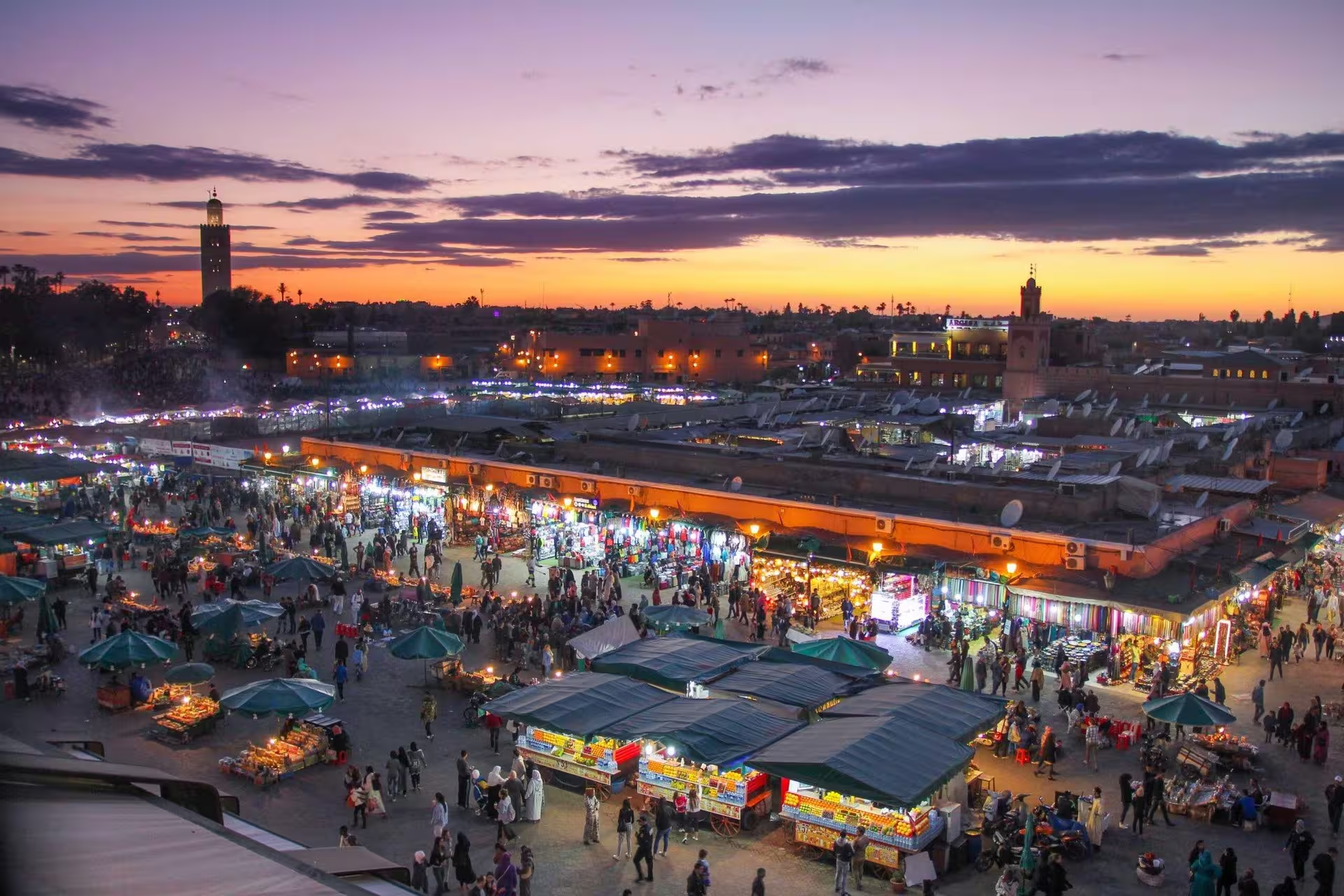
There is a moment, somewhere between the call to prayer drifting over the rooftops and the first sip of mint tea poured from a great height, when you stop wondering whether Marrakech is safe and start wondering why no one warned you it would be this beautiful.
The question of Marrakech safety is the one almost every traveler asks before stepping onto Moroccan soil, and it deserves a thoughtful answer.
Not a reassurance, not a brochure-perfect promise, but the honest perspective of people who live here, drive these roads weekly, and curate journeys for guests from London, New York, Sydney, and Singapore.
So let us answer it the way a trusted local friend would: yes, Marrakech is safe to travel to, and Morocco as a whole remains one of the most welcoming, surprisingly orderly, and quietly fascinating destinations on the African continent. But “safe” deserves nuance, because the Marrakech that exists in the imagination—chaotic, exotic, edge-of-the-map—is not quite the Marrakech you will actually walk through.
The real city is something far more interesting: a place where ancient medina alleys curve around five-star riads, where security officials greet you with a hand on the heart, and where the only real risk to your evening is being seduced into buying one more handwoven rug than your suitcase can carry.
This is our long-form, locally informed answer to the most-Googled question about Morocco travel safety, written for travelers who plan to experience it the way it deserves to be experienced.
Safety Score Overview at a Glance
|
Topic |
Reality on the Ground |
|
Violent crime |
Rare |
|
Pickpocketing |
Possible in busy souks and around Jemaa el-Fnaa |
|
Female travel |
Generally safe, with normal precautions |
|
Solo travel |
Comfortable, especially with a private driver |
|
Terrorism risk |
Low, monitored by Moroccan security services |
|
Night safety |
Good in busy areas (Gueliz, Hivernage, main medina streets) |
|
Scams |
Common but harmless, easy to sidestep |
|
Taxi safety |
Petit Taxi is safe; Careem and InDrive widely used |
|
Tap water |
Stick to bottled water |
|
Medical emergencies |
Good private clinics in Gueliz and Hivernage |
Is Marrakech Safe? The Honest, Locally Informed Answer
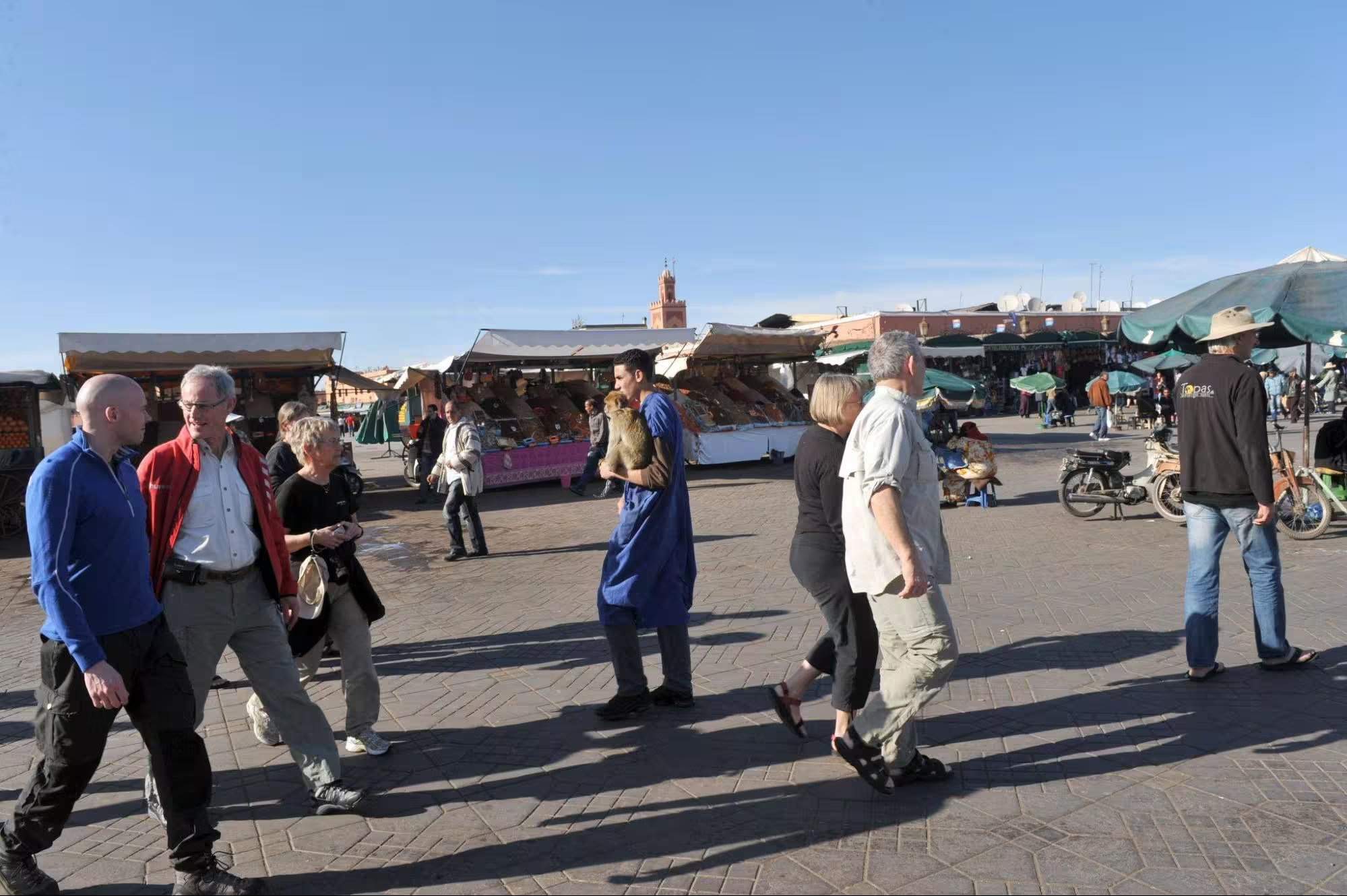
Marrakech, like any major destination, rewards awareness rather than carelessness. What makes the city feel intense is not danger, but density: centuries of history compressed into a maze of medina alleys, crowded souks, artisan workshops, scooters, calls to prayer, and a constant rhythm of movement that can feel overwhelming at first and fascinating once you settle into it.
In statistical terms, Morocco safe is the accurate description for tourists, and Marrakech in particular benefits from a highly visible safety and security presence in tourist areas. Plain-clothed officers patrol the main squares; the Brigade Touristique (tourist police) walks the souks in pairs; uniformed agents stand at the medina gates of Bab Doukkala, Bab Agnaou, and Bab er Robb, and at the entrances to major hotels in Gueliz and Hivernage. Violent crime against foreign nationals is rare. The most common safety concerns are petty crime, including pickpocketing in crowded places, occasional scams around Jemaa el-Fnaa, and the kind of opportunistic nuisances any traveler learns to brush off in a busy city. Major Western governments, including the U.S. State Department and the UK foreign office, currently advise normal travel precautions, with the same exercise increased caution language they apply to most European destinations. These are the latest travel advisories any prudent visitor should review before departure.
Travelers who arrange their journey through a private Morocco tour operator experience an additional layer of insulation: a dedicated driver, vetted accommodations, pre-booked guides, and someone on the ground who knows which alley to take when the medina swells with crowds. That structural advantage is one of the quiet reasons luxury travelers consistently rate Morocco travel safety as easier than expected, even when the country is also their most adventurous trip in years.
Want a clearer picture for your own trip? Speak with a Morocco specialist to discuss neighborhoods, riads, and the right rhythm for your dates.
Why Choose a Curated Morocco Experience
There is a version of Morocco that exists for backpackers, taxi-hagglers, and travelers with infinite time and a tolerance for missteps. It is real, and it has its romance. But it is not the Morocco our guests come for. The version we have built our craft around is a country experienced through the right doors, and in Marrakech, the right doors matter more than almost anywhere else on earth.
A curated experience begins with a private driver waiting at Marrakech Menara Airport, your name printed discreetly on a card. You step into a boutique riad in the medina where the noise of the souks dissolves behind a heavy wooden door into the cool hush of an orange-tree courtyard.
A private guide is matched to your interests: the carpet seller who is honest, the cooking teacher with the best hand for tagine, the rooftop that catches the last gold of the day.
Beyond Marrakech, this same philosophy unfolds across the country. Whether crossing the High Atlas to reach the Sahara Desert, wandering the blue lanes of Chefchaouen, or watching the wind shape the dunes from a private terrace at a luxury desert camp, the experience is shaped, invisibly, by local expertise. Authentic Morocco is not a thing you stumble upon. It is a thing arranged with care. Our approach to private Morocco itinerary planning is the difference between a holiday and a journey.
A Sample Day-by-Day Journey Through Safe, Luxurious Morocco
The itinerary below is illustrative rather than fixed. Every journey we craft is private and tailor-made, but it gives a sense of how safety, comfort, and discovery weave together when Morocco is traveled the right way.
Day 1, Arrival in Marrakech: The First Encounter
Your driver meets you at Marrakech Menara Airport (only fifteen minutes from the medina), where the formalities are quietly efficient.
The road skirts the new town’s wide boulevards through Hivernage, past the Royal Theater and the Cyber Park, before turning toward the ochre walls of the old medina. Within thirty minutes you have crossed from the modern into the medieval, and your riad’s door opens to a courtyard of dappled light, plunge pool, and the soft welcome of mint tea. There are no crowds here. Only stillness, and a balcony overlooking rooftops that turn copper at sunset.
Day 2, Marrakech Slowly: Medina, Gardens, and a First Taste of the Souks
A morning walk with your private guide unfolds the layers of the medina: the Ben Youssef Madrasa, the Saadian Tombs, the spice quarter, the dyers’ alley where wool hangs in violet and saffron loops. The souks at midday can feel kinetic, but with a guide at your elbow you walk through them as a knowing observer rather than a target. Family-run shops since the seventeenth century, scams to politely sidestep, the trick of keeping an eye on your belongings without surrendering the pleasure of the place: your guide handles all of it. Afternoon brings the Majorelle Garden’s cobalt walls in Gueliz, or perhaps a calmer hour at the Bahia Palace. For more inspiration visiting Marrakech, our guide to things to do in Marrakech maps the highlights with a curator’s eye.
Day 3, Marrakech Refined: Cooking, Crafts, and a Hammam Ritual
A day when Marrakech turns intimate. A private Moroccan cooking class in a courtyard kitchen teaches you the architecture of a tagine, the slow geometry of onions, the patience of preserved lemon. Afternoon brings a visit to a master craftsman in the medina, where the rituals behind Morocco’s living crafts come to life, from zellige tile to leather. The evening closes with a hammam ritual in a heritage spa, a uniquely Moroccan act of softening, scrubbing, and surrender.
Day 4, Over the Atlas Mountains
You leave Marrakech behind in a private SUV, climbing past olive groves and Berber villages into the Atlas Mountains. The Tizi n’Tichka pass opens onto views that have humbled travelers for a thousand years. A hilltop kasbah serves lunch; the afternoon brings the ancient ksar of Aït Benhaddou and a glimpse of nearby Atlas Studios, where some of the great desert films of the century were shot. By evening you arrive in the Skoura palm grove, and the doors of a palm-grove lodge close behind you on a world of birdsong and silence.
Day 5, Into the Desert
The landscape opens. Through the Valley of the Roses, past the Dadès Gorge, the road curves toward the Sahara. Late afternoon brings the dunes, first as a smudge on the horizon, then as a wall of gold. A 4×4 carries you the final stretch to a luxury desert camp where tents are dressed with kilims, copper basins, and proper beds. Camels wait at the edge of the dunes for the sunset ride. Dinner is served under a canopy of stars so dense it feels almost rude.
Day 6, Sahara Sunrise and the Return West
Dawn wakes you before the camp does. You climb the nearest dune in time to watch the light pour over the Sahara like liquid honey. Breakfast in the sand, then a slow journey back toward Ouarzazate, the Atlas, and eventually the coast. Or, depending on the rhythm of your tailored itinerary, onward to Fez, to Essaouira, or to one of the oases and palm groves that punctuate Morocco’s south.
Day 7, Coastal Air in Essaouira
When the journey turns west, Essaouira is its quiet reward: a salt-bleached port town of Atlantic light, working fishermen, and a medina that feels gentler than Marrakech’s. There is wind here, and gulls, and grilled sardines on the dock. A walk along the ramparts at golden hour reminds you that Morocco contains more weather than most countries contain entirely.
Ready to shape your own version of this journey? Our team handles every detail of luxury Morocco travel planning, from riad selection to private guide pairing. Send us a note and we will be in touch within 24 hours.
Where You Sleep: The Riads, Lodges, and Camps That Define a Moroccan Journey
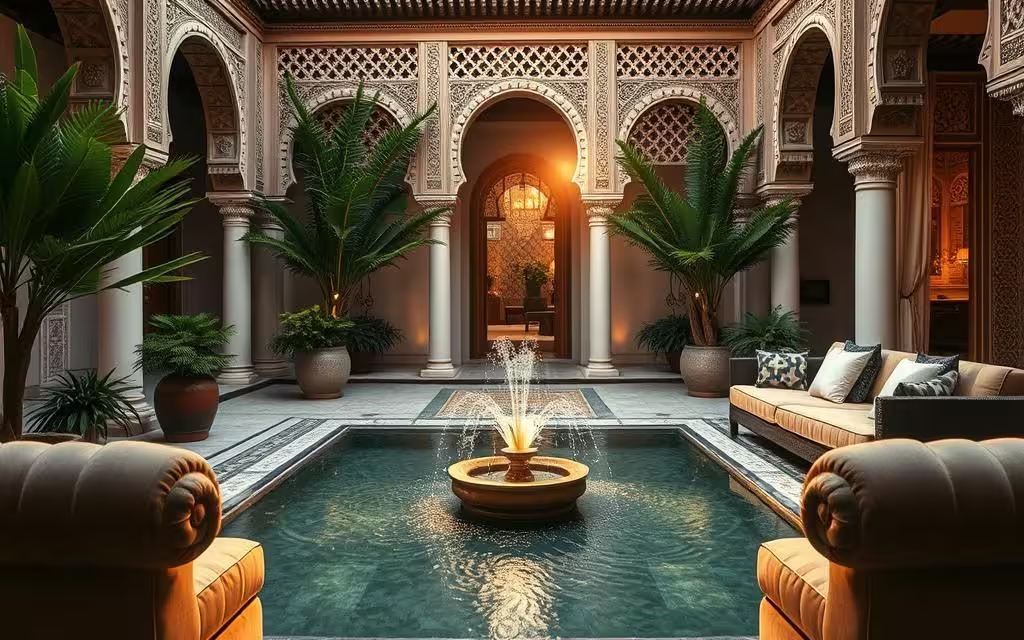
Accommodation in Morocco is not infrastructure. It is part of the journey itself. A riad is not a hotel. It is a private house built around a courtyard, traditionally invisible from the street, where every architectural decision pulls the eye inward and upward. To stay in one is to inherit, for a few nights, a way of living that has shaped Moroccan domestic life for centuries.
The riads we work with in Marrakech are heritage homes, restored with the gentleness they deserve. Cool tadelakt walls, carved cedar ceilings, plunge pools that catch the sky, rooftop terraces where breakfast arrives on a brass tray. Many sit within ten minutes’ walk of Jemaa el-Fnaa or the artisan quarters near Bab Doukkala, yet within their walls the city falls away into birdsong and the soft pour of a fountain. For travelers who prefer a more contemporary setting, the boutique hotels of Hivernage and the design properties of Gueliz offer a different but equally polished sensibility.
Beyond the city, the rhythm of accommodation shifts. In the Atlas Mountains, a design lodge might offer fireplaces, hand-loomed blankets, and views that rearrange your idea of altitude. In the desert, luxury Sahara camps deliver proper beds, hot showers, and gastronomy you would not expect from a tent floor of sand. In Skoura, a palm-grove lodge frames the High Atlas through its windows. In Fez, a medina riad places you within whispering distance of one of the oldest universities on earth. Each is an experience, not a base.
What’s Included in the Experience
- Private camel rides into the dunes at sunset, met afterwards with tea and warm bread on a Berber rug
- A private 4×4 with a dedicated driver-guide throughout the journey, replacing the need for public transport or unmetered taxi rides
- Visits to remote Berber villages where you are received as a guest, not a customer
- Cooking classes, slipper-making workshops, and zellige tile demonstrations with master artisans
- Long, generous Moroccan meals in hidden courtyards and rooftop dar restaurants
- Mountain trekking from gentle valley walks to multi-day routes (see our Atlas Mountains trekking journeys for the full range)
- A private hot-air balloon flight over the Marrakech palmeraie at first light, for those who want to begin a day suspended above it
- Time built deliberately into the itinerary for nothing: for a long lunch, for an unplanned wander, for the moment that makes the trip
Best Time to Visit Marrakech and Morocco
Morocco offers four genuine seasons, each with its own character. The right time depends less on weather and more on the kind of journey you wish to have.
Spring (March to May)
The most beloved season. Almond and rose blossoms open across the south, the High Atlas is still snow-capped, and Marrakech enjoys long warm days without midsummer heat. Wildflowers carpet the valleys; the desert is still cool enough for daytime walks among the dunes. If only one season is possible, this is the one.
Summer (June to August)
Marrakech becomes hot, often very hot, and the Sahara is at its most demanding. Yet this is also the season of cool mountain escapes. The Atlas Mountains, Imlil, the Ait Bouguemez “Valley of Happiness,” and the Atlantic coast at Essaouira come into their own. Summer journeys lean toward altitude and ocean rather than red city and desert.
Autumn (September to November)
The second great season. The heat softens, the light turns golden, the desert becomes ideal again. September can still be warm; by November, Marrakech evenings call for a light wrap on the rooftop. Harvest season fills markets with dates, pomegranates, and quince.
Winter (December to February)
A surprising favorite. Marrakech is mild and sun-drenched by day, fresh by night. Riad fireplaces are lit, hammams feel more luxurious than ever. The Sahara is cold at night but spectacularly clear by day. The High Atlas wears snow, and the Anti-Atlas in winter becomes one of North Africa’s most beautiful and underrated trekking regions.
Transportation and Comfort: Why a Private Driver Changes Everything
The single most consequential choice a traveler can make in Morocco is how to move through it. The country’s distances are deceptive. Marrakech to the Sahara is not a quick hop but a full, scenic day’s drive through some of the most cinematic landscapes on earth. The journey is part of the experience, and how you make it shapes the entire trip.
A private, professional driver-guide transforms Morocco. You travel in a comfortable, climate-controlled SUV or premium minivan, with stops timed to the light, the appetite, and the rhythm of your day rather than a bus schedule. There are no Petit Taxi negotiations, no Careem or InDrive surge moments, no train timetables to decode, no logistics to carry on your shoulders. Your driver knows the road, the weather over the Tizi n’Tichka, the village with the best Berber bread, and which viewpoint will be empty at 4 p.m.
For travelers concerned about general safety, this matters more than any other factor: a private driver eliminates almost every situational vulnerability associated with travel in any country, including late-night transport, unfamiliar routes, and language barriers in moments of friction. It is one of the quiet reasons our guests so consistently describe travel safety in Morocco as easier than expected, and the country itself as the easiest “exotic” destination they have ever traveled to.
Frequently Asked Questions
Is Marrakech safe to travel to in 2026?
Yes. Safety in Marrakech in 2026 is generally safe by every meaningful measure. Most government travel advisories, including those from the U.S., the UK, and Canada, recommend normal precautions or exercise increased caution, the same baseline they apply to most major European cities. Violent crime against tourists is rare. The most common issues are petty crime, occasional scams in tourist areas, and the kind of bustle that any large medina produces. With a private guide, a trusted driver, and well-chosen accommodation, safety in 2026 is comparable to any well-managed Mediterranean destination.
Is Morocco safe for tourists?
Yes, Morocco is safe for tourists, and has been for decades. The country invests heavily in tourism security, particularly in Marrakech, Fez, Casablanca, Tangier, and the coastal towns. The Moroccan tourist police (Brigade Touristique) patrol the medinas in plain clothes and uniform. Travelers who use reputable accommodations, vetted guides, and pre-arranged transport rarely experience anything beyond minor inconveniences.
Is Morocco safe for female travelers?
Yes, Morocco is safe for female travelers, including those who travel alone, and we have hosted many such guests over the years. Women may receive unwanted attention in the form of comments or persistent vendors, particularly in busy souks and crowded places. Wearing loose-fitting clothing that covers shoulders and knees, walking with confidence, and avoiding poorly lit alleys late at night will resolve almost every concern. Traveling with a private guide and driver removes most situational discomfort entirely, and many of our female guests describe the trip as easier than anticipated.
Is Morocco safe for solo travelers?
Yes. Solo travelers, both male and female, find Morocco a rewarding destination, and a curated private journey is especially suited to solo travel because it removes logistical strain and gives you a trusted local contact throughout. Solo guests on a private itinerary typically report feeling more at ease in Morocco than in many European capitals. It is a Muslim country with a long, deep tradition of hospitality toward visitors.
What are the most common scams to be aware of in Marrakech?
The classics are gentle rather than dangerous: a scammer offering their services as an unsolicited guide and then demanding payment, the “tannery is closed, follow me to another one” routine near Bab Debbagh, credit card fraud at low-end establishments, and aggressive haggle tactics in the souks. The simplest defense is to use a guide arranged through your travel operator, pay in cash at small vendors, and politely but firmly decline anyone offering unsolicited help on the street. Watch out for scams that begin with someone insisting a monument is closed.
Are the souks of Marrakech safe?
Yes. The souks are safe, lively, and one of the great pleasures of the city. Stay aware of your surroundings, keep an eye on your belongings in crowded passages, and avoid carrying large amounts of cash in an open bag. Pickpocketing and the occasional snatch of a loose phone are the only realistic concerns, and they are uncommon. With a private guide walking the souks alongside you, the experience becomes purely a pleasure.
Has there been any recent terrorist attack in Morocco?
Attacks in Morocco against major tourist areas have not occurred in many years. The country maintains a robust security apparatus and is widely considered one of the most stable nations in North Africa. Travel advisories note the theoretical possibility that terrorists may target crowded places anywhere in the world, but this is standard language applied globally and does not reflect a heightened Morocco-specific risk. Incidents involving tourists in street attacks are extremely rare.
Is Marrakech safe at night?
Yes, particularly in well-trafficked areas. Jemaa el-Fnaa is one of the most alive places in Morocco after dark, full of food stalls, musicians, and storytellers. The main streets of the medina remain busy until late, and Gueliz and Hivernage have a lively evening restaurant scene. As anywhere, remain alert, avoid empty alley routes, walk in pairs when possible, and return to your riad with a pre-arranged escort if unsure. Most riads will happily send a staff member to meet you at the medina’s edge or at the nearest medina gate. Burglary in well-chosen riads is essentially unheard of, as they are staffed around the clock.
Are taxis in Marrakech safe?
Yes. The red Petit Taxi is regulated and inexpensive within city limits; insist on the meter (“compteur, s’il vous plaît”) or agree on a price before leaving. Careem and InDrive operate in Marrakech and are popular with both locals and visitors for the transparency of the fare. For longer journeys (airport, Atlas Mountains, Essaouira), a private driver through your travel operator is significantly more comfortable and removes any negotiation.
Do I need travel insurance for Morocco?
Yes. Comprehensive travel insurance is strongly recommended for any international trip, including Morocco. It covers medical emergencies, trip interruption, and personal belongings, peace of mind that costs little and changes much. We advise all guests to arrange it before departure. Private clinics in Gueliz and Hivernage offer excellent medical care for travelers.
What are Morocco’s entry requirements?
Most visitors from the U.S., Canada, UK, EU, and Australia can enter Morocco visa-free for stays of up to 90 days, with a passport valid for at least six months beyond the date of entry. Always verify current entry requirements with your consulate before departure, as policies can evolve. Checking local news in the weeks before travel is also a sensible habit.
Is it safe to drink the water and eat the food?
Bottled water for drinking is the simple rule, and it is widely available and inexpensive. Moroccan cuisine is one of the great pleasures of the journey: fresh, varied, and largely safe when eaten at riads, established restaurants, and recommended food stalls. Your guide will help you navigate the difference between adventurous and unwise. If anything feels off, Moroccans themselves are quick to point you toward the right table.
Are there laws travelers should be aware of?
A few simple cultural notes go a long way. Public displays of affection are best kept modest. Same-sex relationships are technically illegal in Morocco, though enforcement is rare and discreet travelers of all orientations visit without issue every year. Drug use is a serious offence that can lead to prosecution, and any encounter with police is best handled by quietly following instructions and showing your passport. If you are ever uncertain, your guide or driver will navigate the moment for you.