dakhla morocco kitesurfing

Dakhla Morocco Kitesurfing: Where the Sahara Meets Perfect Wind

Dakhla kitesurfing exists in a category of its own. Imagine a 40-kilometer lagoon of impossibly flat water, trade winds blowing 300+ days per year, and the Sahara Desert rising from the shoreline in golden dunes. This remote outpost in Morocco’s deep south has become one of the world’s most celebrated kitesurfing destinations – a place where beginners learn in waist-deep shallows, freestylers throw unhooked tricks on glass-smooth water, and every rider leaves transformed by conditions that seem designed specifically for kiting.59b5e5ecc6a62eb3392203d852862050d8b67bdb47b751ce14b3b50d06440c56?ts=1772723294

Update 2026: Dakhla’s kite infrastructure continues expanding with new camps, improved facilities, and growing international recognition. The lagoon remains as perfect as ever; the wind keeps blowing. Here’s your complete guide to kitesurfing’s Saharan paradise.

Why Dakhla Is a Global Kitesurfing Mecca

The numbers tell part of the story: 300+ wind days annually. But statistics don’t capture why riders return to Dakhla year after year, why professionals choose it for training, why beginners progress faster here than anywhere else.

The lagoon: Dakhla’s 40-kilometer lagoon creates conditions found almost nowhere else on earth. Protected from ocean swell, the water stays flat regardless of wind strength. You can ride powered up in 30 knots on water as smooth as a mirror. For freestyle, for learning, for pure riding pleasure, this flatness transforms the sport.

The consistency: Wind doesn’t just visit Dakhla – it lives here. The alizé trade winds blow reliably from spring through autumn, with even winter delivering rideable days. Book a week; ride almost every day. That consistency accelerates progression like nothing else.ecef07d2a85ddcd7f3f2d1c2b066145f825b99a57137fed3bbcef9d151974ba8?ts=1772723352

The simplicity: Dakhla strips kitesurfing to its essence. Wake up, check the wind (it’s blowing), rig up, ride for hours, eat, sleep, repeat. No distractions, no complicated logistics, no fighting for sessions between other commitments. This focus creates flow states that busy lives rarely allow.


The community: Riders from every continent converge on Dakhla’s camps. The shared obsession with wind and water creates instant connection. Meals become strategy sessions; evenings become trick analysis. You’ll leave with friends from countries you’ve never visited.

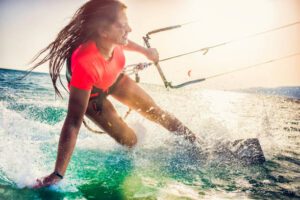
The otherworldly setting: The Sahara rises directly from the lagoon’s edge. Dunes glow orange at sunset while you’re still on the water. The landscape feels extraterrestrial – Mars with better wind conditions. Nowhere else looks quite like this.

Understanding the Dakhla Lagoon

Geography and Layout

The Dakhla lagoon occupies a peninsula extending into the Atlantic Ocean. The peninsula creates a protected body of water roughly 40 kilometers long and varying in width from a few hundred meters to several kilometers.

Key characteristics:

  • Flat water: The peninsula blocks Atlantic swell, creating mirror-smooth conditions

  • Shallow areas: Extensive shallows (waist to chest deep) perfect for learning and low-consequence tricks

  • Deeper zones: Areas for jumping and more advanced riding

  • Sandy bottom: Soft landings, no reef concerns

  • Warm water: 20-24°C year-round; rarely need more than a shortyb5478abb945ef27eec71f4b7ccd896d090d887e2aab85c87a74698081738bd9b?ts=1772723372

The Spots

Multiple kite zones exist along the lagoon, each with different characteristics:

Speed Strip / Flat Water Zone

The most famous section – a designated flat-water area used for speed records and freestyle progression.

What to expect: Butter-flat water, dedicated rescue coverage, organized sessions. This is where the magazine photos come from.

Best for: Freestyle progression, unhooking, speed sailing, flat-water jumping

Beginner Zone

Dedicated shallow areas where learners can stand up if needed.

What to expect: Waist-deep water, patient instructors, soft sandy bottom, separate from advanced riders

Best for: First-time kiters, early progression, building water confidence

Main Riding Areas

The bread-and-butter zones where most sessions happen.

What to expect: Flat to lightly choppy water (depending on wind strength), mixed skill levels, plenty of space

Best for: All-around riding, practicing, enjoying consistent conditions

Lassarga

Slightly north of the main Dakhla zone, offering different wind angles and often fewer riders.

What to expect: Sometimes emptier conditions, slightly different wind direction

Best for: Riders seeking variety or escaping crowds during peak season

Ocean Side

The Atlantic side of the peninsula offers wave riding for those seeking variety.

What to expect: Ocean swell, wave-riding conditions, more challenging than the lagoon

Best for: Experienced riders wanting strapless/wave sessions

Wind Conditions: The Dakhla Advantage

The Trade Wind Engine

Dakhla sits in the path of the alizé trade winds – consistent northerly/northeasterly winds that blow along Africa’s Atlantic coast. These winds result from global atmospheric patterns, making them remarkably predictable.

What this means for you: The wind isn’t random. It follows patterns. When it’s forecast to blow, it blows. When camps say conditions are good, they’re almost always right.5d091744807cb977c3494307a52bec4009ea33f80190f7a6d9a56a3942e59b87?ts=1772723387

Wind Statistics

Annual wind days: 300+ (some sources claim 330+)

Typical wind range: 15-30 knots

Peak months: April-October (most consistent, strongest)

Off-peak: November-March (still excellent, slightly less consistent)

Wind direction: Side-offshore to side-shore (ideal for kiting)

Seasonal Breakdown

April-June: Season ramps up. Consistent wind, pleasant temperatures, fewer crowds than peak summer.

July-August: Peak season. Strongest, most consistent wind. Hottest temperatures. Busiest camps.

September-October: Excellent conditions continue. Crowds thin slightly. Many experienced riders consider this the sweet spot.

November-March: Wind remains good but less consistent. Some days are epic; occasional light-wind gaps. Fewer crowds, cooler temperatures (still pleasant).

Daily Pattern

Typical Dakhla wind day:

  • Morning: Wind builds from late morning

  • Midday-afternoon: Peak wind (often 20-28 knots)

  • Evening: Wind continues until sunset or slightly drops

Early morning sessions are sometimes possible in lighter wind; afternoons are the reliable window.

Kitesurfing Dakhla by Skill Levela8085cfe4f26181c41a5e1685cfb70d8ae96346d49dbb6f870a64da3832597b6?ts=1772723440

Beginners: The Perfect Classroom

Dakhla may be the world’s best place to learn kitesurfing. The combination of consistent wind, flat water, and shallow areas creates ideal learning conditions.

Why learn here:

  • Flat water: No waves to complicate early attempts

  • Standing depth: Shallow areas allow standing when needed

  • Consistent wind: Lessons rarely cancel due to conditions

  • Warm water: No cold-related fatigue or thick wetsuits

  • Dedicated zones: Beginners separated from advanced riders

What to expect:

  • Timeline: Most students ride independently within 9-15 hours of instruction

  • Format: Camps offer multi-day courses (typically 3-5 days)

  • Equipment: Modern training kites and boards provided

  • Instruction: IKO-certified instructors at reputable camps

Typical progression at Dakhla:

  • Day 1-2: Kite control, body dragging

  • Day 3-4: Water starts, first rides

  • Day 5+: Building confidence, longer rides, basic transitions

Cost: €300-500 for a complete beginner course2242a069332d8083b3976bb1bf15ed6c2cf924ef0fd68f847ccc1ff890aabda2?ts=1772723447

Intermediate: Accelerated Progression

Dakhla’s consistent conditions accelerate intermediate progression dramatically.

Why intermediates thrive:

  • More water time: Consistent wind means more hours riding

  • Flat water confidence: Attempt tricks without wave anxiety

  • Soft landings: Sandy bottom and flat water reduce crash consequences

  • Community learning: Watch and learn from advanced riders

Skills to develop:

  • Transitions: Toeside, backroll transitions, direction changes

  • Jumping: Flat water allows focus on technique without timing waves

  • Unhooking: Dakhla’s flat water is ideal for first unhook attempts

  • Board-offs: Low-consequence environment for learning

Tips for intermediates:

  • Book at least one week – progression requires time

  • Consider coaching sessions to accelerate specific skills

  • Ride the flat-water zones rather than choppier areas

  • Film sessions for analysis (many camps facilitate this)

Advanced: Freestyle Paradise

Professional riders choose Dakhla for training, and the reasons are obvious once you ride here.

Why advanced riders come:

  • Trick progression: Flat water allows the biggest unhooked tricks

  • Consistent powered conditions: Build muscle memory through repetition

  • Speed potential: World records have been set on Dakhla’s flat water

  • Video capability: Perfect conditions for filming

  • Community of pros: Train alongside sponsored riders

What advanced riders do:

  • Kite loops on flat water

  • Unhooked handle passes

  • Megaloop combinations

  • Speed sailing attempts

  • Strapless freestyle (wave board on flat water)

Coaching opportunities: Several professional riders offer high-level coaching at Dakhla camps. If you want to learn from the best, this is where they train.b65cb481d9fd7dca9585dd69a443b0bb69abb5c56d728a275195b92c02176753?ts=1772723457

Best Time for Casablanca Surfing

Year-Round Possibility

Casablanca’s beaches receive swell throughout the year. Unlike destinations that go flat in summer, you can find rideable waves any month.

Peak Season: October to March

Winter brings the biggest, most consistent swells. Atlantic storms generate groundswell that lights up the beach breaks with overhead-plus conditions. Experienced surfers will find the most challenging waves during these months.

Conditions: Larger waves, cooler water (16-18°C), 3/2 or 4/3 wetsuit required.

Shoulder Seasons: April-May, September

Pleasant conditions with moderate swell. Good balance of wave quality and comfortable weather. Less crowded than winter peaks.

Conditions: Medium-sized waves, warming/cooling water, 3/2 wetsuit usually sufficient.

Summer: June to August

Smaller, gentler waves suit beginners and longboarders. The ocean calms, the weather heats up, and conditions favor mellow sessions rather than performance surfing.

Conditions: Smaller waves, warmer water (20-22°C), spring suit or shorty sufficient.

Daily Timing

Mornings typically offer the cleanest conditions. Sea breezes develop through the day, creating chop by afternoon. Early sessions at Dar Bouazza – before the wind comes up, before the crowds arrive – provide the best experience.

Combining Surf with Casablanca Explorationabb95a36871add618b6be44a70eb4585235abae14f459e4a86b2abedca9f449c?ts=1772721337

Casablanca surfing integrates naturally with city exploration. Here’s how to balance both:

The Hassan II Mosque

One of the world’s largest mosques, with stunning oceanfront architecture. Non-Muslims can tour the interior (one of few Moroccan mosques allowing this). The mosque sits on the corniche, making it easy to combine with nearby surf checks.

Art Deco Architecture

Casablanca’s downtown hosts remarkable Art Deco buildings from the French colonial period. Walking tours reveal architectural gems hidden among the urban bustle.

The Old Medina

Smaller and less touristed than Marrakech or Fez, Casablanca’s medina offers authentic market atmosphere without overwhelming crowds.

Rick’s Café

Yes, it exists – a recreation of the famous film setting. Touristy, but atmospheric for fans of classic cinema.

Food Scene

Casablanca’s dining spans from street food to fine dining. Fresh seafood along the corniche, traditional Moroccan cuisine in the medina, international options throughout the modern city.

Sample Surf + City Itinerary

Day 1: Arrive Casablanca, evening medina exploration Day 2: Early surf at Dar Bouazza, afternoon Hassan II Mosque, dinner on the corniche Day 3: Morning surf session, afternoon Art Deco walking tour Day 4: Final dawn patrol, airport departure

This rhythm maximizes both wave count and city experience.
The Dakhla Camp Experience

How Camps Work

Dakhla kitesurfing operates primarily through dedicated camps. Unlike destinations where you book a hotel and figure out kiting separately, Dakhla camps provide integrated experiences:

Standard inclusions:

  • Accommodation (various standards)

  • Breakfast and dinner

  • Kite storage and rigging areas

  • Rescue boat coverage

  • Transport to/from kite spots

  • Community spaces

Optional additions:

  • Lessons and coaching

  • Equipment rental

  • Yoga and fitness

  • Massage and wellness

  • Desert excursions

Choosing a Camp

Dakhla hosts numerous camps ranging from budget to boutique. Key differentiators:

Location on the lagoon: Some camps sit directly on prime flat-water spots; others require transport. Direct access increases convenience.

Accommodation quality: Ranges from basic shared rooms to boutique private bungalows. Prices reflect the difference.

Rescue boat coverage: Essential for safety. Reputable camps maintain dedicated rescue boats during sessions.

Community and vibe: Some camps attract party crowds; others emphasize chill atmospheres. Research matches your preference.

Instruction quality: If learning or seeking coaching, investigate instructor credentials and approach.

Food: Quality varies significantly. Some camps serve excellent meals; others provide basic fuel.

Camp Price Ranges

Budget camps (€50-70/night): Basic rooms, shared facilities, functional kite infrastructure. Good for riders prioritizing value over comfort.

Mid-range camps (€80-120/night): Comfortable private rooms, solid amenities, reliable operations. The sweet spot for most visitors.

Premium camps (€150-250/night): Boutique accommodation, premium service, often better locations. For those wanting comfort alongside conditions.

Week packages: Most camps offer 7-night packages with better per-night rates. These typically include airport transfers, full board, and kite facilities.

What Camp Life Looks Like

A typical day at a Dakhla kite camp:

8:00: Wake up, breakfast on the terrace 9:00: Check conditions, stretch, prepare gear 10:00: Wind building – first session begins 13:00: Break for lunch, rest during hottest hours 15:00: Afternoon session – often the best wind 18:00: Sunset session or wind down 19:30: Communal dinner, session stories 21:00: Relax, early bed for tomorrow’s sessions

The rhythm is simple: kite, eat, sleep, repeat. Days blur together in the best way.

Getting to Dakhla

By Air

Dakhla Airport (VIL) receives flights primarily from Casablanca.

Royal Air Maroc: The main carrier, operating daily flights from Casablanca (approximately 1.5 hours). Connect from international flights in Casablanca.

Seasonal charters: Some European cities operate direct charter flights during peak season (primarily French and Spanish connections).

Booking tips:

  • Book early for peak season; flights fill up

  • Check baggage policies for kite equipment

  • Consider arriving in Casablanca a day early to avoid connection stress

By Road

Overland from northern Morocco: Technically possible but not recommended for most travelers.

  • Distance: Approximately 1,200km from Marrakech

  • Drive time: 12-15 hours minimum

  • Route: Good roads but extremely long

  • Consideration: Better suited for extended Morocco road trips than dedicated kite trips

Transfers

Airport to camps: Most camps arrange transfers included in packages or for modest additional cost (€20-40 round trip).

Between camps/spots: Camps typically transport riders to different lagoon spots as conditions dictate.

Practical Information

What to Bring

Kite equipment:

  • Kites: 9m and 12m cover most conditions; add 7m for strong wind days

  • Board: Twin-tip primary; strapless/surfboard optional for ocean sessions

  • Harness: Waist or seat per preference

  • Pump, repair kit, spare lines

Personal gear:

  • Sunscreen: High SPF, reef-safe, waterproof (you’ll burn fast)

  • Rashguard or lycra: Essential sun protection

  • Wetsuit: Shorty/spring suit sufficient; often board shorts work

  • Sunglasses with strap

  • Hat for off-water hours

Practical items:

  • Adaptor plugs (Moroccan/European standard)

  • Basic first aid

  • Any medications you need (pharmacies exist but selection limited)

  • Cash (euros and Moroccan dirhams; ATMs available but limited)

Equipment Rental

Quality rental available: Dakhla camps stock current-season equipment from major brands (Duotone, Core, Cabrinha, etc.).

Typical costs:

  • Full setup (kite, board, harness): €40-60/day

  • Weekly rates available at most camps

When rental makes sense:

  • Beginners (course includes equipment)

  • Testing new gear styles

  • Avoiding airline board fees/hassle

  • Short trips where transport hassle exceeds rental cost

When to bring your own:

  • Extended stays (cost adds up)

  • Specific equipment preferences

  • Advanced riders wanting familiar gear for progression

Health and Safety

Sun exposure: Intense and relentless. Sunburn is the most common health issue. Protect aggressively.

Dehydration: Drink constantly. The wind creates evaporative cooling that masks how much you’re sweating.

Water safety: Reputable camps maintain rescue boat coverage. Respect the ocean side’s additional challenges.

Medical facilities: Basic clinic in Dakhla town. Serious issues require evacuation to larger cities. Travel insurance essential.

Food/water: Stick to bottled water. Camp food is generally safe; street food requires normal developing-world caution.

Budget Expectations

One-week Dakhla trip (mid-range):

Category

Cost Range

Flights (from Europe)

€300-600

Camp package (7 nights, full board)

€600-900

Equipment rental (if needed)

€250-350

Extras (drinks, excursions, tips)

€100-200

Total

€1,250-2,050

Two-week trip: Better per-day value with camp packages; approximately €2,000-3,500 total.

Budget options: Possible at €1,000/week with cheapest camps and own equipment.

Premium options: €3,000+/week at boutique camps with coaching.

Beyond Kitesurfing

Dakhla exists primarily for kitesurfing, but alternatives exist for rest days or variety:

When the Wind Drops

Surfing: The Atlantic side offers wave riding. Not world-class, but enjoyable for variety.

Fishing: Dakhla is renowned for fishing – both shore and boat options available.

SUP: Flat lagoon is perfect for stand-up paddling on calm days.

Yoga: Many camps offer yoga sessions.

Rest: Sometimes the best option is doing nothing. The remoteness encourages genuine relaxation.

Desert Excursions

Day trips into the Sahara are available:

  • Visit nomadic camps

  • Explore desert landscapes

  • Sunset/sunrise in the dunes

These excursions reveal the extraordinary landscape surrounding the lagoon and provide memorable contrast to water-focused days.

Dakhla Town

Dakhla town offers basic urban amenities:

  • Restaurants and cafes

  • Markets

  • Pharmacies and ATMs

  • Mosque and local life

It’s functional rather than charming – most visitors spend limited time there. But it provides what you need if camp life feels too isolated.

Dakhla vs. Other Kitesurfing Destinations

Dakhla vs. Essaouira

Factor

Dakhla

Essaouira

Water

Flat lagoon

Choppy/waves

Wind consistency

300+ days

Seasonal (Apr-Sep)

Learning conditions

World-class

Challenging

Cultural activities

Minimal

UNESCO medina

Remoteness

Very remote

Accessible

Best for

Pure kiting, progression

Kite + culture balance

Choose Dakhla if: Maximum riding is your priority, you want flat water, you’re learning, or you seek focused kite trips.

Choose Essaouira if: Culture matters alongside kiting, you enjoy wave riding, or you’re traveling with non-kiters.

Dakhla vs. Other Global Destinations

Dakhla vs. Tarifa (Spain): Tarifa offers similar wind but crowded conditions and no flat water. Dakhla wins for space and water quality.

Dakhla vs. Cabarete (Dominican Republic): Both excellent; Cabarete offers more nightlife and reef-protected flat water. Dakhla has more consistent wind and dramatic setting.

Dakhla vs. Brazil: Brazil’s lagoons compete on flat water. Dakhla offers more consistent wind; Brazil offers more cultural diversity.

Dakhla vs. Egypt: Egypt’s Red Sea spots offer flat water and wind. Dakhla is more remote but equally consistent.

What Our Guests Say

“I’ve kited on four continents. Dakhla is the best flat-water destination on earth – not close, not comparable, simply the best. A week here did more for my freestyle than two years at home. The conditions are freakishly perfect.” – Markus, Germany

“We came as intermediate riders hoping to progress. Left as different kiters. The flat water lets you focus on technique without wave anxiety. I landed my first back roll, first kite loop, first everything. Dakhla is a progression machine.” – Emily, Australia

“The remoteness scared me at first. Sahara Desert? Middle of nowhere? But that isolation becomes the point. No distractions. Just wind, water, and the community of riders. I found my flow state and didn’t want to leave.” – Julien, France

“Beginner course in Dakhla was the best money I’ve spent. Standing in waist-deep warm water, consistent wind, patient instructors – I was riding by day four. Can’t imagine a better place to learn.” – Sara, Netherlands

“Yes, it’s remote. Yes, there’s not much to do besides kite. That’s exactly the point. I came for two weeks, stayed a month. Dakhla gets into your soul.” – Ricardo, Brazil

Planning Your Dakhla Trip

Dakhla kitesurfing rewards planning but doesn’t demand complexity. The key decisions:

When to go: April-October for guaranteed wind; November-March for fewer crowds with good (not perfect) consistency.

How long: One week minimum; two weeks ideal for meaningful progression.

Which camp: Research matches your priorities – budget, location, vibe, instruction quality.

Equipment: Bring your own for extended stays; rent for shorter trips or if testing the destination.

Combining Dakhla with Broader Morocco

For travelers with time, Dakhla integrates into larger Morocco adventures:

Dakhla + Essaouira: Compare flat-water and wave conditions; add cultural dimension.

Dakhla + Marrakech: Bookend your kite trip with the Red City’s medina magic.

Dakhla + Sahara: You’re already in the desert – extend into the dunes.

Dakhla + Atlas Mountains: Contrast water and peaks; surf wind and hike altitude.

Every private Morocco tour we create is fully customizable. We can design journeys that place Dakhla within broader exploration – or help you maximize every moment of a dedicated kite trip.

Start Planning Your Dakhla Adventure

Dakhla Morocco kitesurfing offers conditions that exist almost nowhere else – the flat water, the consistency, the otherworldly setting. Whether you’re learning your first water starts or training for competition, the lagoon rewards everyone who makes the journey.

We’ve been organizing luxury Morocco tours from Marrakech since 2009, including trips that incorporate Dakhla’s legendary conditions. Contact our team to discuss your plans. Tell us your skill level, when you’re traveling, and what interests you beyond kiting. We’ll help design a journey to the world’s best lagoon – and wherever else Morocco calls you.

The wind is blowing. The water is flat. Dakhla is waiting.

Our Location in Morocco

Scroll to Top
Sun Trails
Privacy Overview

This website uses cookies so that we can provide you with the best user experience possible. Cookie information is stored in your browser and performs functions such as recognising you when you return to our website and helping our team to understand which sections of the website you find most interesting and useful.