CLIMBING TOUBKAL – THE WIT AND THE CHAFF
The internet abounds with advice on how to climb Mount Toubkal. Some of it is great insight. Some of it is pure conjecture. And some, well, you should know better – anything beyond 6-7 hours or 1000 meters of altitude gain in one day will be excruciating.
If you’ve hardly ever climbed mountains before, this is not the right place to start. Is it worth it ? Certainly. Is there a way to turn it memorable and enjoyable ? With careful planning, quite likely.
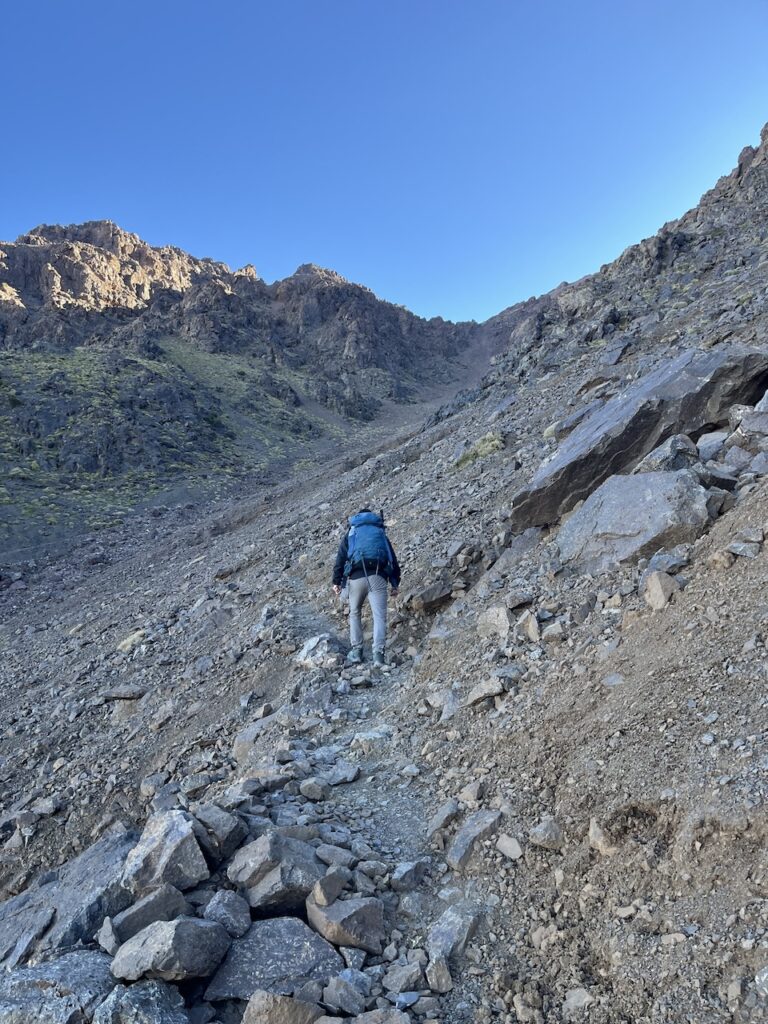
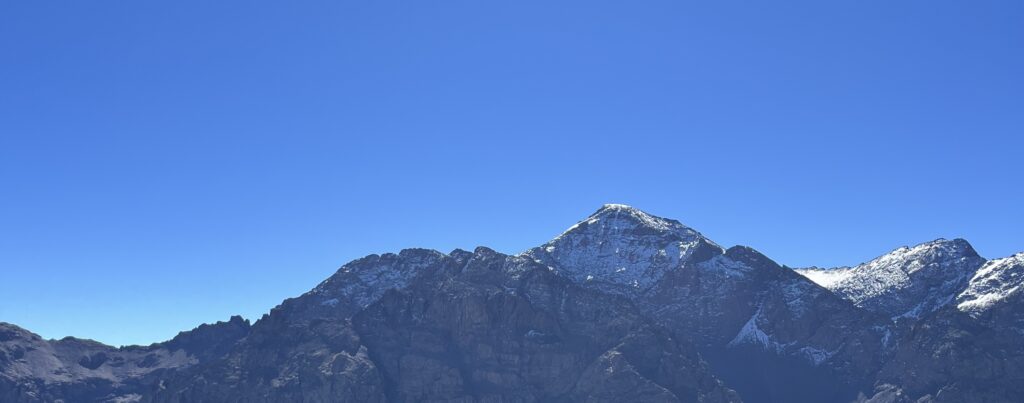
Falcons hover above the escarped valleys, bluffs and crests leading up to the summit of Toubkal, highest in Morocco and North Africa. If you take a moment and rake the summits ( binoculars help) you are likely to sight of the local, terribly discreet mufflon. Well, I found out on my own recently that is not so easy as it sounds. Taking a moment, that is.
To start off, there aren’t that many ways to climb up to the peak: you get dropped off in Imlil, a village 1 hour and a half drive from Marrakech at 1700 meters high and you start climbing ( a local guide is imperative if not compulsory) through the village of Aramd (1900 meters high). The path then passes by the shrine of Sidi Chamarouch. Before reaching the basecamp at 3200 meters high several brooks break the trail, along with makeshift huts dispensing orange juice, mint tea or wool beanies. It ultimately reaches the base camp at 3200 meters. One could be excused for thinking the hike is cushy. Leaving Imlil, only very gradually the trail serpents up its sinuous turns and twists, the rubble underfoot at times uncertain, slippery or dustraising.
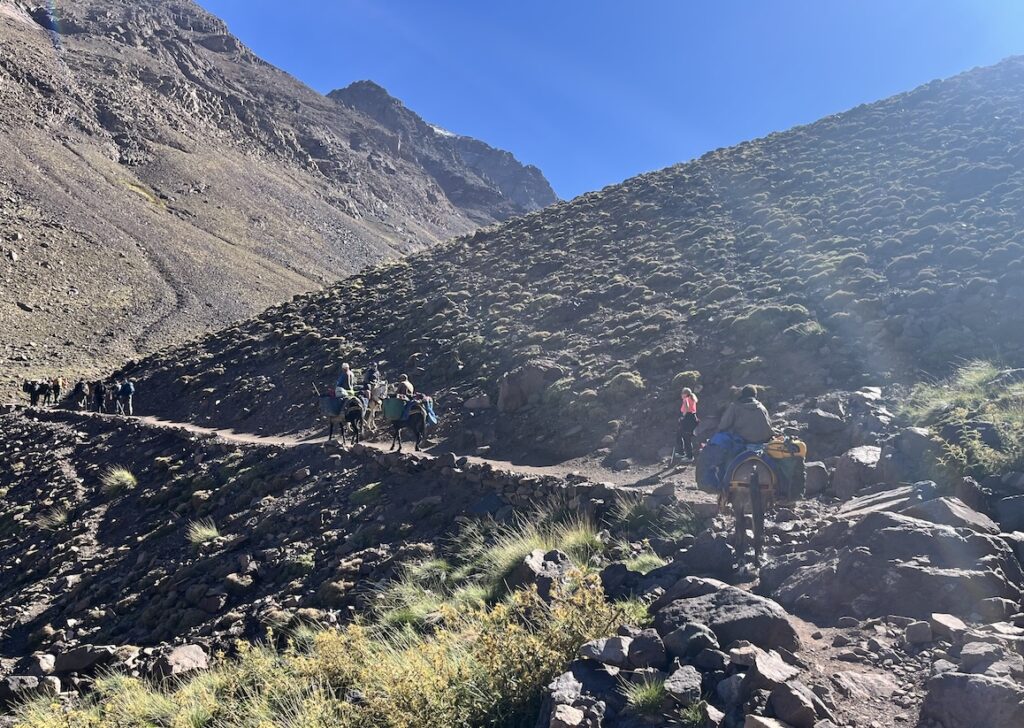
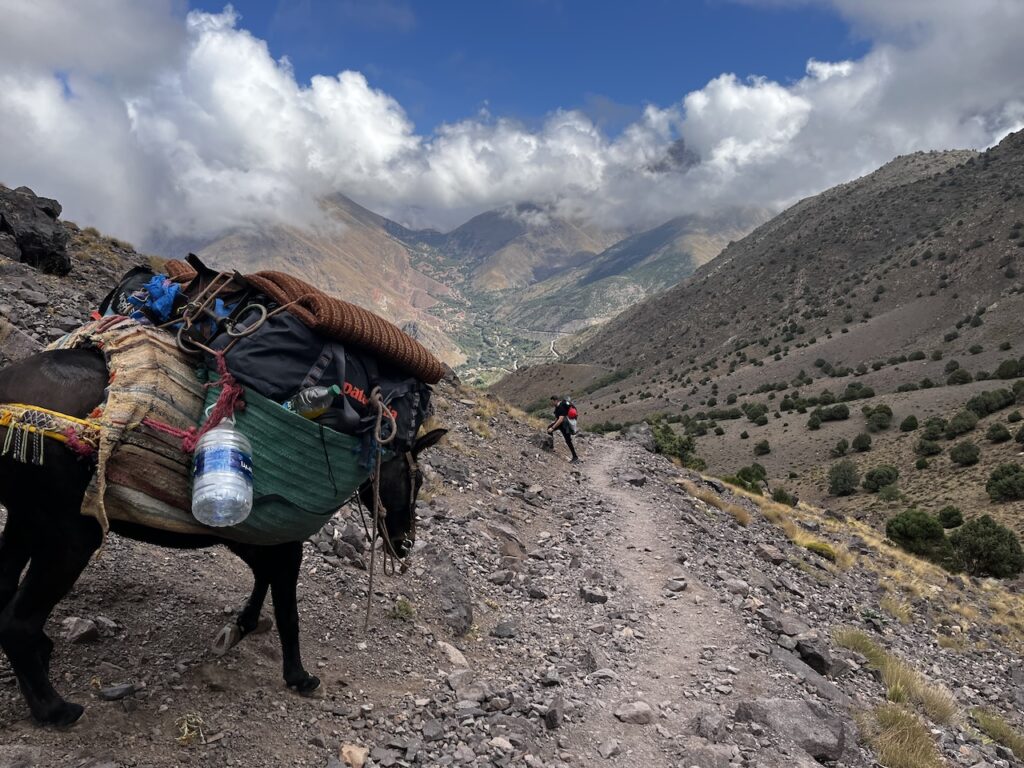
But daydream not ! Or you might get hustled over by a back-pack laden mule, making its way to or from the base camp. And this is maybe where I should backtrack. One radiant afternoon in October I was making my way back from Toubkal refuge to Aramd. I had crossed over from Ouazane valley in the morning, having spent the night in a cozy refuge at 3000 meters high, above a tortuous pass at 700 meters higher and then spent a few hours slouching on the terrace of the basecamp. All seemed in tune. Was it the altitude’s high ? Knowing that it’s only downhill from here onwards ? Everything about the place beamed with that spontaneous mountain caramaderie that one feels in a refuge, over a certain altitude, regardless of coordinates. Bar the 4G coverage.
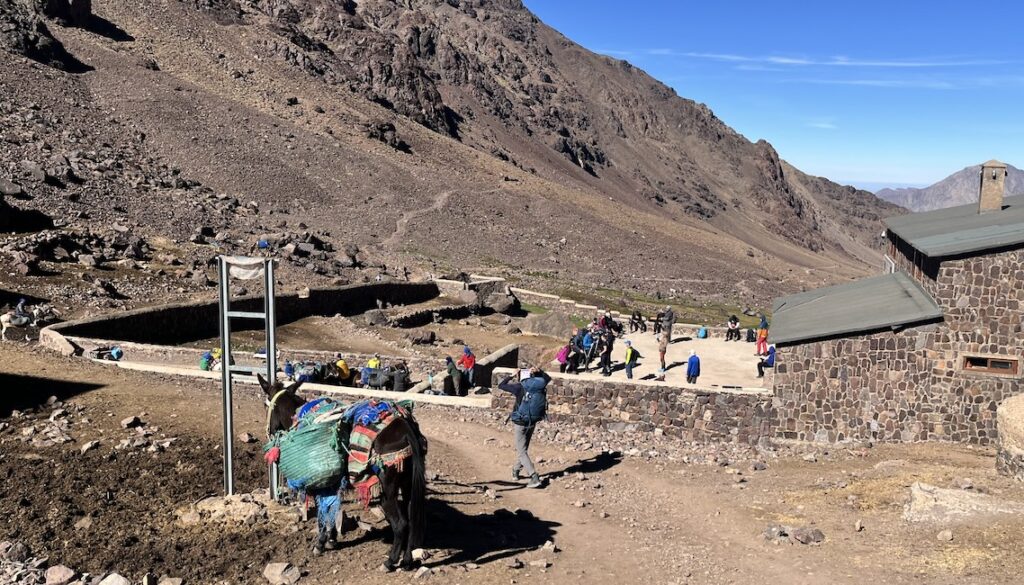
From time to time, trekkers arrived, smiling and exhausted. Dignified. The only discordant note seemed to be the smoke rising from the burning , uninspiringly placed vat of, plastic garbage , but one can excuse that for the complications it would take to transport all that crud down the valley.
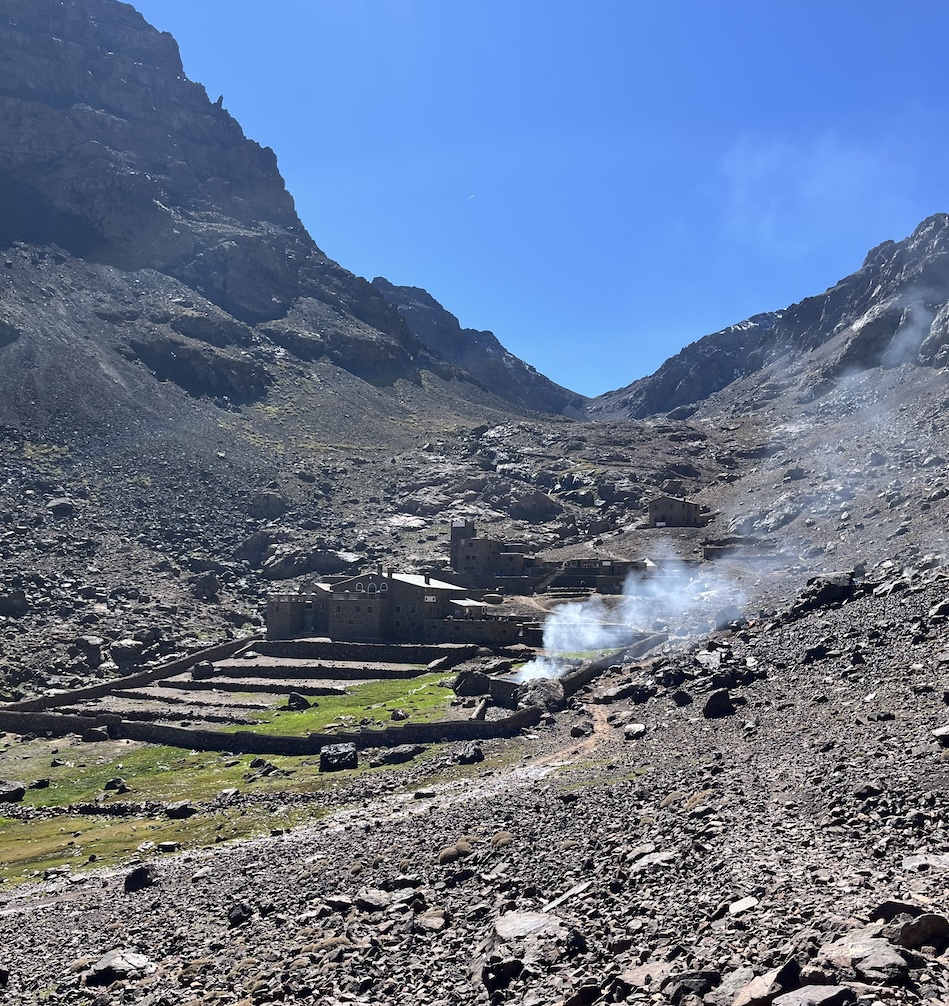
Towering above us and the refuge, the peaks over 4000 meters high had already been sprinkled with a fine powder, the first of the year. Curious as to what the accoutrements might look like, I briefly toured the facilities. I surmised the place could accommodate around 60 to 80 guests, 100 if you stretched it. The toilets and showers looked clean enough, all considered. In the dining areas, folks were having sandwiches that they had brought along. Others, some crackers they had purchased from the minishop by the entrance. Finally, some were feasting on a proper lunch, tagine and Moroccan salads. Opposite, the smaller Les Mouflons refuge seemed to be the posher alternative .
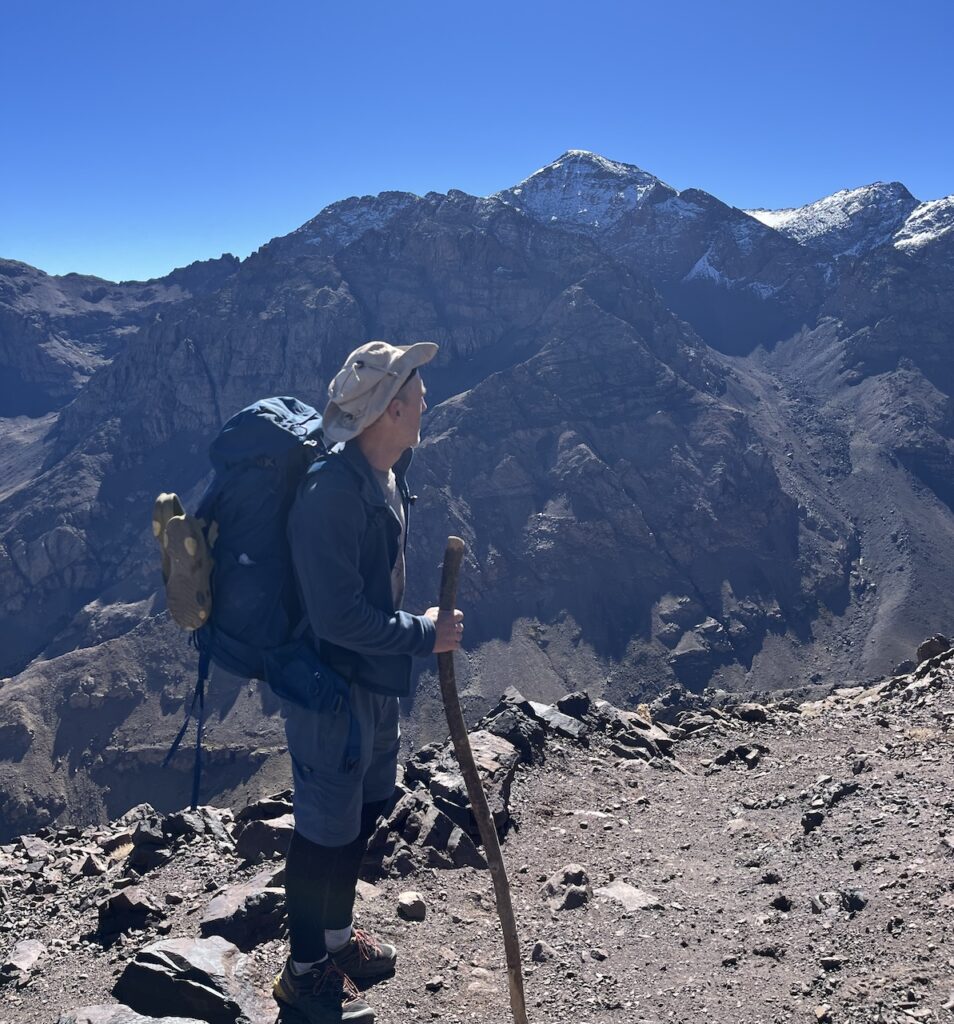 I left the refuge and headed downstream, not for fear of space shortage, but rather planning. Next day’s schedule included a 700 meters altitude hike , doubled by a more extensive descent to eventually end up in Imlil, at 1700 meters high. Vaguely heavy- hearted, I followed behind my guide, Said, who nimbly scuttled down the trail, hoping from boulder to edge. And then we crossed a first group. Then, the second. A third. Fourth. Before reaching Aramd 2 hours later, I had counted more than 200 trekkers heading up to the base camp, in compact groups, the corollary mules trailing close behind them. Most of them ( trekkers) were positively radiant, likely beguiled by the dream to reach the summit next day.
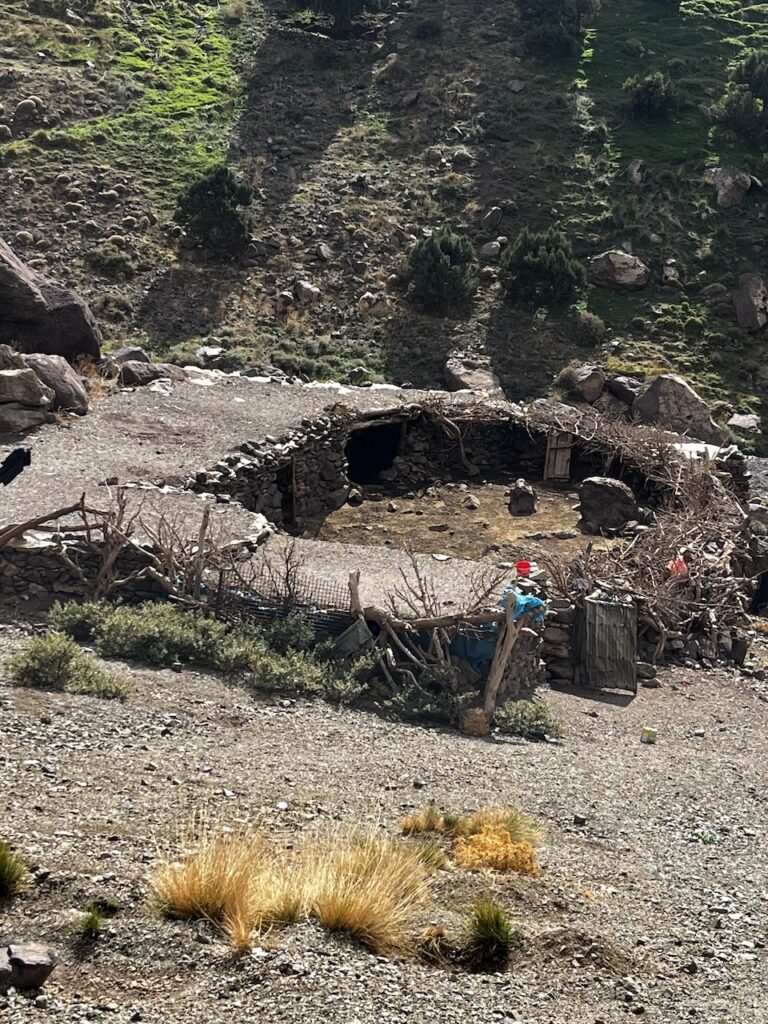
Something wrong with mules carrying trekkers backpacks ? Certainly not. It helps local ‘economy’, putting food on the table of folks that otherwise would employ the same beasts for other, more menial tasks. With less of a revenue stream. And no, in 20 years of living and trekking around Morocco, I don’t recall seeing mules being maltreated. It just didn’t make sense though. Where were all these people going to rest at night ? Were they all trained athletes ? Ready to skip a good night’s sleep and conquer the grudging slope only on cereal bars and positive attitude ?
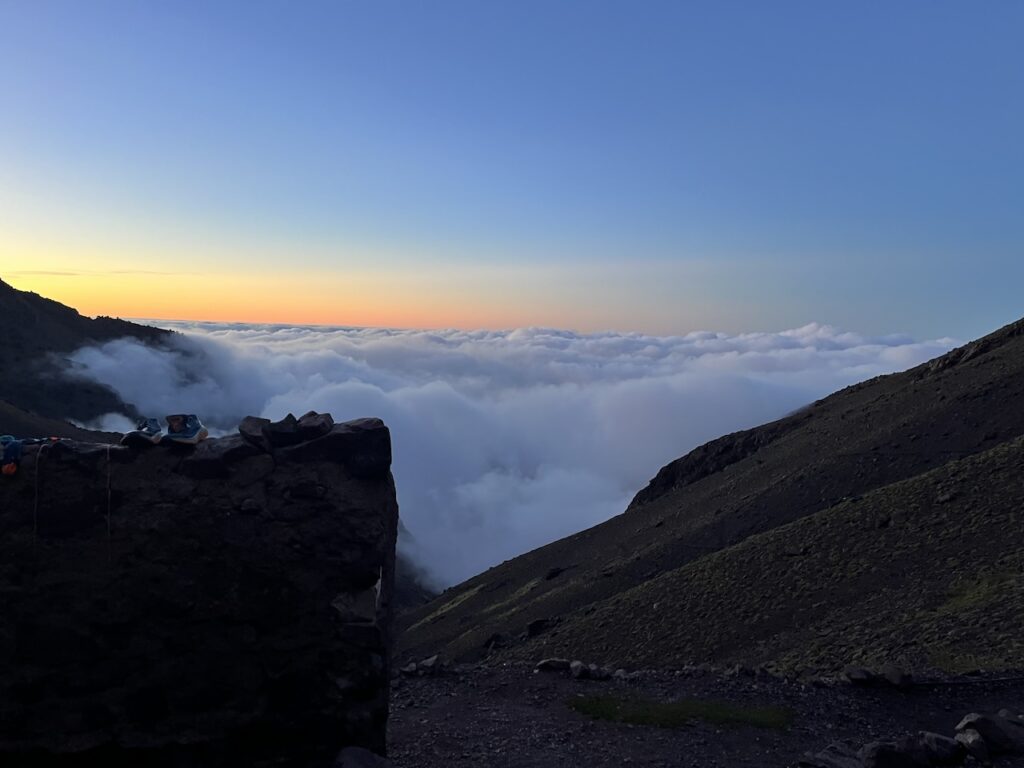
Later, as the night descended over the valley, having tea with Hassan, our long-time guide on the terrace of a lodge in Aramd, my apprehensions were confirmed: many of them were going to spend the night in the common areas or the dining room, on benches, floor or wherever space was available. Many of them would be waking up around 3 AM to start the trek ( looks like catching sunrise on the summit is the trend). Which meant that you either join in or you better bring along a great novel to read by your headlamp, for snugging in your sleeping bag you aren’t likely getting much past the collective wake up call.
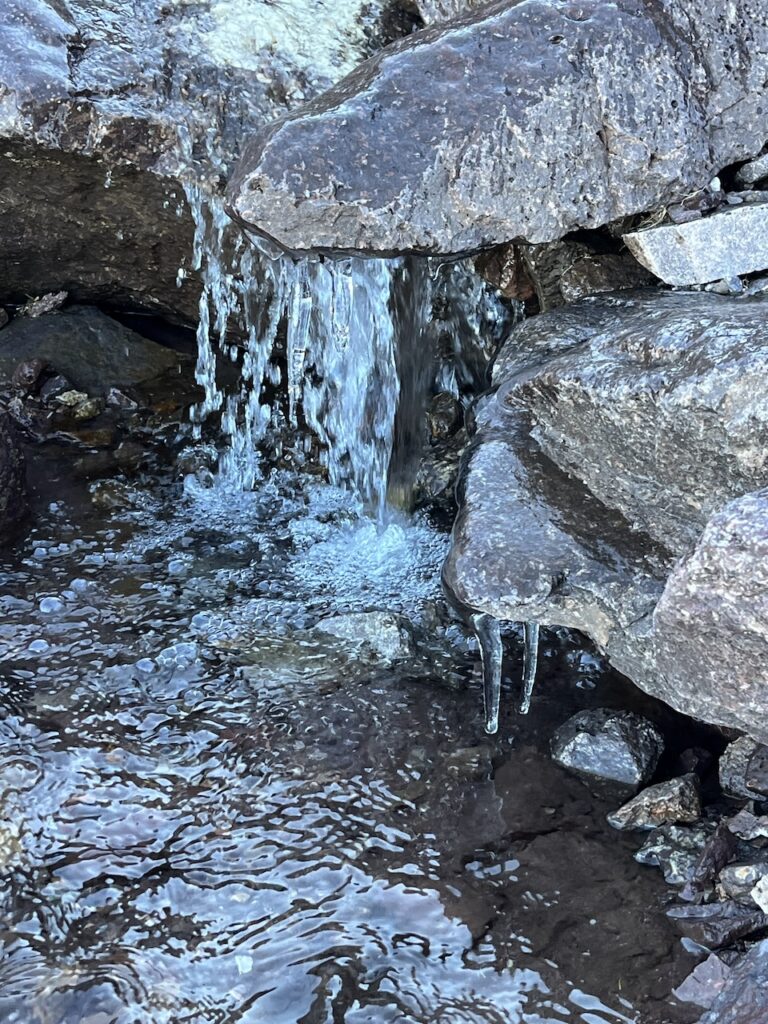
Whatever ambivalence I had felt earlier was now dissipated. Hassan’s take was reinforced by the reviews left by previous trekkers on various internet forums. The pattern seems to spread to the whole of ‘good season’: March to May and September to November.
And from the basecamp to the summit you are looking at 1000 meters of altitude difference. But then, what if you don’t want to spend the second poorly- slept night in the refuge ? Another 1300 meters of climbing down ( altitude difference, not actual distance) to Aramd awaits you, the nearest you will find a good night’s rest. Is it all worth it ? I guess it’s each man’s choice.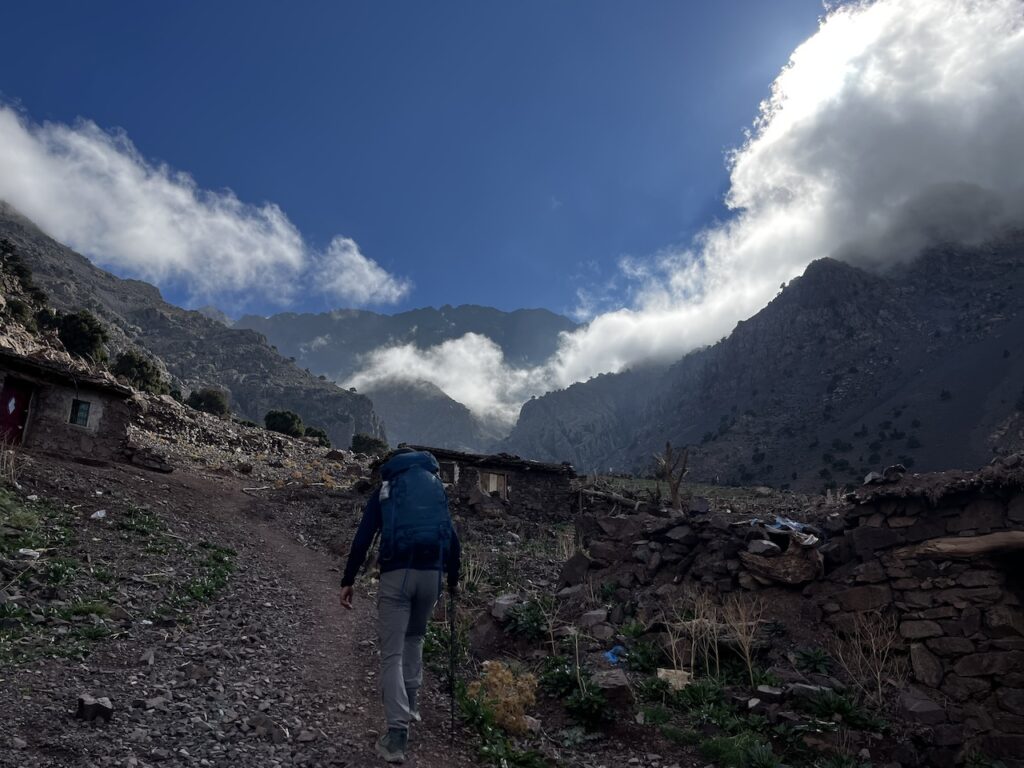
Decidedly, there are two types of trekkers. If ticking off the box of climbing North Africa’s highest summit at any cost, you can join in the groups – by all means, do hire a local guide. If taking your time to revel in the High Atlas mountains over 3000 meters high is what you’re after, there are other choices. And you can still resume your ascent in Imlil. Without the crowds and the hustle. Overnighting in a cozy, intimate refuge, with incredible views, at 3000 meters high. Actually interacting with the locals, not just tipping them off for an orange juice or mint tea along the trail.
If you’d like to enjoy the High Atlas mountains, away from droves of tourists while delving into locals’ lives, send us an enquiry. There are plenty of choices, starting in Imlil, Tafraoute, Smougen and elsewhere, cresting at above 4000 meters high. Or below.
© Sun Trails 2026. All rights reserved. No part of this article may be reproduced, distributed, or transmitted in any form, including photocopying, recording, or other electronic or mechanical methods, without the prior written permission of the publisher.