
Fez Morocco Travel Guide: Best Things to Do, Travel Tips & Itinerary
Fez Morocco Travel Guide helps visitors discover one of Morocco’s oldest cities, where centuries of history, culture, and craftsmanship come together within the walls of one of the world’s largest living medieval medinas. As Morocco’s spiritual and cultural capital, Fez offers travelers an authentic experience filled with historic mosques, traditional tanneries, bustling souks, and beautifully restored riads. If you’re visiting Morocco for the first time or returning to discover another side of the country, Fez deserves a place on your itinerary.
This Fez Morocco Travel Guide covers everything you need to know before your visit, from the best time to travel and the city’s top attractions to local cuisine, transportation, suggested itineraries, and practical travel advice. If you’re spending one day exploring the ancient medina or using Fez as the starting point for a longer journey through Morocco, this guide will help you plan every stage of your trip with confidence.
Unlike Morocco’s coastal cities or modern urban centers, Fez immerses visitors in centuries-old traditions that remain part of everyday life. Skilled artisans continue to produce handmade leather goods, ceramics, textiles, and brasswork using techniques passed down through generations. Every narrow alley, hidden courtyard, and historic monument tells a story that makes Fez one of the country’s most rewarding destinations.
Think of this as your complete travel guide to Morocco’s cultural and spiritual heart.
How This Fez Travel Guide Helps You Plan Your Trip
Planning a visit to Fez can feel overwhelming, especially for first-time visitors. The city’s ancient medina is one of the largest car-free urban areas in the world, with thousands of narrow streets, hidden passages, and historic landmarks waiting to be explored. Without proper planning, it’s easy to miss many of the experiences that make Fez one of Morocco’s most unforgettable destinations.
This Fez Morocco Travel Guide answers the questions travelers ask most before arriving. You’ll discover when to visit, how to reach the city, the best neighborhoods to stay in, which attractions deserve your time, and how to navigate the medina comfortably.
Beyond the city’s famous landmarks, you’ll also learn about nearby destinations that pair perfectly with Fez, including Chefchaouen, Volubilis, Meknes, and the Middle Atlas Mountains. If you’re planning a longer adventure, browse our private Morocco itineraries. Fez also connects naturally with Marrakech, Casablanca, Rabat, and the Sahara Desert through our Private & Tailor-Made Tours.
If you’re visiting for two days or including Fez in a two-week Morocco itinerary, planning ahead allows you to experience the city at a relaxed pace while discovering both its famous highlights and lesser-known treasures.
Why Visit Fez, Morocco?
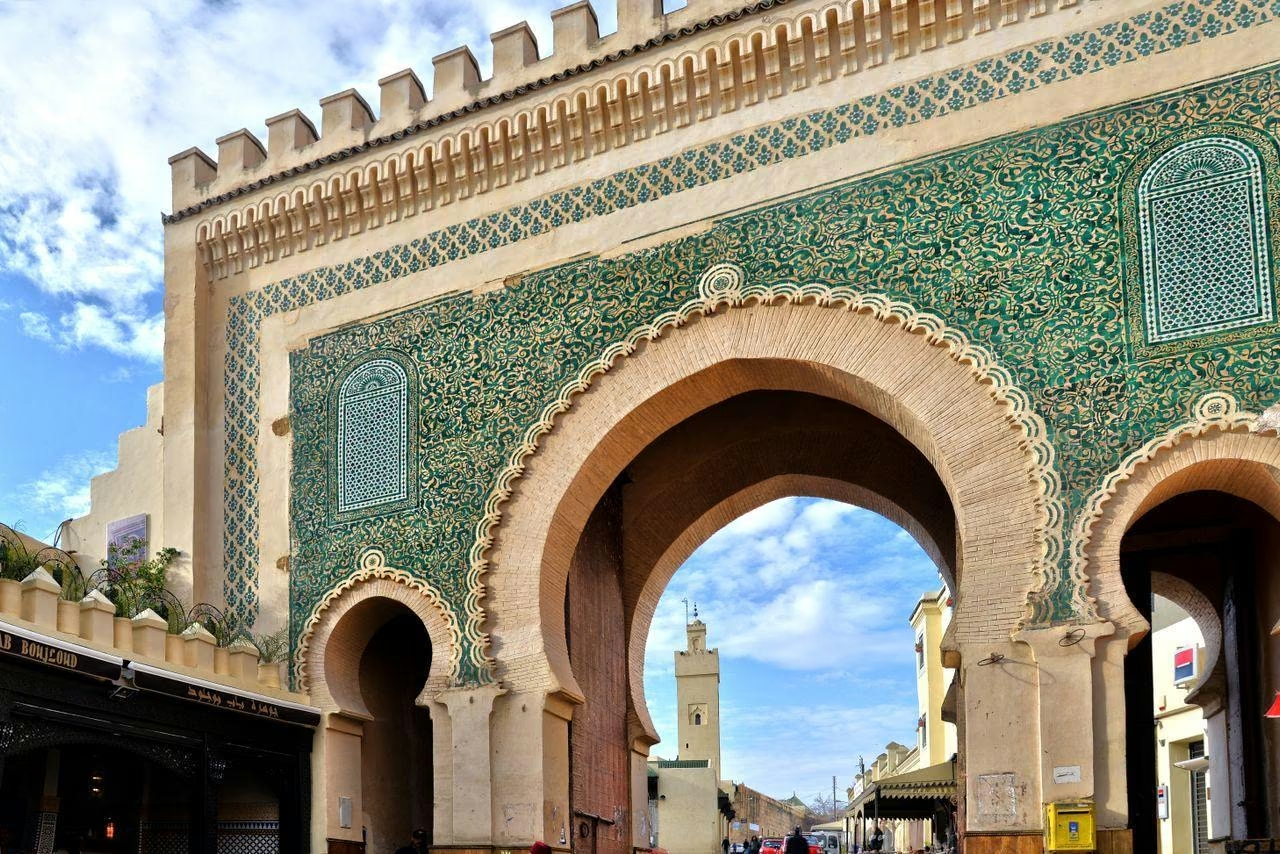
Fez offers one of the most authentic travel experiences in Morocco. One of the first places we recommend to our guests is Bab Boujloud, early in the morning, before the busiest crowds arrive. While cities like Marrakech attract visitors with lively squares and modern luxury hotels, Fez preserves a more traditional atmosphere where daily life continues much as it has for centuries.
As one of Morocco’s four imperial cities, Fez is home to remarkable Islamic architecture, historic madrasas, beautiful riads, and one of the oldest universities in the world. The city’s UNESCO World Heritage Site, the Medina of Fez, provides an extraordinary opportunity to step back in time while experiencing Morocco’s living cultural heritage.
As you move through Fez, you’ll see craftsmen shaping leather by hand, metalworkers creating ornate lanterns, potters producing colorful ceramics, and spice merchants filling the air with the aromas of saffron, cinnamon, cumin, and mint. More than demonstrations for tourists, these traditional industries continue to support local families and preserve skills that have existed for centuries.
Among the imperial cities in Morocco, Fez is widely regarded as the country’s cultural and spiritual heart.
Fez is also an excellent gateway to northern and central Morocco. Travelers often combine the city with Chefchaouen, Volubilis, Meknes, the Middle Atlas Mountains, and the Sahara Desert before continuing toward Marrakech or Casablanca. At Sun-Trails, we frequently include Fez in our private Morocco itineraries because it offers visitors an authentic introduction to the country’s history, craftsmanship, and culture.
Where Is Fez and How to Get There?
Fez is located in northern inland Morocco, approximately 530 kilometers northeast of Marrakech, 295 kilometers east of Rabat, and around 320 kilometers from Casablanca. Surrounded by rolling hills and fertile plains, the city occupies a strategic position that has connected Morocco’s imperial cities and caravan routes for centuries.
Although Fez was once the capital of Morocco, today Rabat is the country’s administrative capital.
Most international visitors arrive through Fès-Saïss International Airport, located approximately 15 kilometers south of the city center. The airport serves domestic flights as well as direct connections from several European destinations, making Fez easily accessible throughout the year.
Many travelers include Fez as part of one of our custom Morocco tour packages and reach Fez using Morocco’s modern ONCF railway network. Comfortable trains connect Fez with Casablanca, Rabat, Meknes, Tangier, and Marrakech, making rail travel one of the easiest ways to move between Morocco’s major cities.
Approximate travel times include:
- Casablanca to Fez: around 4 hours by train or car.
- Rabat to Fez: approximately 2.5 to 3 hours.
- Marrakech to Fez: around 6 to 7 hours by train or private transfer.
- Chefchaouen to Fez: approximately 3.5 to 4 hours by road.
- Meknes to Fez: around 1 hour.
Private transfers remain one of the most comfortable ways to travel between destinations, especially for visitors who wish to stop at Volubilis, Meknes, or scenic viewpoints along the route. Our Morocco Tour Packages often include these stops, allowing travelers to discover several of Morocco’s historic highlights without rushing from one city to another.
Once you arrive in Fez, the historic medina is largely pedestrian-only. Most accommodations arrange luggage assistance from the nearest vehicle access point, allowing guests to reach their riads comfortably while experiencing the atmosphere of the ancient city from the moment they arrive.
Best Time to Visit Fez
Fez is a year-round destination, but each season offers a different experience. Because the city sits inland rather than along Morocco’s Atlantic coast, temperatures can vary more than in coastal destinations such as Rabat or Agadir. Choosing the right season depends on whether you prefer comfortable sightseeing weather, cultural festivals, or quieter streets.
If you’re planning a multi-city journey, our seasonal Morocco travel guide can help you choose the ideal season for exploring destinations across the country.
Spring (March to May)
Spring is widely considered the best time to visit Fez. Daytime temperatures usually range between 68°F and 79°F (20°C to 26°C), creating comfortable conditions for wandering through the medina, visiting historical monuments, and enjoying outdoor cafés.
The surrounding countryside is also greener after the winter rains, making spring an excellent season for day trips to Volubilis, Meknes, and the Middle Atlas Mountains. Because this is one of Morocco’s busiest travel seasons, it’s wise to reserve accommodations and private tours four to five months in advance.
Summer (June to August)
Summer brings warmer temperatures to Fez than Morocco’s coastal cities. Afternoon highs frequently exceed 90°F (32°C), especially during July and August. Fortunately, many riads feature shaded courtyards, rooftop terraces, and traditional architecture designed to keep interiors cool.
Early mornings and evenings remain the best times to explore the medina during summer. Many visitors choose to spend the hottest hours relaxing in cafés, museums, or their riads before continuing their sightseeing later in the day.
Despite the heat, summer remains popular with international travelers, so booking hotels and guided experiences early is recommended.
Autumn (September to November)
Autumn combines pleasant temperatures with fewer visitors, making it another excellent season to experience Fez. Warm days and cooler evenings create ideal conditions for exploring historical sites, shopping in the souks, and enjoying rooftop restaurants overlooking the old city.
Many travelers consider September and October among the best months to visit because the weather remains comfortable while the busiest summer crowds begin to disappear.
Winter (December to February)
Winter offers a quieter side of Fez. Daytime temperatures generally remain between 55°F and 66°F (13°C to 19°C), although evenings can become surprisingly cool.
This season is ideal for travelers who prefer fewer crowds and lower accommodation prices. While occasional rain showers are possible, most sightseeing remains enjoyable, especially inside the medina where narrow streets provide shelter from changing weather conditions.
Best Things to Do in Fez: Top Attractions You Shouldn’t Miss
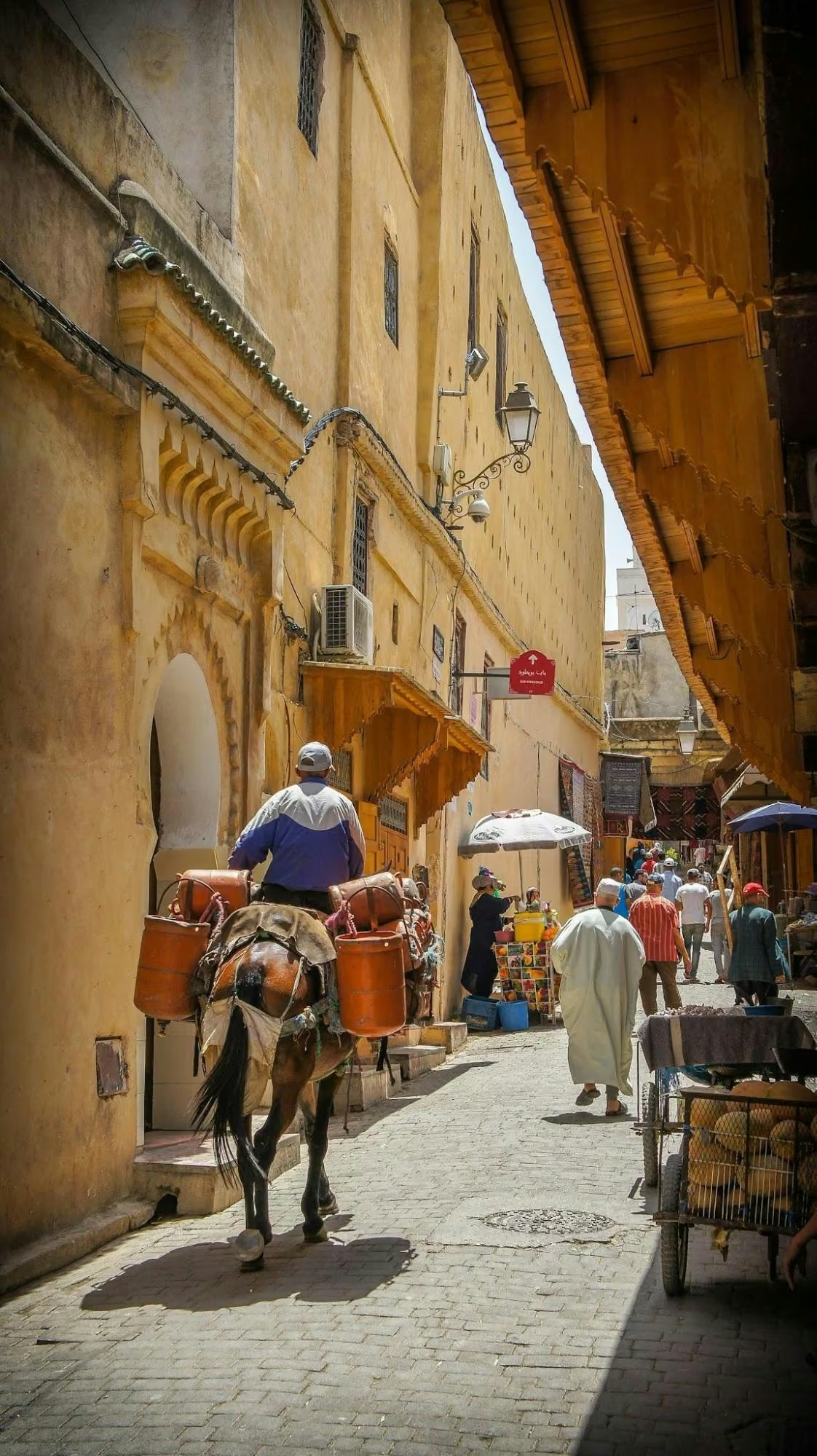
Fez is one of Morocco’s richest cultural destinations, offering an extraordinary collection of historical monuments, artisan workshops, religious schools, traditional markets, and hidden courtyards. Every neighborhood reveals another chapter of the city’s long history, making it one of the country’s most rewarding places to explore.
If you’re interested in architecture, local craftsmanship, history, or authentic Moroccan culture, these attractions deserve a place on your itinerary.
Explore Fez Medina (Fes el-Bali)
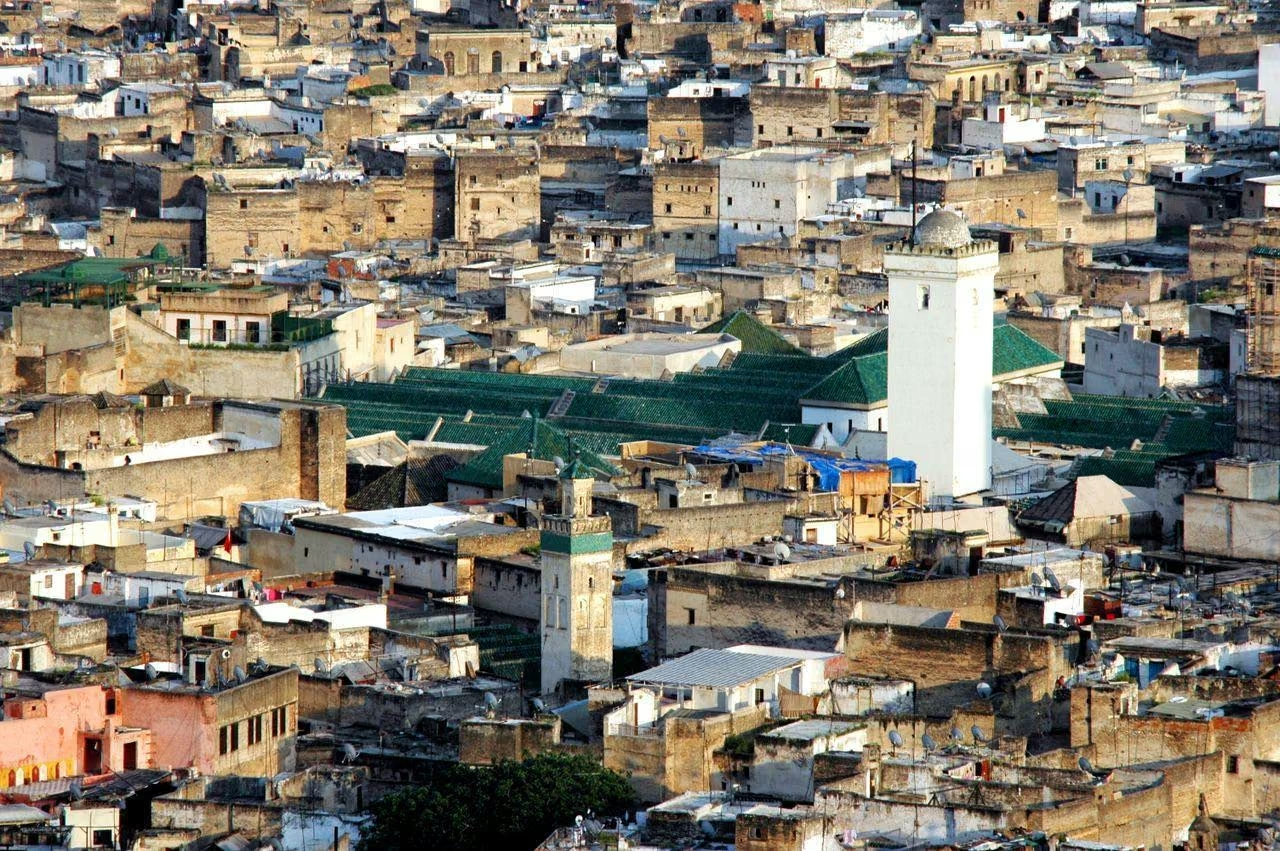
The Fez Medina, also known as Fes el-Bali, is the heart of the city and one of the world’s largest living medieval medinas. Home to thousands of narrow streets and countless historic buildings, it has remained remarkably unchanged for centuries.
Every corner introduces visitors to traditional Moroccan life. Small workshops produce handmade leather bags, woven textiles, brass lanterns, carved wood, and colorful ceramics using techniques that continue to be passed from one generation to the next.
Getting lost inside the medina is often part of the experience. Behind unassuming doorways, you’ll discover peaceful riads, hidden courtyards, local bakeries, and small cafés serving freshly prepared Moroccan dishes.
Hiring a local guide is highly recommended for first-time visitors, helping you better understand the history, architecture, and traditions that make Fez unique.
Visit Al Quaraouiyine University
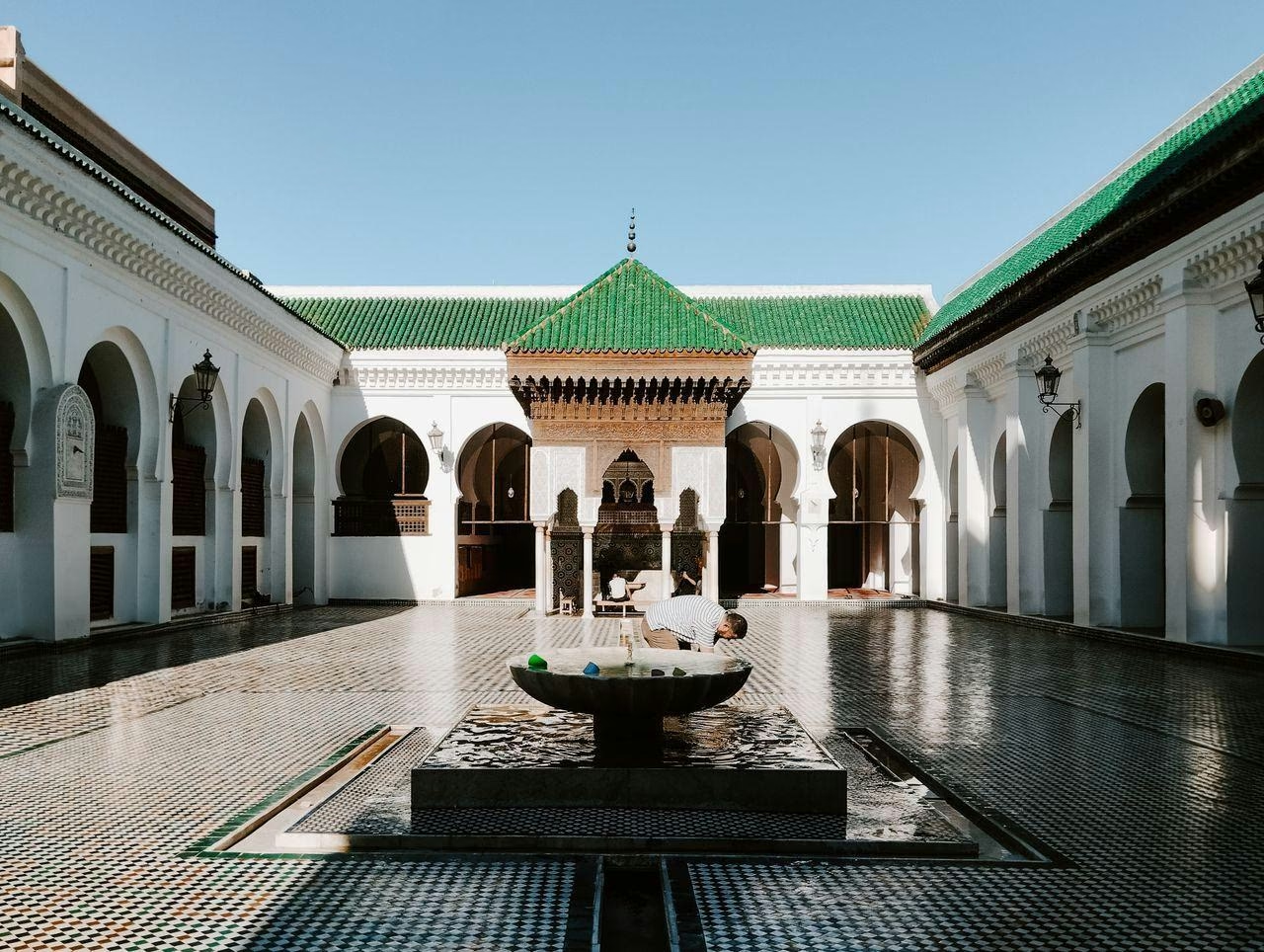
Founded in 859 AD, Al Quaraouiyine is widely recognized as one of the oldest continuously operating universities in the world. It has welcomed scholars from across North Africa, Europe, and the Middle East for more than a thousand years.
Although non-Muslim visitors cannot enter the mosque itself, several nearby viewpoints provide beautiful views of its elegant courtyard, green-tiled roofs, and impressive architecture.
The surrounding neighborhood is equally fascinating, with bookshops, artisan workshops, and historic schools reflecting Fez’s long tradition as Morocco’s intellectual and spiritual center.
Discover the Chouara Tanneries
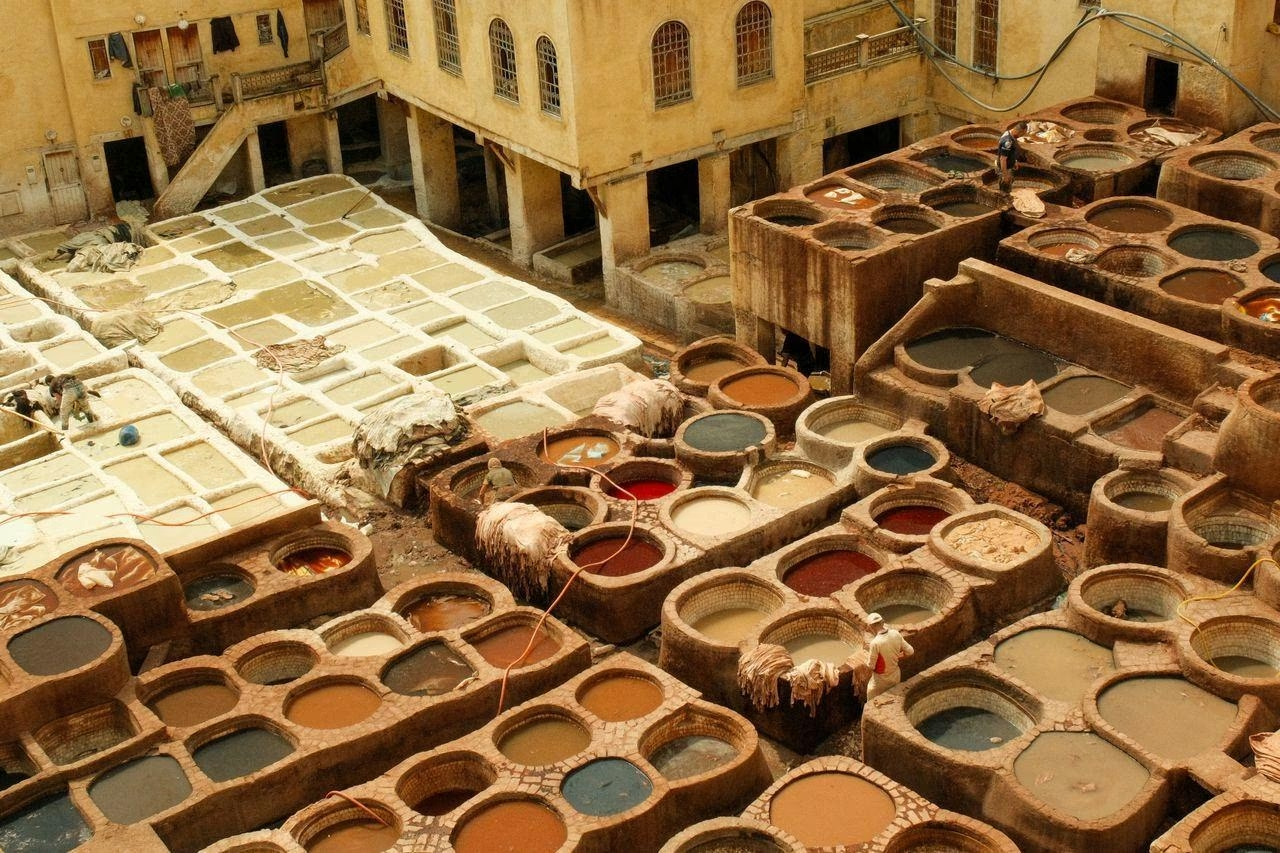
The Chouara Tanneries remain one of Fez’s most iconic attractions. Leather has been produced here for centuries using traditional methods that have changed very little over time.
Visitors can observe workers dyeing leather in large stone vats filled with natural pigments derived from saffron, indigo, poppies, and henna. Although the distinctive smell surprises many first-time visitors, nearby leather shops usually offer fresh mint leaves to make the experience more comfortable.
Many of the city’s finest leather jackets, slippers, handbags, and belts are crafted here, making this one of the best places to purchase authentic Moroccan leather products directly from local artisans.
Admire Bou Inania Madrasa
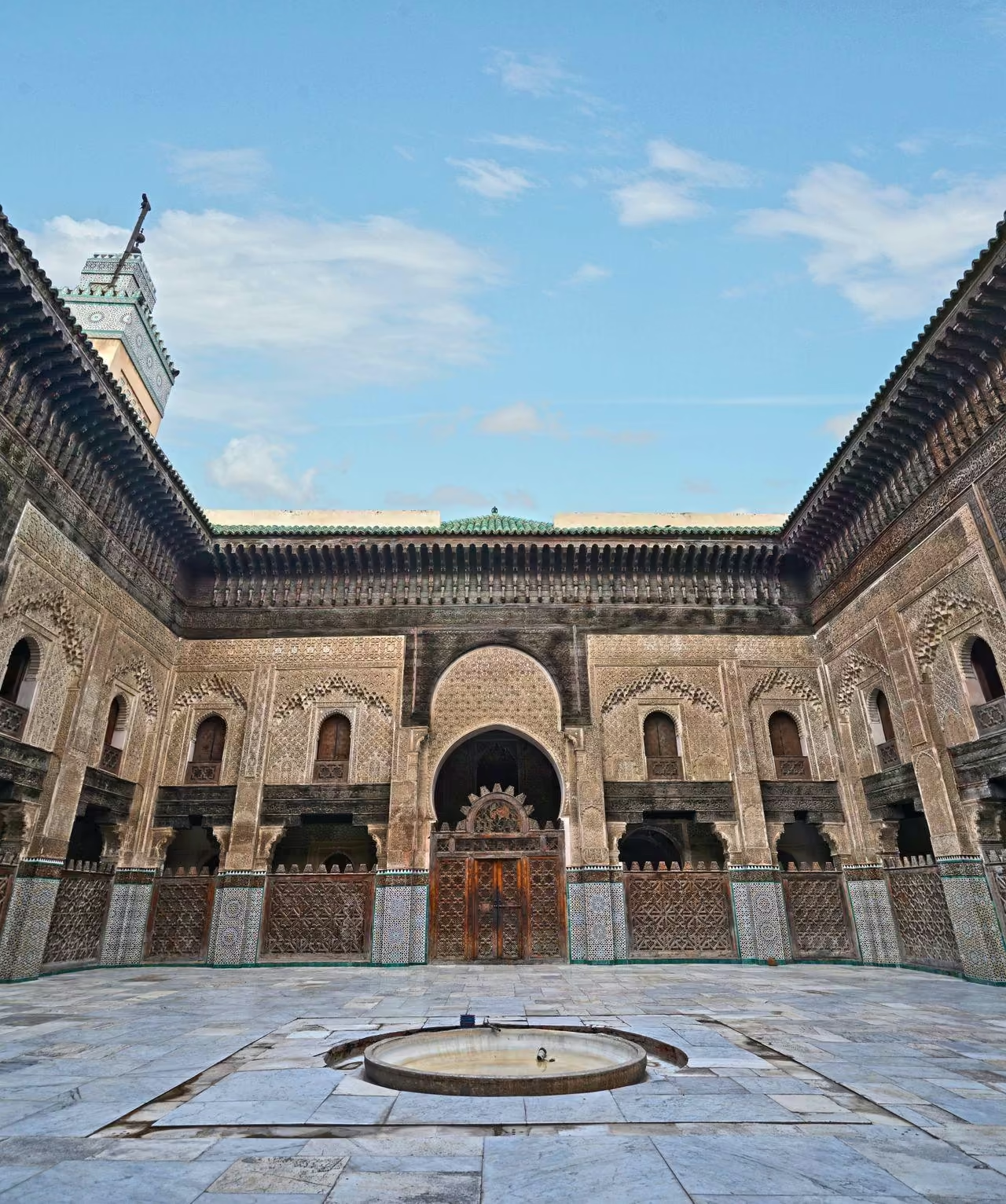
Bou Inania Madrasa is one of Morocco’s finest examples of Marinid architecture. Built during the 14th century, this beautifully preserved Islamic school welcomes visitors to admire its remarkable craftsmanship.
Finely carved cedar wood, colorful zellige tilework, elegant stucco decoration, and peaceful courtyards demonstrate the exceptional artistry that flourished during Fez’s golden age.
Unlike many religious buildings in Morocco, Bou Inania Madrasa is open to non-Muslim visitors, making it one of the city’s most accessible historical landmarks.
Walk Through Bab Boujloud
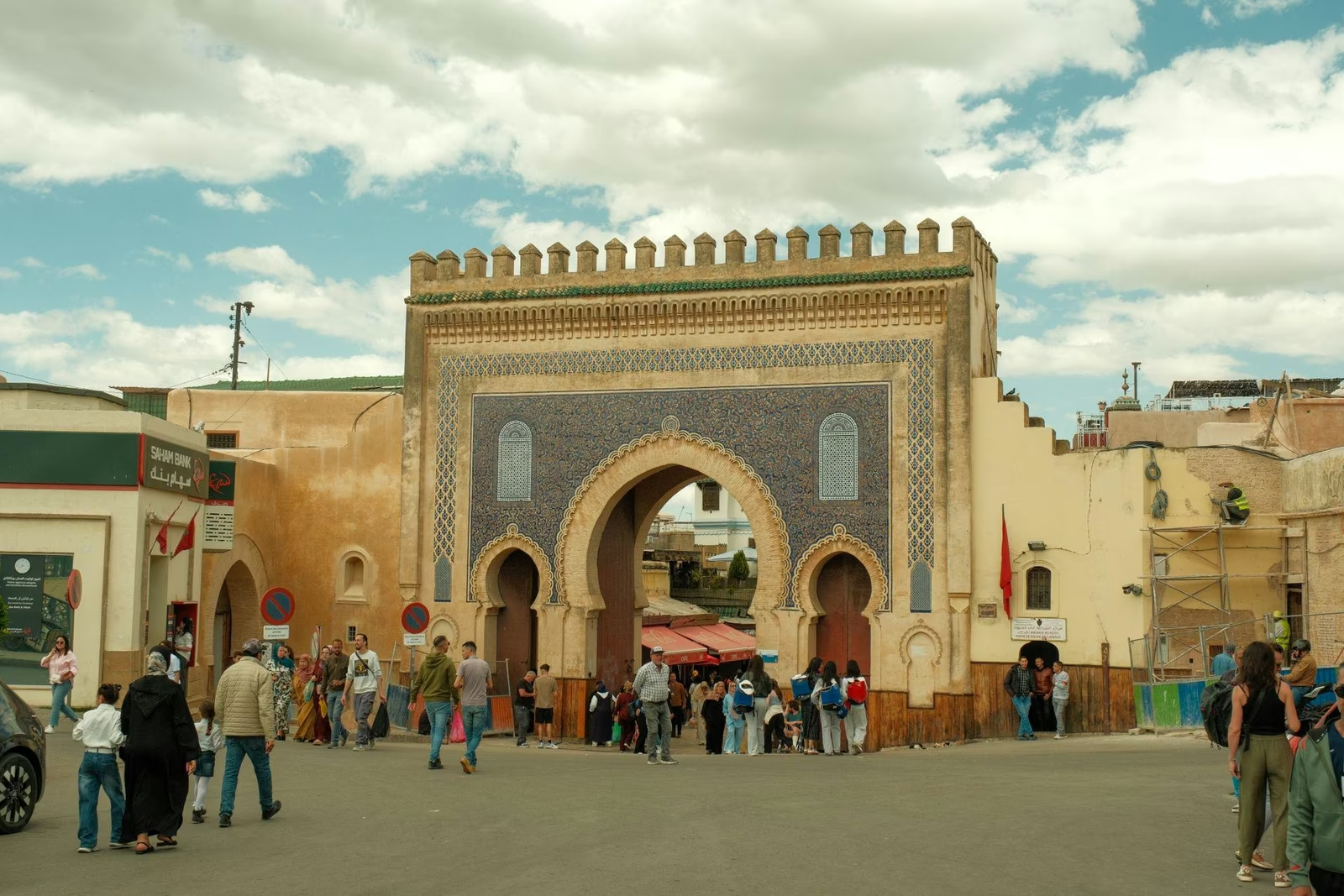
Bab Boujloud, often called the Blue Gate, is the main entrance to the old medina and is one of Fez’s most photographed landmarks.
Its blue mosaic exterior represents the city of Fez, while the green tiles on the opposite side symbolize Islam. The gate marks the beginning of lively streets filled with cafés, restaurants, bakeries, traditional shops, and local markets.
Many visitors begin their exploration here before wandering deeper into the medina’s fascinating network of alleyways.
Visit the Royal Palace of Fez
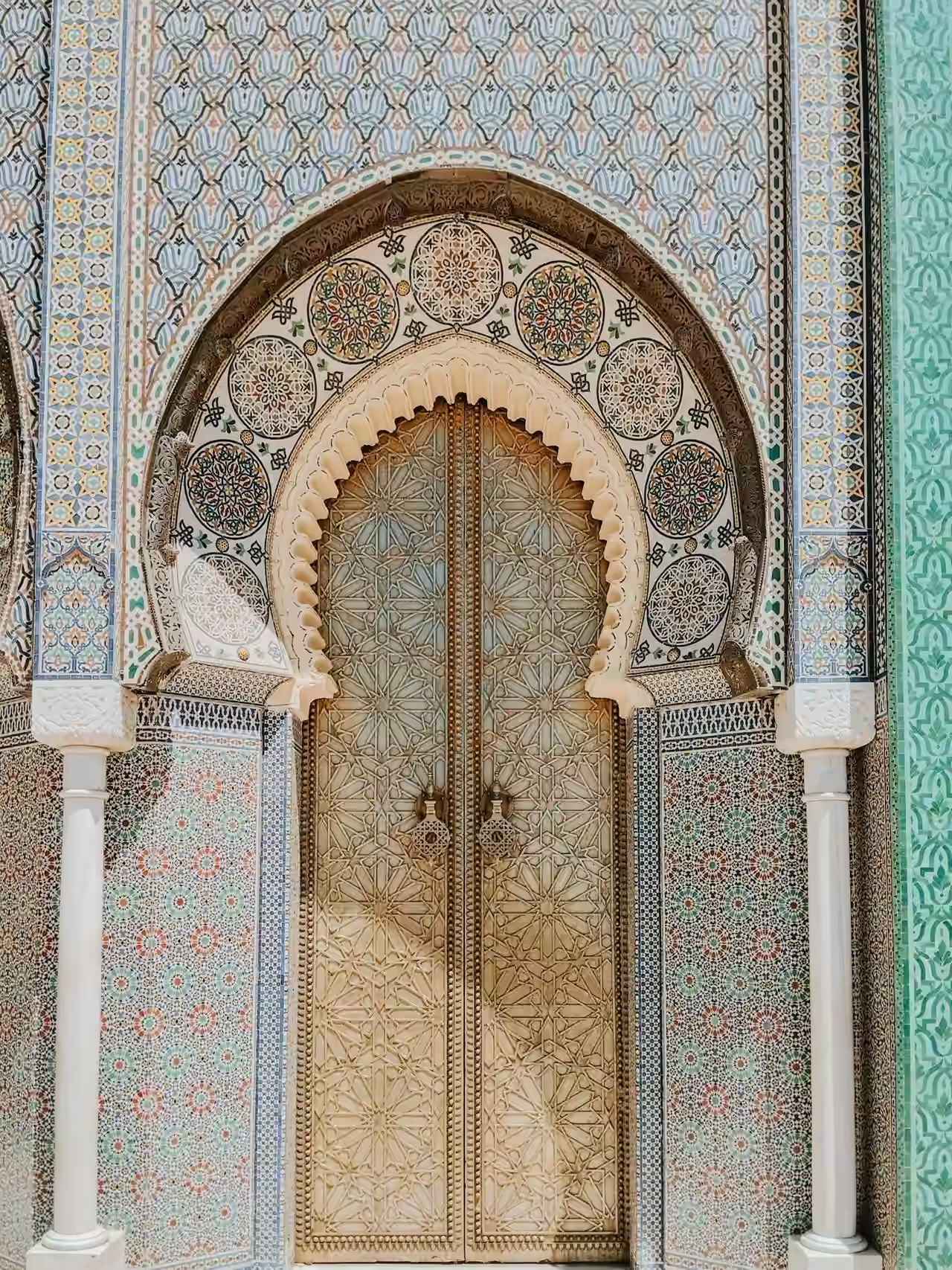
Although the Royal Palace is not open to the public, its magnificent golden gates attract visitors from around the world.
Surrounded by impressive walls and beautifully maintained grounds, the palace demonstrates Morocco’s rich architectural heritage through detailed brass work, colorful mosaics, carved cedar wood, and elegant decorative patterns.
The nearby Jewish Quarter provides another interesting stop, allowing visitors to experience a different chapter of Fez’s multicultural history.
Visit the Mausoleum of Moulay Idriss II
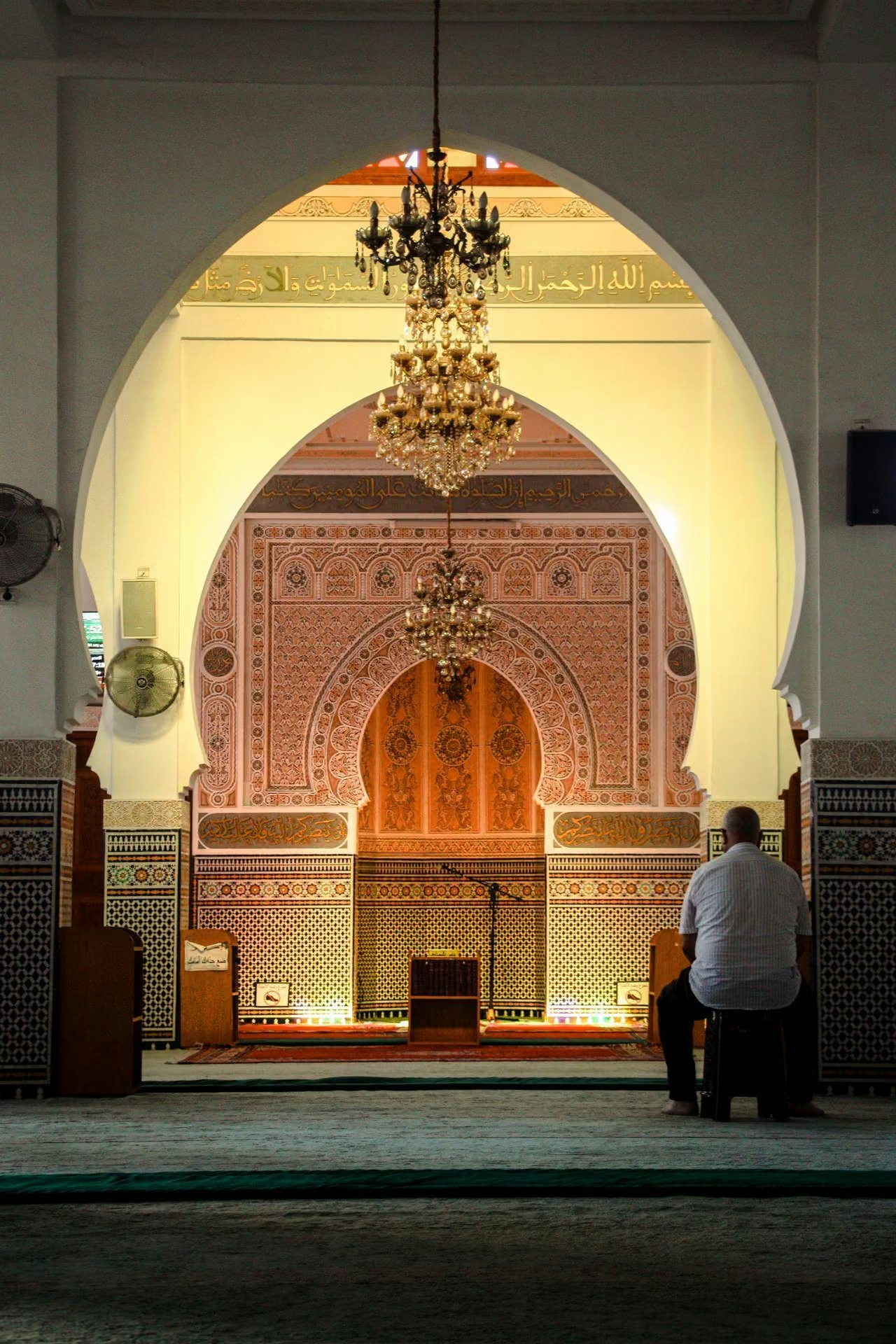
The Moulay Idriss II Mausoleum is one of Fez’s most important religious landmarks. While non-Muslim visitors cannot enter, the surrounding streets are worth exploring for their historic atmosphere.
Explore the Mellah, Fez’s Historic Jewish Quarter
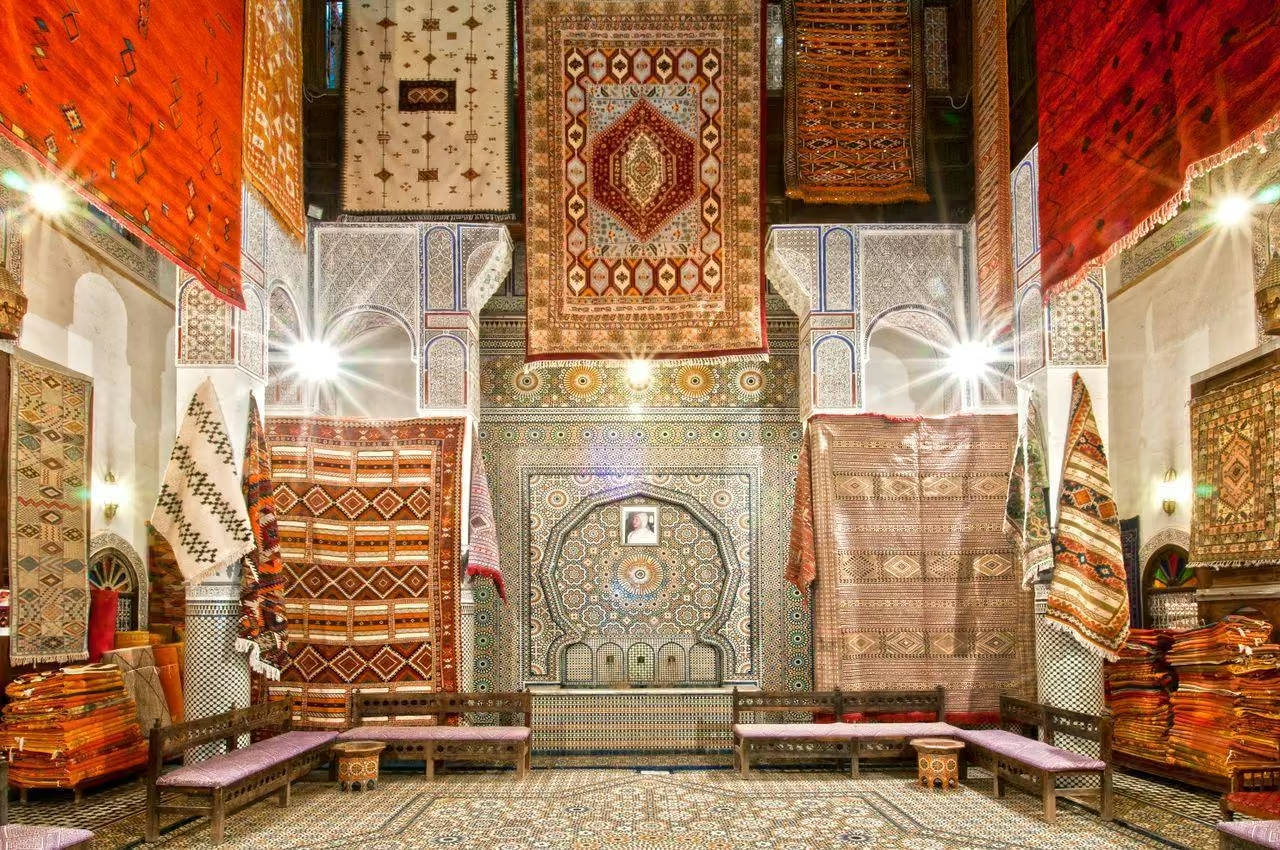
The Mellah reflects the city’s long history as a meeting place for different cultures and communities.
Unlike the narrow streets of the medina, this neighborhood features wider roads, distinctive balconies, and architecture influenced by both Moroccan and European traditions.
Visitors can explore local markets, historic synagogues, and traditional homes while learning about the important role Morocco’s Jewish community played in the city’s commercial and cultural development.
Relax in Jnan Sbil Gardens
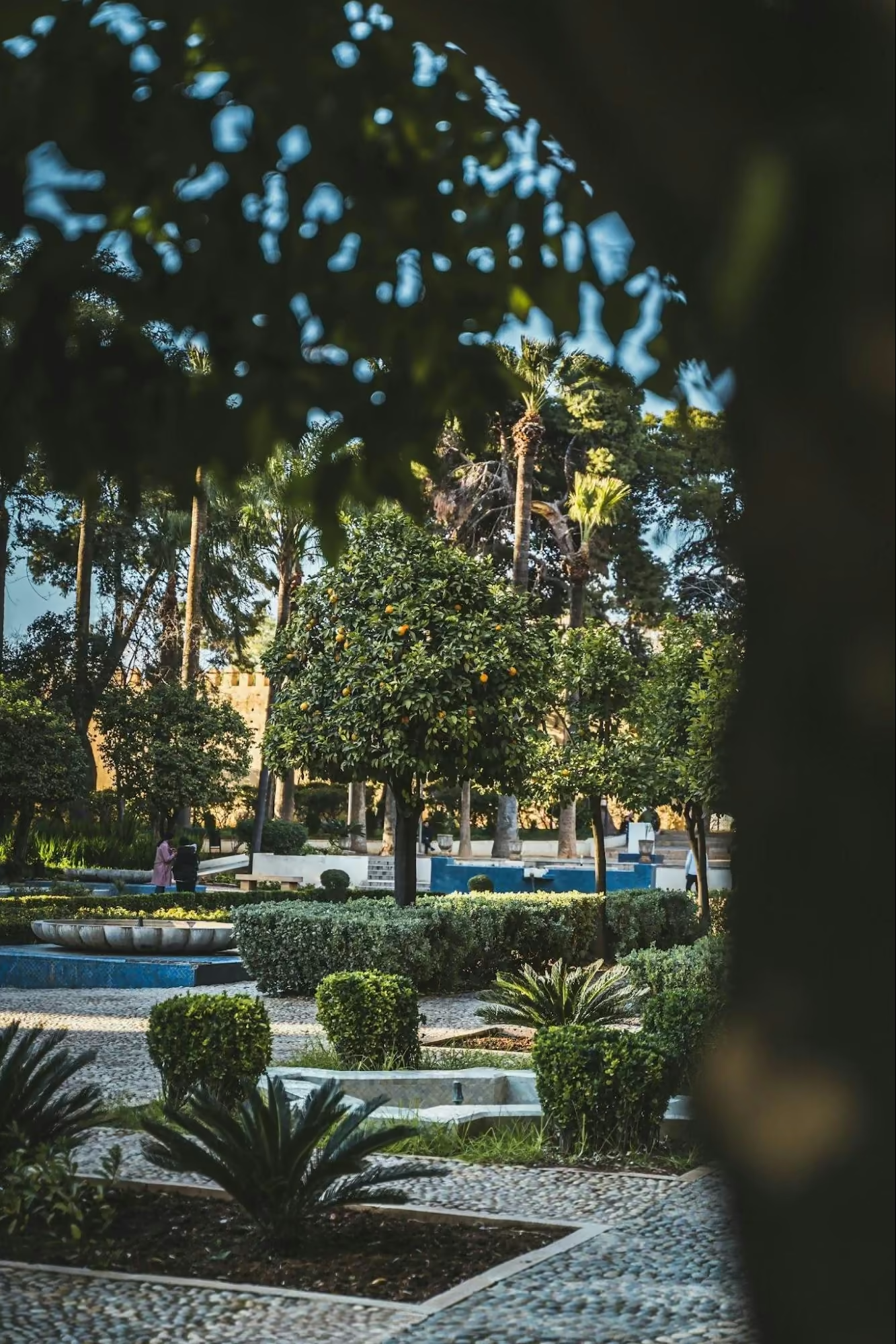
After spending several hours navigating the lively streets of the medina, Jnan Sbil Gardens provide a peaceful change of pace.
Palm trees, fountains, shaded walking paths, colorful flowers, and small lakes create one of the city’s most relaxing green spaces.
The gardens are particularly enjoyable during spring, when flowers bloom throughout the park and temperatures remain comfortable for an afternoon stroll.
Visit Borj Nord for Panoramic Views
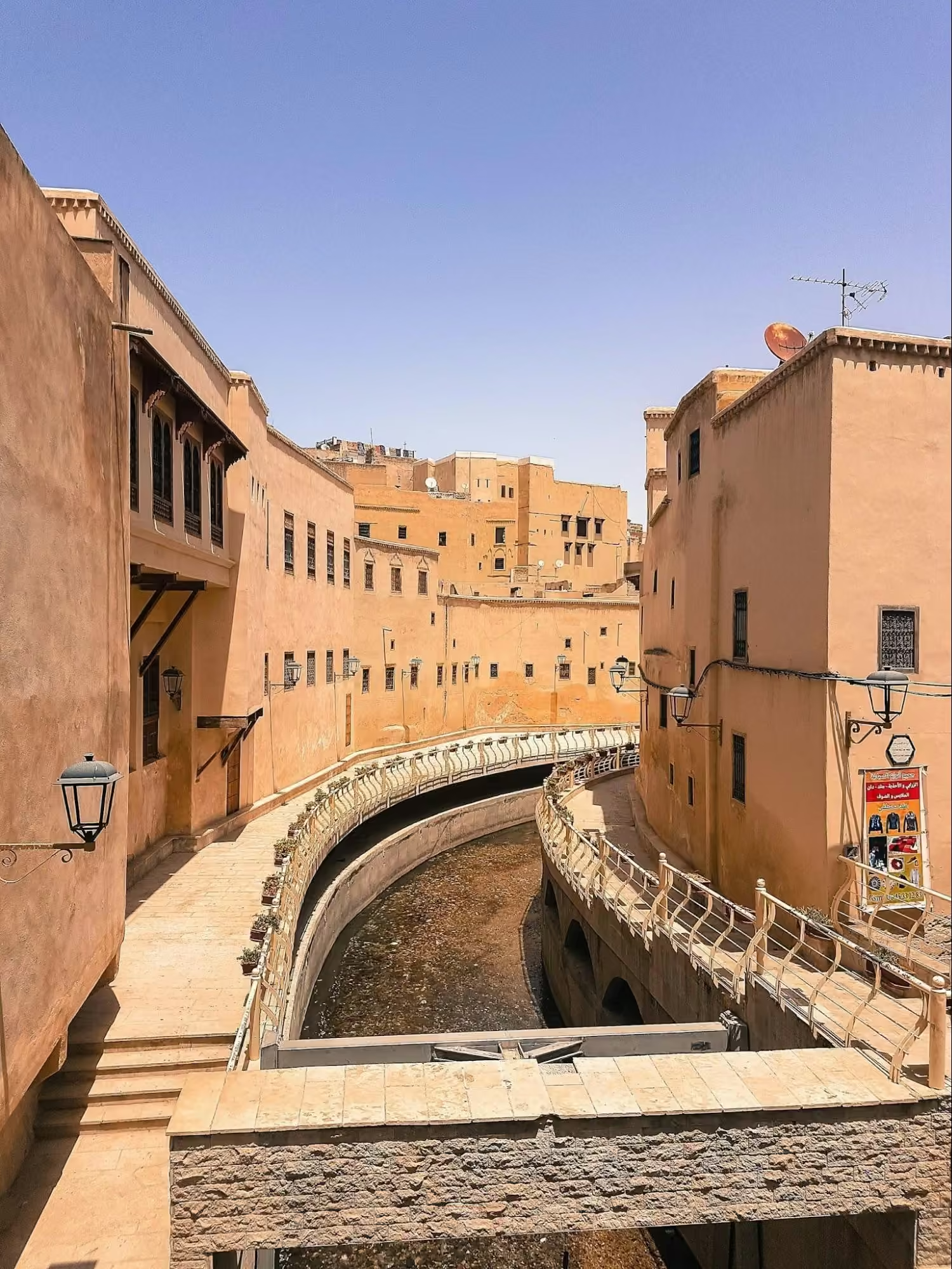
Located on a hill overlooking the city, Borj Nord offers some of the best panoramic views across Fez and its sprawling medina.
Originally built as a fortress during the Saadian dynasty, the structure now houses a museum featuring historical weapons and military artifacts from different periods of Moroccan history.
Many photographers visit during the late afternoon, when warm sunlight illuminates the rooftops, minarets, and surrounding hills.
Shop in the Traditional Souks
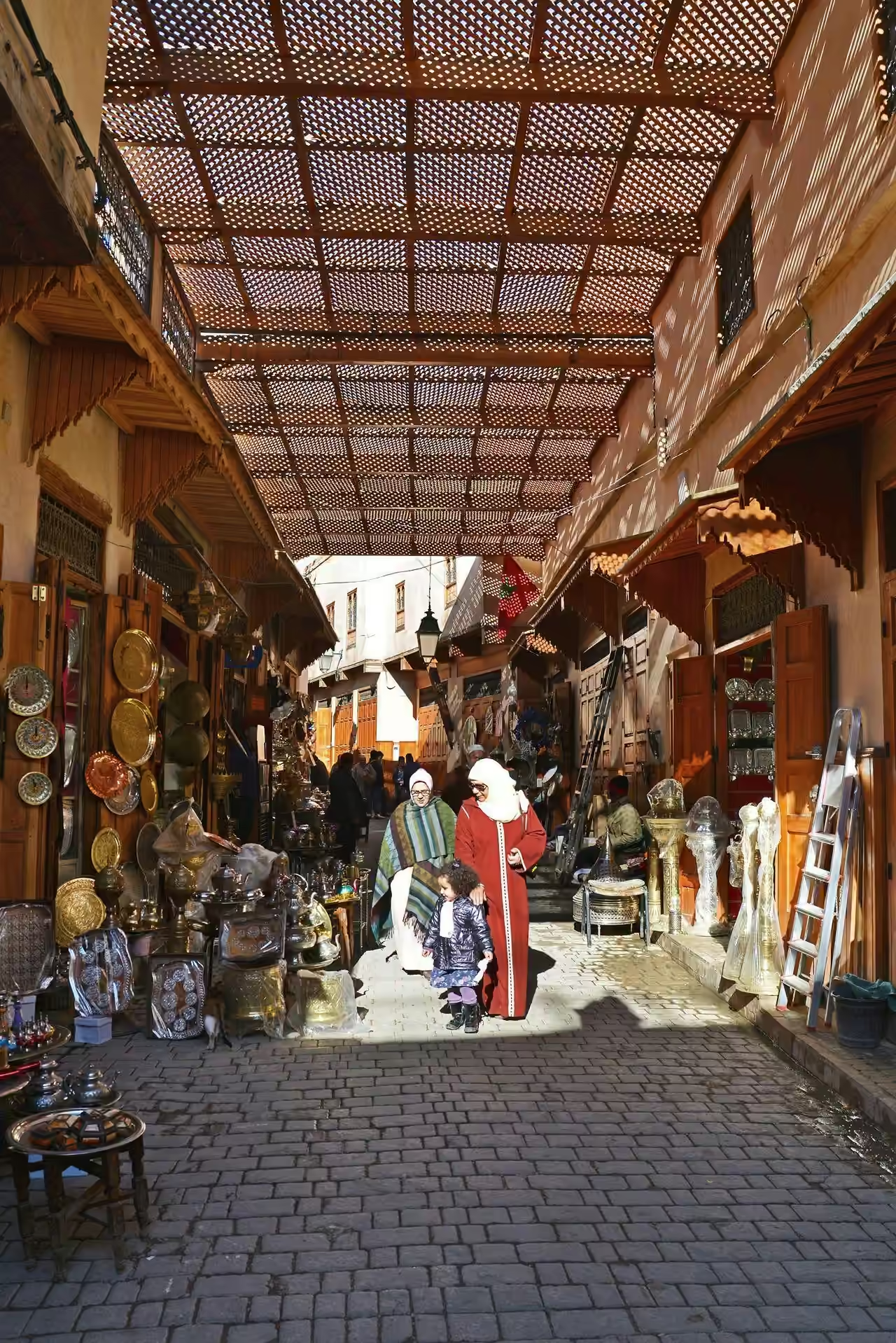
No visit to Fez is complete without exploring its traditional souks. Unlike modern shopping centers, these markets continue to function much as they have for centuries.
You’ll find handmade carpets, ceramics, brass lanterns, embroidered textiles, spices, perfumes, leather goods, and beautifully painted pottery created by local artisans. Each souk specializes in different products, including leather goods, ceramics, brasswork, spices, and textiles created by local artisans.
Bargaining is expected and often becomes an enjoyable part of the shopping experience. Taking time to speak with artisans also offers valuable insight into the craftsmanship that has made Fez famous throughout Morocco.
A handmade ceramic bowl, leather bag, or traditional lantern also makes a memorable souvenir from your visit to Fez.
Best Places to Visit Around Fez
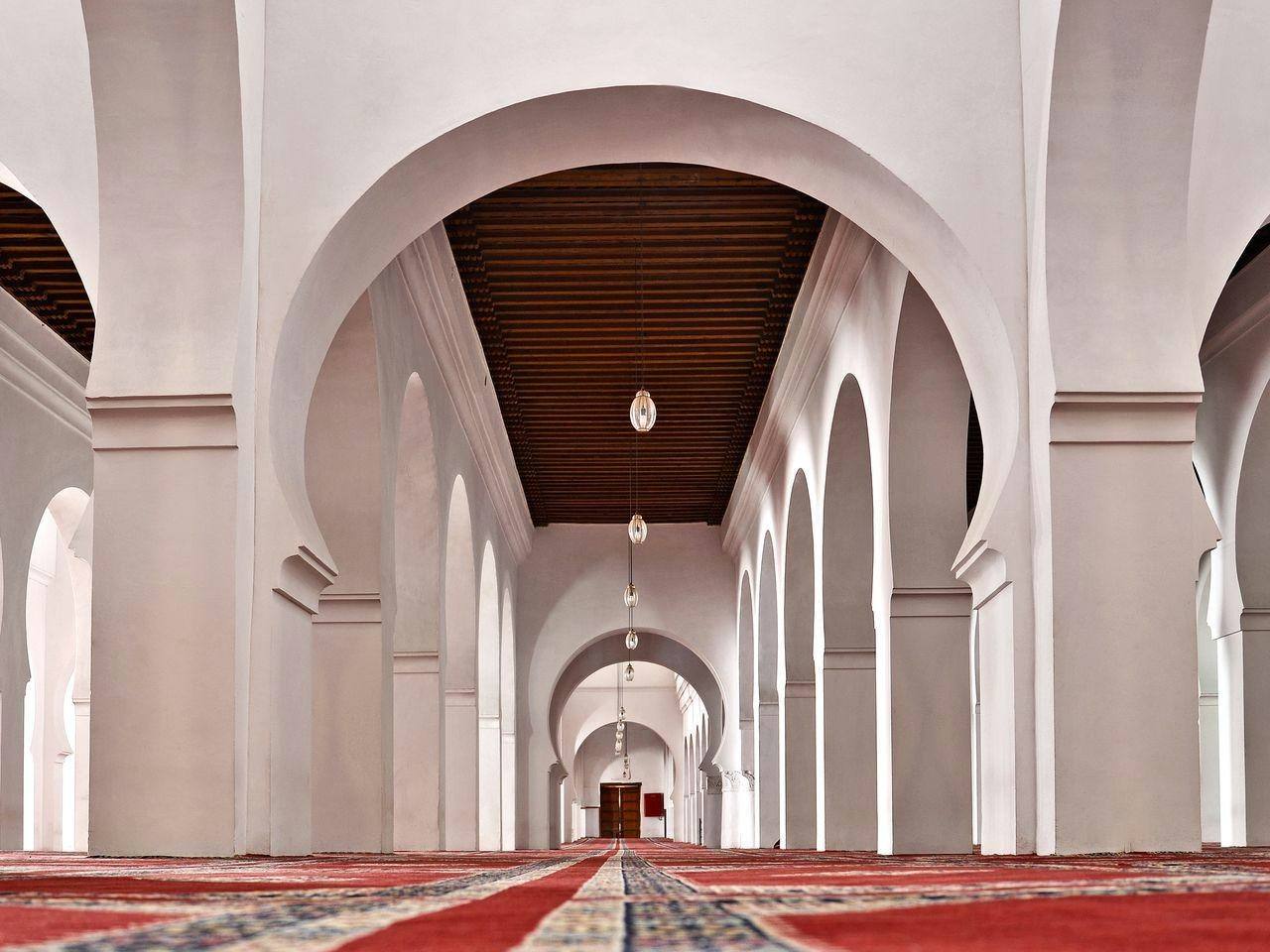
Fez is an excellent base for discovering northern and central Morocco. Within just a few hours, you can visit Roman archaeological sites, picturesque mountain towns, cedar forests, and one of Morocco’s famous blue-painted cities. If your itinerary allows extra time, these destinations are well worth including in your journey.
Many travelers also continue toward the desert through our luxury Sahara experiences.
At Sun-Trails, we often combine Fez with nearby destinations through our Private & Tailor-Made Tours, allowing travelers to experience Morocco at a comfortable pace while enjoying carefully planned routes and personally selected accommodations.
Visit Meknes, Morocco’s Imperial City
Located about an hour from Fez, Meknes is one of Morocco’s four imperial cities and offers an excellent introduction to the country’s royal history. Although often overshadowed by Fez and Marrakech, Meknes rewards visitors with impressive monuments, spacious squares, and a more relaxed atmosphere.
Highlights include Bab Mansour, one of Morocco’s most beautiful city gates, the Mausoleum of Moulay Ismail, and the lively medina filled with artisan workshops and traditional markets.
Because of its close proximity, many travelers combine Meknes with Volubilis during the same day.
Explore Volubilis
Less than an hour and a half from Fez lies Volubilis, Morocco’s best-preserved Roman archaeological site.
Visitors can wander through remarkably preserved temples, basilicas, triumphal arches, ancient homes, and beautifully detailed mosaic floors that have survived for nearly two thousand years.
The peaceful countryside surrounding the ruins creates a striking contrast with the lively streets of Fez, making Volubilis one of Morocco’s most rewarding historical excursions.
Combining Volubilis with Meknes allows visitors to experience two very different periods of Moroccan history in a single day.
Discover Chefchaouen, the Blue City
Chefchaouen is one of Morocco’s most photographed destinations, famous for its blue-painted streets, mountain scenery, and relaxed atmosphere.
Located approximately three and a half to four hours from Fez, the city attracts photographers, couples, and travelers looking for a slower pace after exploring the busy medina.
Visitors enjoy wandering through narrow blue alleyways, browsing artisan shops, relaxing in small cafés, and admiring panoramic views from the Spanish Mosque overlooking the town.
Many travelers choose to spend one or two nights in Chefchaouen before continuing toward Tangier or Casablanca.
Visit Ifrane and the Middle Atlas Mountains
Often called the “Switzerland of Morocco,” Ifrane surprises visitors with its European-style architecture, clean streets, and cooler mountain climate.
Located about 70 kilometers south of Fez, the town offers a refreshing change from the historic medina. During winter, nearby ski resorts attract domestic visitors, while spring and autumn are excellent seasons for hiking and nature walks.
Many excursions continue into the cedar forests of Azrou, where visitors often spot Barbary macaques living in their natural habitat.
Experience the Middle Atlas Scenic Route
The Middle Atlas Mountains offer beautiful forests, traditional Amazigh villages, mountain lakes, and scenic roads that reveal another side of Morocco.
Travelers interested in nature, photography, or rural life often enjoy spending a full day exploring the region before returning to Fez.
Private excursions allow visitors to stop at small villages, local markets, and panoramic viewpoints that larger group tours often overlook.
Where to Stay in Fez
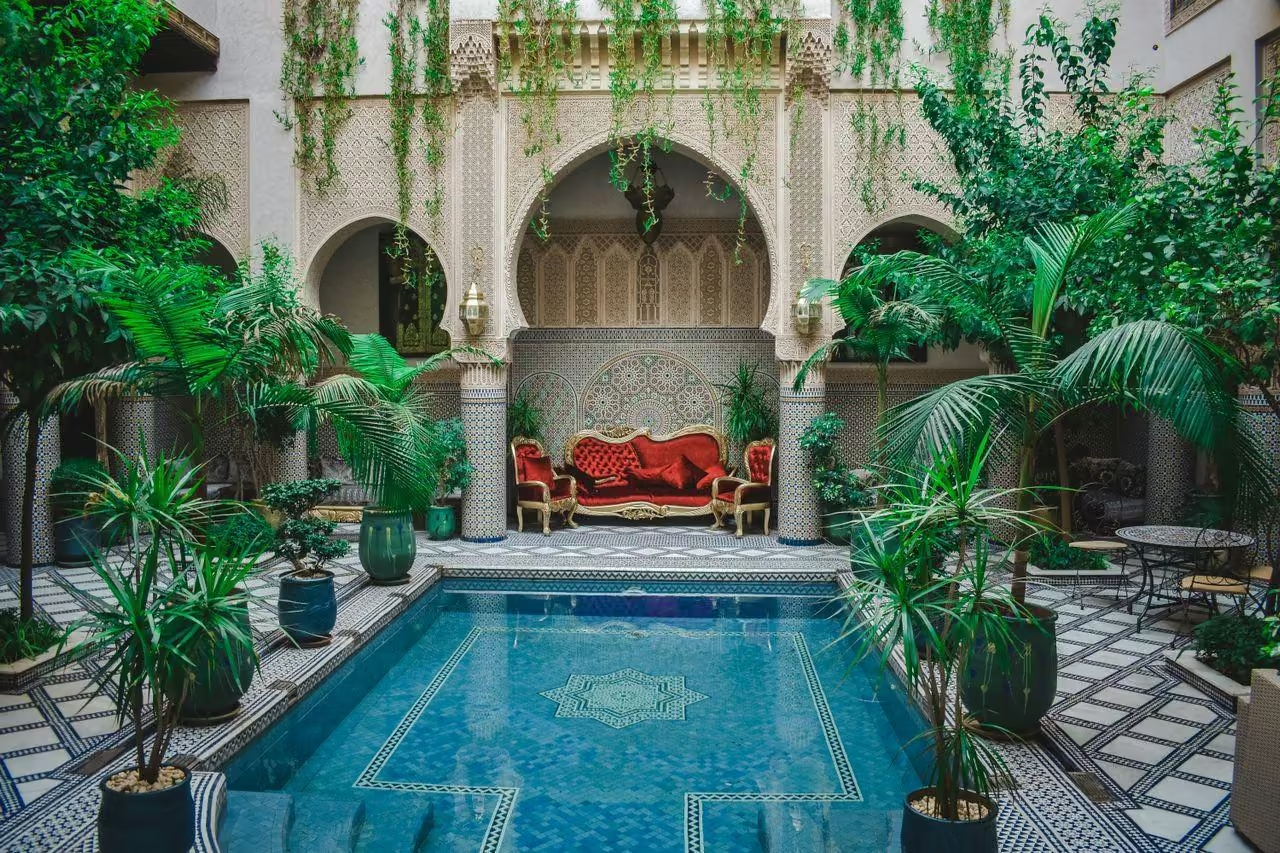
Fez offers accommodations for every type of traveler, from beautifully restored historic riads inside the medina to modern hotels with contemporary comforts. Choosing the right neighborhood depends on the type of experience you’re looking for during your visit.
At Sun-Trails, we carefully select and personally evaluate every accommodation we recommend, ensuring each property combines comfort, excellent service, and authentic Moroccan hospitality.
Stay in Fes el-Bali
For travelers seeking a truly authentic experience, staying inside Fes el-Bali is the best choice.
Traditional riads hidden behind modest doorways reveal peaceful courtyards, detailed tilework, carved cedar wood, rooftop terraces, and warm Moroccan hospitality. Many historic homes have been carefully restored while preserving their original architecture.
Staying inside the medina places you within walking distance of the city’s main attractions, traditional markets, artisan workshops, and historic monuments.
Because vehicle access is limited, many riads arrange luggage assistance from the nearest accessible street.
Stay in Ville Nouvelle
Ville Nouvelle offers a completely different atmosphere from the ancient medina.
Built during the French protectorate, this modern district features wide boulevards, shopping centers, cafés, restaurants, and international hotels.
Travelers who appreciate modern conveniences while remaining close to the historic center often choose accommodations here. Petit Taxis make traveling between Ville Nouvelle and the medina quick and affordable.
Stay Near the Royal Palace
The neighborhood surrounding the Royal Palace provides another excellent option for visitors seeking quieter surroundings.
This area combines elegant hotels, peaceful streets, and convenient access to attractions such as the Mellah and several beautiful gardens.
It is also a good base for travelers planning day trips beyond Fez since road access is easier than inside the medina.
Stay in a Traditional Riad or Best Riad Options in Fez
One of the highlights of visiting Fez is staying in a traditional Moroccan riad.
Many boutique properties feature handcrafted zellige tiles, carved plasterwork, cedar wood ceilings, peaceful fountains, and rooftop terraces overlooking the medina.
At Sun-Trails, we personally select riads and boutique hotels that offer exceptional hospitality while preserving the city’s architectural heritage, ensuring every stay becomes part of the overall travel experience.
Traditional Moroccan Food to Try in Fez
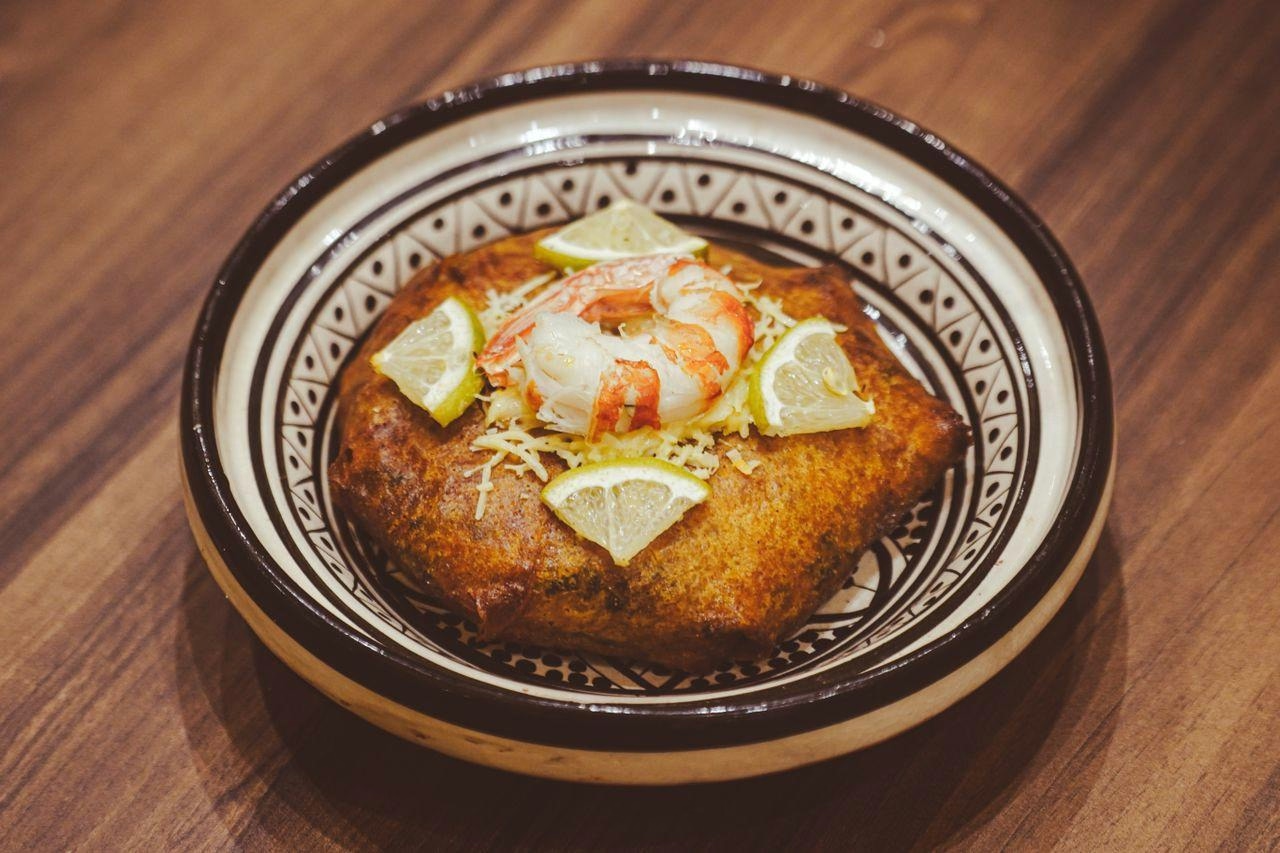
Fez is widely regarded as one of Morocco’s culinary capitals. The city’s cuisine reflects centuries of cultural influences while preserving traditional recipes that continue to be prepared in family kitchens and local restaurants.
One of Fez’s most famous specialties is pastilla, a delicate pastry traditionally filled with pigeon or chicken, almonds, cinnamon, and fragrant spices wrapped inside crisp layers of pastry. The combination of sweet and savory flavors makes it one of Morocco’s most distinctive dishes.
Tagine remains a favorite throughout the city, prepared with lamb, chicken, beef, vegetables, preserved lemons, olives, dried fruits, and aromatic spices. Every restaurant offers its own variation, allowing visitors to sample different regional interpretations.
Couscous is traditionally served on Fridays and remains one of Morocco’s most iconic meals. Prepared with steamed semolina, seasonal vegetables, and slow-cooked meat, it represents an important part of Moroccan family traditions.
Visitors should also try harira, a hearty soup made with tomatoes, lentils, chickpeas, herbs, and spices. Although commonly enjoyed during Ramadan, it’s served throughout the year in many local restaurants.
Fresh pastries, almond cookies, honey-coated sweets, and traditional breads are available in bakeries throughout the medina, making them perfect snacks while exploring the city’s narrow streets.
No visit to Fez is complete without enjoying traditional Moroccan mint tea, served throughout the day as a symbol of hospitality and friendship.
Getting Around Fez
Despite its reputation for winding alleyways, getting around Fez is relatively straightforward with a little preparation.
The historic medina is entirely pedestrian-friendly, meaning most attractions are reached on foot. Comfortable walking shoes are highly recommended since uneven stone streets and occasional hills are common throughout the old city.
Petit Taxis provide the easiest way to travel between the medina, Ville Nouvelle, the Royal Palace, and other neighborhoods. They are inexpensive, widely available, and ideal for short journeys. They also make it easy to travel around the medina before continuing on foot through the historic center.
Travelers planning to visit Meknes, Chefchaouen, Casablanca, Rabat, or Marrakech can use Morocco’s reliable ONCF train network, which connects Fez with many of the country’s major destinations.
Private transportation offers the greatest flexibility for visitors planning day trips or longer journeys through Morocco. At Sun-Trails, we often recommend private transfers because they allow travelers to stop at scenic viewpoints, historical sites, and small villages that public transportation cannot easily access.
If you’re renting a car, driving within the medina is not possible. Most hotels provide parking information and arrange assistance with luggage from nearby vehicle access points.
Many travelers also enjoy simply wandering through the medina without a fixed schedule. Every street reveals another hidden courtyard, artisan workshop, historic mosque, or small café, making Fez one of Morocco’s most rewarding cities to explore on foot.
Suggested Fez Morocco Travel Guide Itinerary
If you’re spending a single day in Fez or planning a longer stay, organizing your itinerary in advance will help you experience the city’s history, culture, and local traditions without feeling rushed. Here are a few itinerary suggestions to help you make the most of your visit.
If you’re planning one, two, or three days in Fes, the following itinerary suggestions will help you experience the city’s highlights without feeling rushed.
One-Day Fez Morocco Travel Guide Itinerary
If you only have one day in Fez, begin your morning at Bab Boujloud, the famous Blue Gate, before entering the historic medina. Continue to Bou Inania Madrasa, where you can admire some of Morocco’s finest Islamic architecture before wandering through the narrow streets toward Al Quaraouiyine University.
After lunch at a traditional Moroccan restaurant, visit the Chouara Tanneries to watch leather artisans at work using centuries-old techniques. Spend the rest of the afternoon browsing the medina’s artisan workshops before ending your day on a rooftop terrace overlooking the old city while enjoying traditional Moroccan cuisine.
Two-Day Fez Morocco Travel Guide Itinerary
With two days available, you’ll have time to discover both the city’s major attractions and its quieter neighborhoods.
Dedicate your first day to exploring the medina, including Bab Boujloud, Bou Inania Madrasa, Al Quaraouiyine, the Chouara Tanneries, and the bustling souks.
On your second day, visit the Royal Palace, stroll through the Mellah, relax in Jnan Sbil Gardens, and continue to Borj Nord for panoramic views across Fez. Finish the day with dinner in a traditional riad while enjoying authentic Moroccan hospitality.
Three-Day Fez Morocco Travel Guide Itinerary
Three days allows you to experience Fez at a slower pace while exploring destinations beyond the city.
Spend your first two days discovering Fez’s historic monuments, artisan workshops, gardens, and traditional markets.
On your third day, take a day trip to Meknes and Volubilis, explore the blue streets of Chefchaouen, or visit Ifrane and the cedar forests of the Middle Atlas Mountains.
Many travelers also continue toward Merzouga, the Sahara Desert, or Marrakech as part of a longer Morocco itinerary. At Sun-Trails, we often customize these routes through our private Morocco tours, allowing travelers to explore Morocco comfortably while enjoying carefully selected accommodations and authentic local experiences.
Travel Tips for Visiting Fez
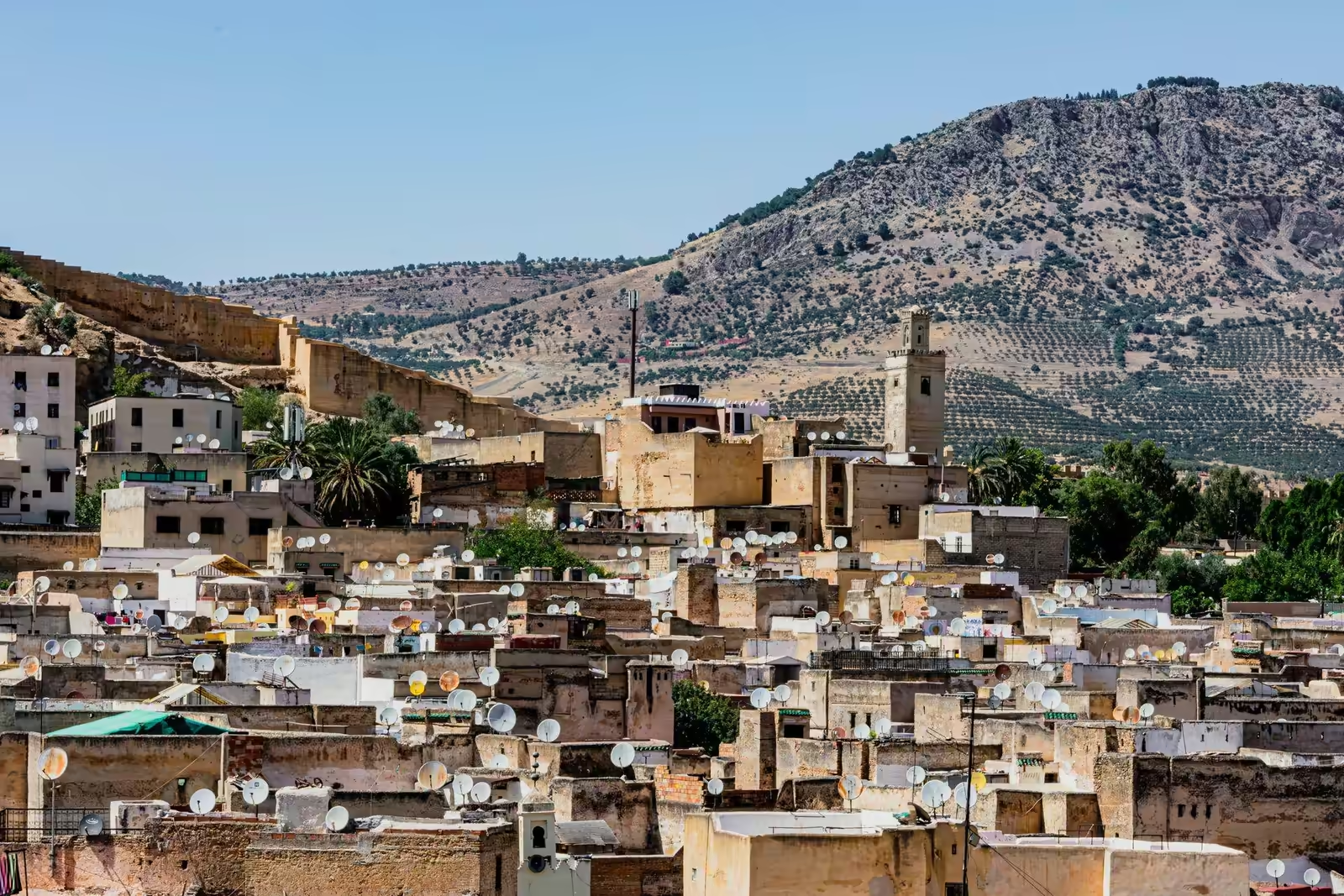
A little preparation will help you enjoy everything Fez has to offer. As one of Morocco’s oldest cities, the medina operates differently from modern urban centers, so understanding a few practical details before you arrive can make your visit much smoother.
Currency
Morocco uses the Moroccan Dirham (MAD). Credit cards are accepted at many hotels and larger restaurants, but cash remains useful when shopping in the medina, visiting artisan workshops, or dining in smaller local cafés.
ATMs are widely available throughout Ville Nouvelle and near the main entrances to the medina.
Language
Arabic and Amazigh are Morocco’s official languages, while French is widely spoken throughout Fez. English is becoming increasingly common in hotels, restaurants, and tourist attractions.
Learning a few local expressions such as Salam (hello), Shukran (thank you), and La shukran (no, thank you) is always appreciated and often creates friendly interactions with local residents. Many Moroccans appreciate visitors who make an effort to learn a few local expressions.
Safety
Fez is considered one of Morocco’s safest destinations for travelers. As with any historic city, it’s advisable to remain aware of your surroundings, especially in busy market areas.
The medina’s maze of narrow streets can feel confusing at first. Using offline maps or hiring a licensed local guide on your first day can help you become familiar with the city’s layout while avoiding unnecessary stress.
Keep personal belongings secure and politely decline unsolicited guiding services if you prefer exploring independently.
Dress Code
Fez is one of Morocco’s more traditional cities, so modest clothing is recommended, particularly when visiting religious sites or walking through residential neighborhoods.
Lightweight clothing works well during warmer months, while comfortable walking shoes are essential because much of the city is explored on foot over uneven stone streets.
Local Hammam
Spending an afternoon in a local hammam is another traditional experience many visitors enjoy after exploring the medina.
Tipping
Tipping is customary throughout Morocco. Leaving a small gratuity for restaurant staff, hotel employees, local guides, and drivers is appreciated when you receive good service.
When shopping in the medina, bargaining is common, but negotiations should always remain friendly and respectful.
Travel Insurance
Purchasing travel insurance before your trip is highly recommended. Coverage for medical emergencies, unexpected cancellations, lost luggage, and travel delays provides additional peace of mind throughout your Morocco journey.
Connectivity
Most riads, hotels, cafés, and restaurants provide free Wi-Fi.
Travelers who require reliable internet throughout their trip can purchase a local SIM card at Fès-Saïss International Airport or from mobile providers located throughout the city.
Booking Advice
Fez remains one of Morocco’s most popular cultural destinations, especially during spring and autumn.
If you’re planning to visit during these seasons, or during major holidays, reserving accommodations and private tours four to five months in advance provides the best selection of boutique riads, luxury hotels, and experienced local guides.
Extend Your Journey Beyond Fez
Fez is often one of the highlights of a Morocco itinerary, but it’s only the beginning of what the country has to offer. Its central location makes it easy to continue toward Morocco’s imperial cities, mountain villages, Atlantic coastline, and the Sahara Desert.
Many travelers combine Fez with Chefchaouen, famous for its blue-painted streets and relaxed atmosphere. Others continue to Meknes and Volubilis, where Roman history and imperial architecture provide another fascinating perspective on Morocco’s past.
For visitors looking to experience dramatic mountain scenery, the Middle Atlas Mountains and Ifrane offer refreshing views, cedar forests, and charming villages that contrast beautifully with the busy streets of Fez.
Longer itineraries often continue to Marrakech, Casablanca, Rabat, or the golden dunes of Merzouga, allowing travelers to experience Morocco’s remarkable diversity in a single journey. You can also explore more places to visit across Morocco before finalizing your itinerary.
At Sun-Trails, our Private & Tailor-Made Tours connect Fez with Morocco’s most iconic destinations through flexible itineraries designed around your interests, travel style, and schedule. Every journey includes personally selected accommodations, experienced local guides, and authentic experiences that go beyond the typical tourist route.
Frequently Asked Questions
Why should you use a Fez Morocco Travel Guide before visiting?
A Fez Morocco Travel Guide helps you plan your itinerary, choose the best neighborhoods to stay in, understand transportation options, and discover both the city’s famous landmarks and lesser-known attractions before you arrive.
How many days should I spend in Fez?
Two to three days is ideal for exploring Fez’s historic medina, museums, gardens, artisan workshops, and nearby attractions. Travelers planning day trips to Meknes, Volubilis, or Chefchaouen may wish to stay even longer.
Is Fez worth visiting?
Absolutely. Fez is one of Morocco’s most historically significant cities, offering authentic cultural experiences, remarkable architecture, traditional craftsmanship, and one of the world’s oldest living medieval medinas.
Is Fez better than Marrakech?
Both cities offer very different experiences. Marrakech is known for its lively atmosphere, luxury accommodations, and famous squares, while Fez provides a quieter and more traditional introduction to Morocco’s history, craftsmanship, and cultural heritage.
Can you explore Fez without a guide?
Yes, many visitors explore Fez independently using maps or navigation apps. However, hiring a licensed local guide for your first visit can help you better understand the city’s history while making it easier to navigate the medina’s complex network of streets.
What food should I try in Fez?
Visitors should sample local specialties including pastilla, tagine, couscous, harira, freshly baked Moroccan bread, traditional pastries, and authentic Moroccan mint tea.
Is Fez safe for tourists?
Yes. Fez is generally considered safe for travelers, including couples, families, and solo visitors. Basic precautions, such as keeping valuables secure and remaining aware of your surroundings in crowded areas, are usually all that’s required.
What is the best time to visit Fez?
Spring and autumn are generally considered the best seasons thanks to their comfortable temperatures and ideal sightseeing conditions. However, Fez offers rewarding experiences throughout the year.
Plan Your Trip Beyond Fez with Sun Trails
Fez remains one of the most rewarding places in Morocco for travelers interested in history, architecture, and authentic cultural experiences. From its ancient medina and historic madrasas to its lively souks and welcoming riads, every visit reveals another layer of Morocco’s rich heritage.
This Fez Morocco Travel Guide is designed to help you plan your visit with confidence, whether you’re spending a weekend exploring the imperial city or including Fez as part of a longer journey across the country.
Many travelers continue from Fez to destinations such as Chefchaouen, Meknes, the Sahara Desert, Marrakech, Casablanca, or Rabat. A private itinerary allows you to experience each destination at your own pace while discovering Morocco beyond the typical tourist routes.
At Sun-Trails, our local team has been welcoming travelers since 2009. Every itinerary is carefully designed around your interests, travel dates, and preferred pace, combining experienced local guides with personally selected accommodations and authentic experiences across Morocco.
Tell us your travel dates, group size, and the experience you imagine. A Sun-Trails specialist will respond within 24 hours with a personalized itinerary designed exclusively for you.